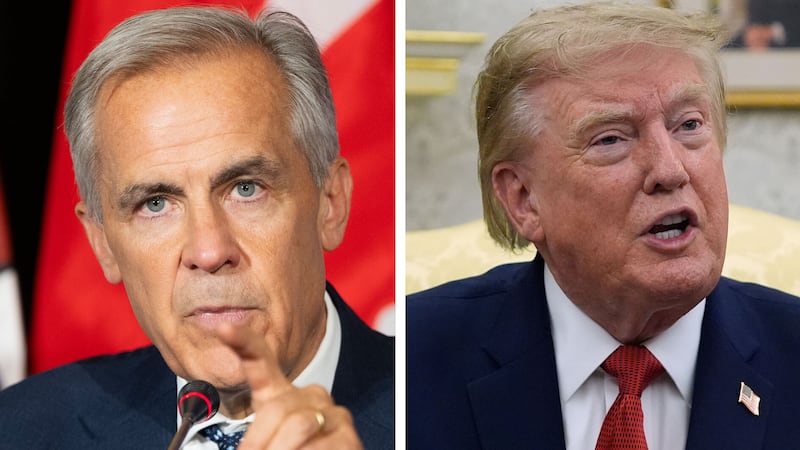
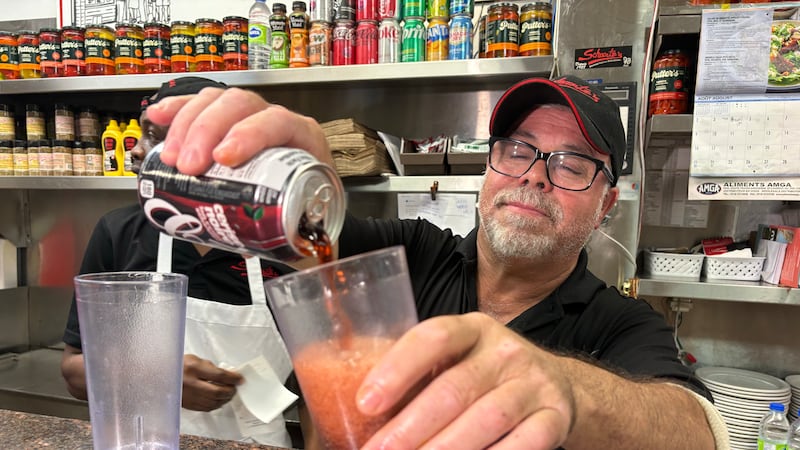
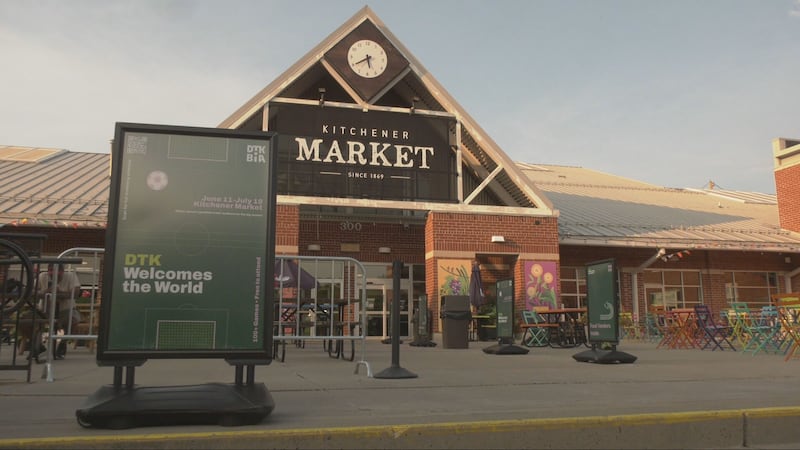
High-level trade talks are underway in Washington. U.S. President Donald Trump says trade talks are “moving along,” while LeBlanc says “more work” needs to be done, as negotiators have just hours to reach a deal and avoid 50 per cent tariffs. The Canadian side has remained tight-lipped about the details of the accord. LeBlanc said Wednesday that Canada’s dairy supply management system will remain in place. Multiple sources tell CTV News they expect reductions in American aluminum, steel and auto tariffs, but questions linger on lumber and agriculture. All premiers say they will comply with Prime Minister Mark Carney’s request to bring U.S. booze back to shelves, but experts and residents aren’t sure Canadians will buy it. Follow for key updates: ‘Working up until the last minute’: LeBlanc “We have more work to do,” LeBlanc told reporters as he exited the U.S. trade representatives office around 7:30 p.m. on Friday. “We’re going to continue working up until the last minute. Our job is not finished. Canadian workers, Canadian businesses expect us to do all of this important work” he said. Kayla Thompson, CTVNews.ca journalist ‘I only make good deals,’ Trump says “I only make good deals,” Trump told reporters on the tarmac at Joint Base Andrews in Maryland. He was asked about progress toward a deal with Canada. He said talks were “moving along,” and that his team has a “good relationship” with Carney. He didn’t offer details on the prospective deal. “We have to take care of our farmers.” Luca Caruso-Moro, CTVNews.ca journalist A ‘low-key horrible’ deal: trade policy expert Some concern about the deal still persists, an international trade policy researcher told CTV News Channel. “For some of the leaks we’ve seen, it doesn’t sound like it’s going to be a good deal,” Stuart Trew said hours before the deadline on Friday. “In fact, as my niece might say, it sounds ‘pretty low-key horrible’” Trew said, referring to tariffs that will remain on steel exports to the U.S. “Aluminum (and) the auto tariffs, at least according to the leaks, being at 15 per cent would be – in the short-to-medium term – pretty unsustainable for the industry.” Trew said such a deal would inevitably “eat into the reason to make any vehicles in Canada whatsoever.” He cautioned against putting Canada in a worse position than before the trade war started by accepting a deal that would put U.S. booze back on the shelves and letting go of our retaliatory tariffs. “The legitimate question is why would we come to such a bad deal now, when all we’re getting out of this is some kind of barely noticeable reprieve, right?” Kayla Thompson, CTVNews.ca journalist ‘Aiming to get the best agreement’: Alberta’s Smith Alberta Premier Danielle Smith is optimistic for a new trade deal with the United States, telling CTV News Calgary the best deal for Canada would involve no additional tariffs. “I know everybody hopes that we could get 100 per cent of all products going across the border tariff free,” Smith said in an interview. “But I think where we’re at in the negotiations is that we’re aiming to get the best agreement in the world of any nation with the United States and a reduction in the current tariffs that we have.” It’s the first time Smith has spoken on the intense negotiations between Ottawa and Washington during trade deadline week. Cassidy McMackon, CTV News Calgary, Digital Producer Compromise a ‘hallmark’ of any good deal: former U.S. ambassador to Canada For any good deal, there need to be concessions on both sides, according to former U.S. ambassador to Canada David L. Cohen. Cohen told CTV News Channel Friday night that he has been “optimistic,” throughout the process and that although it might take both, Canada and the U.S. some time to reach an agreement, there will ultimately be one. However, he said the “hallmark” of a good deal is when there is “some unhappiness” on both sides. “There’s a compromise here, and it’s a compromise where Canada is giving something up, but the U.S. is giving something up too,” Cohen said. “Both sides giving something up, both sides being a little unhappy with the landing place, but both sides looking at the bigger picture and understanding that there are huge benefits to both Canada and the U.S. to a resolution of this dispute, which has not benefited either country.” Aarjavee Raaj, CTVNews.ca Journalist Trade deal is an ‘economic security negotiation’: analyst Following Trump’s comment that trade talks are moving along, an international trade analyst says securing a deal is now effectively an “economic security negotiation.” “I feel for the number of companies, the factories, and all those that are engaged in looking at this carefully to ensure that they can continue to do business,” Jacques Shore told CTV News Channel on Friday. Canada needs to reach a trade agreement “right now,” to ensure goods currently protected under CUSMA with no tariffs on them “remain as they are without this potential of 50 per cent,” Shore added. Kayla Thompson, CTVNews.ca journalist Trump’s tariffs on autos ‘outrageous’: spokesperson National spokesperson of the Canadian Automobile Dealers Association, Huw Williams believes that Canada and the U.S. should have completely automotive free trade as in the past 60 years but that must be viewed with a “dose of realism” that the other side is an unpredictable and “bombastic” administration. “If the automotive industry remains competitive within the North American context, consumers will be the winner on both sides of the border,” he told CTV News Channel. Williams described U.S. President Trump’s 25 per cent tariffs on autos as “outrageous” which he said is bad for consumers and dealers, both in the U.S and Canada. Archie Niari, CTVNews.ca Journalist Canadian importers need U.S. alcohol: executive Stacy Kyle, executive director of the Import Vintners and Spirits Association, says she’s hoping premiers get American liquor back on store shelves, since is something she’s been asking for since the ban was put in place in March 2025. “The importers are Canadian. They’re locals...and they’ve been impacted by this ban and unable to do business,” Kyle told CTV News Channel on Friday. “So, it’s important for our members to have viable businesses and operations to maintain their relationships they’ve built with their suppliers.” Elianna Lev, CTVNews.ca Journalist We want to hear from you Are you worried about how tariffs might affect your work? Have trade disruptions already impacted your job? Share your story by emailing us at dotcom@bellmedia.ca with your name, general location and phone number in case we want to follow up. Your comments may be used in a CTV News story. Lumber industry needs certainty: expert Executive director of the Independent Wood Processors Association of B.C. says that while he’s pleased softwood lumber has remained on the negotiating table, the industry needs certainty. “Let’s keep in mind we’ve been at this for nine years. We had a tariff that started around eight per cent, now it’s up to 45 per cent and it could expand to 50 per cent,” Brian Menzies told CTV News Channel on Friday. “I don’t think the outcome is going to be great, but at least there’ll be some certainty, and that’s what I want right now for our small businesses,” he said. Menzies said about $11 billion in tariff deposits is currently being held at the border, and many small businesses have taken on significant financial risk, including using their homes as collateral to cover the required bonds. “They want to see some resolution to this. They want to see some of those deposits returned to them as well because they have been paying it out of their own pocket to survive right now.” Kayla Thompson, CTVNews.ca journalist Canadian team takes ‘working lunch’: source A source from the Canadian team tells CTV News LeBlanc, Charette, Blanchard and Wiseman are participating in a “working lunch.” Mike Le Couteur, Senior Political Correspondent LeBlanc returns LeBlanc just passed news cameras on his way back into the U.S. Trade Representative’s office for the first time since departing for lunch at around 1:20 p.m. ET – more than two hours ago. He did not stop to speak to media. Luca Caruso-Moro, CTVNews.ca journalist ‘It’s tricky for Mark Carney’: Former Alberta premier Jason Kenney, the former premier of Alberta, says while trade talks appear to be going “in a pretty good direction,” he has concerns. “I just hope that our government hasn’t made all sorts of preliminary concessions, and I say preliminary because this is an appetizer for the main meal, which is the CUSMA negotiation or renewal,” he told CTV News Channel on Friday. Although Carney is well-equipped to handle negotiations, he is ultimately in a tough position explains Kenney. “It’s tricky for Mark Carney. It couldn’t be trickier,” he said. Kenney said the prime minister is likely torn between his commitment to aggressively defend the interests of Canadians’ in sectors including auto, while also creating “a space of some stability, knowing full well that based on past actions, the Trump administration could just do a 180 all over again.” Kayla Thompson, CTVNews.ca journalist LeBlanc has entered the building LeBlanc has entered the U.S. Trade Representatives office. He did not stop to take questions from reporters. Luca Caruso-Moro, CTVNews.ca journalist Negotiations may be ‘phased’ With hours left to deadline, a trade lawyer says Canadian and U.S. representatives may extended negotiations through the weekend and opt for a “phased approach.” “There is going to be a good amount of negotiation left,” Robert Glasgow, international trade lawyer, told CTV News Channel on Friday. “I think they’re almost certainly going to start segmenting it down ... but that’s probably going to take a few more days to negotiate,” he added. The deal won’t eliminate tariffs entirely, Glasgow said, and Carney’s team is likely focused on preserving the CUSMA exemption and “drive tariffs as low as he can on as broad of a basis as he can get it.” Under the CUSMA exemption, goods that comply with CUSMA rules of origin are generally exempt from U.S. blanket or general emergency tariffs. While Carney has partially pivoted defence procurement to some European contractors, he will want to service “that segment with multinational and transnational participation of Canadian firms.” “If we can focus on procuring from American companies that are producing domestically, we still retain that ... procurement base, while still potentially placating the demands of the American administration,” Glasgow said. Devika Desai, CTVNews.ca journalist Trade talks today This morning’s meeting between Canadian and American negotiators is expected to take place at 11:30 a.m., according to a source close to the talks. Canada-U.S. Trade Minister LeBlanc, Chief Trade Negotiator Janice Charette and Carney’s Chief of Staff Marc-Andre Blanchard, are expected to attend. Mike Le Couteur, Senior Political Correspondent and Luca Caruso-Moro, CTVNews.ca journalist Deadline could be extended: political analyst A former Trudeau staff member says that while a deal is hopefully signed tonight, she would not be surprised if the tariff deadline was extended again. “We’re seeing a level of diffusion come out,” Sharan Kaur, former deputy chief of staff to former finance minister Bill Morneau, told CTV News Channel on Friday. The U.S. president, the now-CTV News political analyst added, is known for making “flippant comments” when things aren’t going his way. She also pointed to issues discussed this week like returning U.S. alcohol to Canadian stores. “These concessions ... are leverage,” she said. “... We have to get used to the fact that tariffs are going to be around in one way, shape or form. This is actually a positive discussion taking place.” Canadians aren’t the only ones impacted; Trump also needs the deal, Kaur said. “The whole anti-everything American sentiment ... is impacting them,” she said. “...Let’s also keep in mind that he’s got midterms coming up.” It’s difficult to say if the deal could be trusted, she said. “He is known to rip deals, left, right and centre.” “The goal is to ensure that the temperature is brought down and that they get to a point where industry is not suffering.” Devika Desai, CTVNews.ca journalist This won’t be an ‘early night’ An international trade lawyer says he’s anticipating being up all night as he awaits final details from the Canadian government. “Let’s put this way: I don’t think I’m going to have an early night,” Barry Appleton told CTV News on Friday. “But here’s the good part: they’re walking in the room. They’re still going to have more talks.” Appleton said that the problem with the trade deal after Trump’s three-day reprieve is that it will likely leave numerous items unresolved. “This is just a deal to get us talking again to have more of a deal, and what are we going to give up to have that? Right, that’s the question that we all want to know. And there’s so many different ideas circulating. That’s the part we got to figure out,” he said. Kayla Thompson, CTVNews.ca journalist Poilievre to Carney: ‘Don’t take a bad deal’ Conservative Leader Pierre Poilievre repeated his call Friday for Prime Minister Mark Carney not to “take a bad deal.” “Mr. Carney promised in the last election that he would be elbows up. He promised that he would negotiate a win,” Poilievre said in a press conference in Kitchener, Ont. on Friday. “In his words, he promised, and I quote, that he could ‘handle Trump.’ He promised he would not accept a bad deal. Mr. Carney, keep your promise. Fight for Canada.” Asked by reporters if it’s acceptable for Canada to agree to a reduced tariffs on steel and aluminum, Poilievre said “no, absolutely not.” “One-sided tariffs on Canadian industry would be a bad deal,” he added. Stephanie Ha, CTV News’ Ottawa News Bureau manager Booze ban ‘had its time’: Raitt The decision to reverse provincial bans on U.S. alcohol may be the reason Canada secures a deal tonight, says Lisa Raitt, member of the Advisory Committee on Canada-U.S. Economic Relations and former deputy leader of the Conservative Party of Canada. She said Trump has made it very clear that he views the removal of American alcohol from Canadian store shelves as a discriminatory measure, and as a result, threatened 50 per cent tariffs on vulnerable industries. “You have to do whatever you can to ensure that that didn’t happen, and that doesn’t happen tonight,” said Raitt. “Asking the premiers to reverse their booze bans, I do believe, is an important part of the entire deal.” She says while the alcohol ban was effective in getting U.S. attention, “it had its time.” “The reality is that the leverage on this negotiation going around really did come from the U.S.,” says Raitt. She says tariff pressure forced the two countries into important negotiations that have likely yielded results and “hopefully a deal that both sides can live with and can prosper with going forward.” Anam Khan, BNN Bloomberg journalist The ‘best deal’ for autos Canada is in a position to get “the best deal” for its auto industry compared to the rest of the world, according to an industry representative. Huw Williams, spokesperson for the Canadian Automobile Dealers Association, told CTV News Channel on Thursday that there is opportunity to get “a good short term deal that hopefully rolls into the CUSMA negotiations in the future.” Canada is the biggest customer of U.S.-made vehicles, he said. “It doesn’t do well to attack your customer.” Williams said they have asked their U.S. counterparts to communicate that the tariffs hurt the economy on both sides. Devika Desai, CTVNews.ca journalist TSX shows gains The S&P/TSX composite was up nearly a point (36,694, up 0.88 per cent) in Friday morning trading. Energy and mining stocks showed the largest gains. Luca Caruso-Moro, CTVNews.ca journalist Anand talks Arctic, NATO with Rubio While Canadian and U.S. negotiators hammer out the details of a deal, Foreign Affairs Minister Anita Anand met with her American counterpart, Marco Rubio, for security talks today. A readout from Anand’s office reports the two discussed “transnational fraudulent activity including scam centres,” Arctic foreign policy and NATO investments. “Minister Anand highlighted that Canada will continue to engage constructively with the United States on trade and to strengthen our economic relationship,” the statement added. Canada recently committed to spend five per cent of its GDP on defence by 2035. U.S. President Donald Trump has long pushed allied countries to increase their military investments. Anand and Rubio will speak again in September at the United Nations. Luca Caruso-Moro, CTVNews.ca journalist PM tried to ‘out-tough’ Trump: Vance U.S. Vice-President JD Vance said Carney tried to “out-tough” Trump in trade negotiations and credited Conservative MP Jamil Jivani as an “effective advocate” in the deal talks. In audio from a Wednesday fundraiser in Southampton, N.Y., which was provided to The Canadian Press by a source who attended the private function, Vance said Carney is a “very sweet guy” and he gets along with him quite well. But Carney “comes in and puffs his chest out and says, ‘I’m going to, like, out-tough Donald Trump,’” he added. “It’s hilarious because Carney presents this as some victory for Canada when fundamentally, like, they climb down on a lot of issues,” Vance told the room. “But the quiet sort of behind-the-scenes story is that this, like, random MP who has a good relationship with us has been a pretty effective advocate,” he said about Jivani. Vance added there’s “this guy Pierre Poilievre, who is the leader of the Conservatives in Canada,” adding he is a “non-entity” in negotiations. The White House and the vice-president’s office have not yet responded to a request for comment. The Canadian Press. Read the full story here. Vance’s comments are ‘childish,’ says ex-ambassador Vance’s comments about Carney were “childish” and “flippant,” according to Gordon D. Giffen, who served as U.S. Ambassador to Canada from 1997 to 2001. “The vice-president was out of line,” he told CTV News Channel from Brevard, N.C. Asked what Canada should do next if a deal isn’t reached, Giffen said he doesn’t think the U.S. will follow through with imposing the 50 per cent tariffs as the president promised. He called the new, 50 per cent tariffs “unsound, bad policy,” and predicted their imposition would beget further Canadian retaliation. Luca Caruso-Moro, CTVNews.ca journalist Winery owner unconcerned about U.S. booze return An Ontario winery owner says he isn’t worried about a drop in sales should U.S. booze return to store shelves. Donald Ziraldo, who is the founding chairman of the Vintners Quality Alliance (VQA), told CTV Your Morning on Friday that provincial bans have boosted sales at local wineries by 25 per cent to 100 per cent. “People became more aware ... that the Niagara Canadian wines, in particular, are as good as the California, and probably a little bit less expensive,” he said. Prime Minister Mark Carney asked premiers this week to lift their respective bans, which have been in place since February 2025. All have said they will comply. The VQA is Canada’s Canada’s official regulatory and appellation of origin system for high-quality wines. A VQA label guarantees that a wine is made entirely from locally grown grapes in Ontario or B.C. and meets strict production and labeling standards. Ziraldo added that he hopes Quebec and the Maritime provinces will join the alliance to let consumers know which wines are “100 per cent grown in Canada.” Devika Desai, CTVNews.ca journalist Sustainable profit margin a good deal for auto makers Flavio Volpe, the president of the Automotive Parts Manufacturers Association, said a good deal for his members is one that allows auto makers to have a sustainable profit margin. “I think a lot of people who aren’t as familiar with the industry say, ‘Hey, look, if you go down from 25 to 15 (per cent tariffs), that sounds great,’” he told CTV News Channel on Friday. However Volpe elaborated that even if U.S. tariffs on Canadian autos fall from 25 per cent to 15 per cent, that may not be enough to protect Canadian carmakers especially after being targeted “by Donald Trump’s White House and also our other main competitors, China, at the same time.” Kayla Thompson, CTVNews.ca journalist LeBlanc on trade deal: ‘We’re very close’ Canada-U.S. Trade Minister Dominic LeBlanc shared an update following a more than three-hour meeting with U.S. Trade Representative Jamieson Greer in Washington on Thursday, saying they are “very close” to an agreement. “We continue to make progress, and we’re going to stay here and do the work that’s necessary until we get to that point,” LeBlanc said to reporters, while also describing the meeting as “long” and “detailed.” Chief Trade Negotiator Janice Charette, Canadian Ambassador to the U.S. Mark Wiseman and Prime Minister Mark Carney’s Chief of Staff Marc-André Blanchard were also involved in the meeting. Stephanie Ha, bureau manager, Ottawa News Bureau All provinces agreed to restock U.S. liquor: N.L. premier Newfoundland and Labrador Premier Tony Wakeham says Canada’s premiers have agreed to return U.S. alcohol to store shelves as part of the tentative trade deal with the U.S. He said the prime minister is confident an agreement will be reached and that “as part of this agreement, he asked all of the provinces, as a sign of good faith, ‘would we put U.S. liquor back on our shelves,’ and we all agreed.” Several of the premiers have not commented publicly on the issue. U.S. alcohol products remain off the shelves in every province except Alberta and Saskatchewan. Tiffany Hendsbee, CTV News supervising multiplatform writer