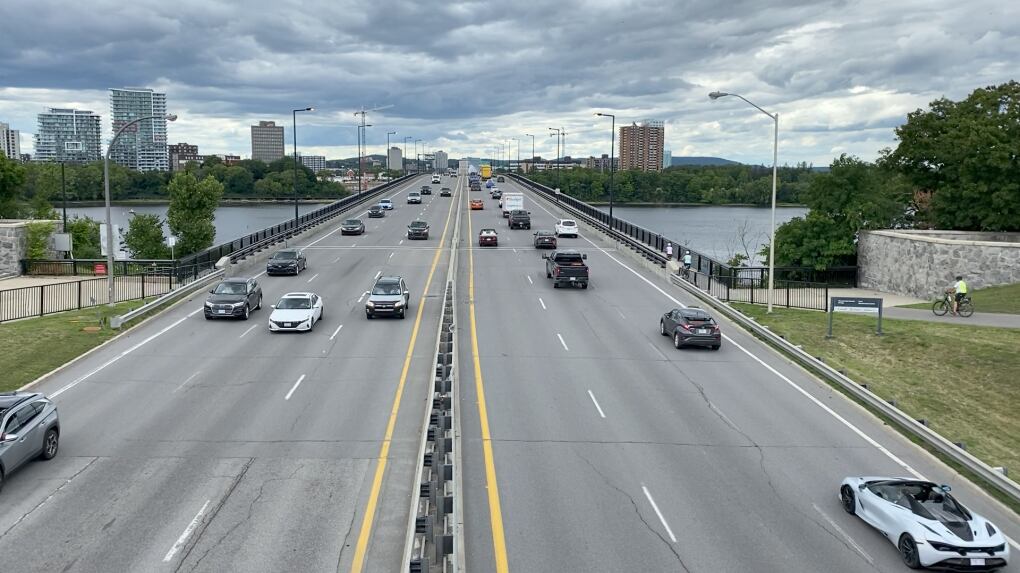
The City of Ottawa’s roadmap to keep commuters moving this fall includes adjusting signal timing on busy roads, extending no-stopping and no-parking zone times in the downtown core and boosting OC Transpo service. An estimated 65,000 additional trips are expected into the downtown core every week, as public servants spend at least four days a week in the office and post-secondary students return to Ottawa for the fall semester. “The reality is that the federal increase in office presence is expected to increase commuter traffic to and from downtown by approximately 10 per cent compared to this period last year,” Alain Gonthier, Public Works general manager, said. “This will be adding additional strain onto the network during a time that already typically sees increased traffic. Now this is a citywide mobility challenge that requires coordination across departments and with our external partners.” City Manager Wendy Stephanson and city staff held a briefing for elected officials and the media Friday morning to outline the “measures in the Transportation and Mobility Action Plan” to support commuters, according to the city. The 48-point plan to address traffic congestion and increased vehicle traffic in downtown Ottawa includes: The City of Ottawa is extending paid parking time limits from two hours to three hours in several areas, including on Elgin Street, on Gloucester Street and Laurier Avenue between Elgin Street and Lyon Street, and on sections of Lisgar, Cooper, Nepean and Sparks Street. Gonthier says the City of Ottawa is adjusting construction projects to limit road closures to off-peak periods and weekends whenever possible. “September will come with some challenges and it will take a few weeks for everyone to settle into their new routine and for travel patterns to stabilize,” Gonthier said. “We are committed to doing everything we can to help residents, workers, businesses, and visitors navigate this transition as smoothly as possible. By all working together, we can help ensure that people reach their destination safely and efficiently.” Last week, OC Transpo unveiled its plan to boost service on the O-Train and buses this fall, calling it “Your ride made better.” The plan includes increasing weekday frequency on O-Train Line 1, starting O-Train Line 2 service earlier Monday to Friday, seven new Express routes from Park and Ride lots to O-Train Line 1 stations and key employment areas, and changes to 30 routes to improve service. “Now, as part of our Customer First Action Plan, OC Transpo is making your ride better,” Rick O’Leary, OC Transpo general manager, told reporters and councillors. “As you’ve heard me say at City Council and at our customer information sessions this summer, we’re enhancing our fall transit service with new options for our customers, and they’re going to include increasing service and reliability across the network and on Para Transpo. We’re enhancing the customers’ experience and providing targeted improvements to key employment areas where we expect ridership to increase.” O’Leary noted OC Transpo’s 2025 ridership peaked in September at 7.4 million riders and 7.8 million riders in October, and “this year, we can anticipate more demand.” Using data to monitor traffic City staff say there will be “regular meetings” at City Hall to assess traffic patterns and make changes if required. “We’ll be using the data that is being collected to really understand where we’re having issues, what is working well and what could be improved,” Debbie Stewart, general manager of strategic initiatives, said. “We don’t know exactly the decisions that residents and commuters will take, and so as we see the traffic patterns kind of evolve, we’re ready to adapt and to respond so that we can have the best possible transportation network for residents come this period.” Stewart says the city is encouraging people to use all modes of transportation to get to the office. “If you do drive, we’re watching and we’re monitoring and making changes as we can.” “Deeply concerned” Orléans South-Navan Coun. Catherine Kitts is continuing to raise concerns about the influx of people on OC Transpo and the roads this fall. “I remain deeply concerned that our transportation network is not ready to absorb the increase in travel demand,” Kitts said on Facebook as she shared some changes to OC Transpo service in the east end. The councillor said OC Transpo has added two new Express routes between Chapel Hill and Blair Station and between Millennium and Blair. “I have no illusions that these changes alone will solve the transportation challenges facing our community,” Kitts said. “As I shared at our last Council meeting, a few million dollars in service improvements cannot undo years of transportation infrastructure failing to keep pace with the growth our community has experienced. That is why I have remained focused on moving the major transportation projects our community needs from planning and design toward construction.” Coun. Tim Tierney told Newstalk 580 CFRA earlier this month that the fall commute is “going to be hell.” “Incentivizing more driving” Capital Coun. Shawn Menard told city staff the return-to-office mandate is very costly for federal and municipal workers. “They’re going to have to pay for parking. They’re going to have to drive their cars with gas. This is hugely expensive for people with RTO5. It’s not just the city and federal government it’s expensive for,” Menard said. The councillor noted many of the measures announced by the city are “incentivizing more driving.” “Unfortunately, we’re going to see more parking, more cars on the road if we continue to incentivize that type of behaviour,” Menard said. “There is a simple way to solve this problem and it’s to offer transit services for a much-reduced rate. That will help get people back on the bus, back on the train, where they haven’t tried it before.” Menard said the city’s decision to bring office employees back to the office five days a week in January was “probably one of the worst decisions this council could have made,” and asked if the city would revisit it. Stephanson said the city is providing a “lot of flexibility to staff.” “We’re modifying workspaces to make sure that they are collaborative for staff, create that great environment in terms of the relationship building here, and we’re going to continue that work,” Stephanson said. “So, there is no plan to revisit, but what I can say is that there is ultimate flexibility between the employer and employees, and that’s really important to us and important to our employees, and we’re completely respecting that.”