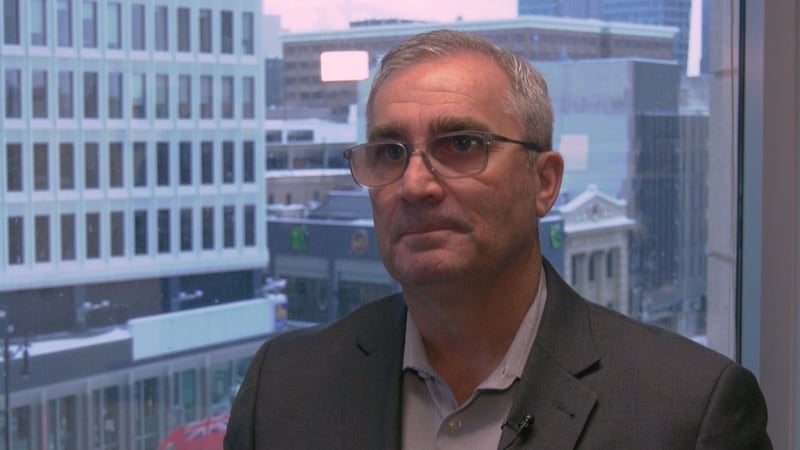
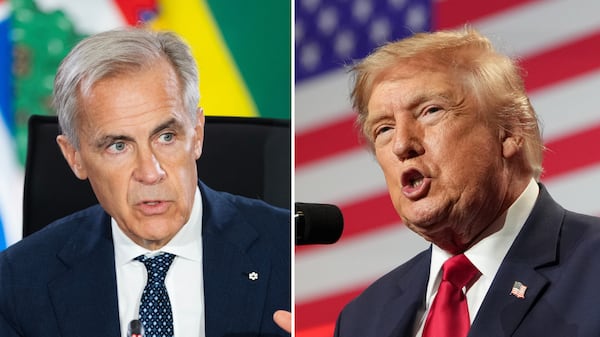
Tom Mulcair served as leader of the federal New Democratic Party from 2012 to 2017. He is a political commentator for CTV News and a columnist for CTVNews.ca. Prime Minister Mark Carney has been consistent since he arrived on the scene: no deal is better than a bad deal. But with an approaching deadline, Canada is fast becoming the hand-wringing capital of the world. What if Trump won’t sign? What if we do and it’s not perfect? On the liquor front, of course, it’s 100% provincial jurisdiction. Only the provinces can ban the sale of American booze; they can lift their own boycott. You might have missed it, but Quebec Premier Christine Frechette, seemingly out of the blue, announced this week that she was open to ending Quebec’s U.S. liquor ban if there are gains in key sectors such as aluminum and lumber during trade talks. Except that nothing comes ‘out of the blue’ when, like Fréchette, you’re heading into a general election. Her ruminations about possibly ending the ban on U.S. alcohol were calculated and very helpful to Carney. Provincial politics in play Frechette and Alberta Premier Danielle Smith have established themselves as exceptional dealmakers with Carney and his government. Sure, B.C. Premier David Eby got lots of goodies in exchange for Smith’s new pipeline to the West Coast, but the clear winner was Smith. Next week, you can expect to see Carney, Frechette and Newfoundland and Labrador Premier Tony Wakeham announce a mammoth hydroelectric deal. For Carney, it will be an opportunity to assuage the fears of Canadians who are rightly concerned about the climate crisis. Carney practically invented the key notion of “net zero,” and he is going to be backing an incredibly important link in the chain to get us on track. Team Carney includes two key players who have had everything to do with getting this exceptional deal in place: Energy Minister Tim Hodgson and Clerk of the Privy Council Michael Sabia. Hodgson is Carney’s lead on all things natural resources. Sabia, in addition to his impressive private-sector CV, is the former head of Hydro Quebec. Together they have played a key role in fashioning a deal for clean, renewable energy on an unprecedented scale. Later this month, there will be a series of federal byelections, one of which is in Chicoutimi-Le Fjord. The Liberal candidate there is Daniel Gobeil, an agronomist and dairy farmer, who’s been the head of Quebec’s milk producers association for years. That byelection got called after Carney named sitting Conservative MP Richard Martel to the Senate. For a guy who was supposed to have no clue about politics, Carney is showing that he has some pretty clever moves. Protecting Canadian dairy The choice of dairy expert Daniel Gobeil as the Liberal candidate is no accident, either. Carney is signalling that he wants a champion of supply management with him and is willing to fight on this key issue. If the booze ban is largely symbolic, the threat to Canada’s dairy sector is very real. In theory, a supply management system like the one Canada has goes against the grain of free markets. In fact, supply management gives our dairy, poultry and egg producers a fair price and helps stabilize the market. Canadian rules have allowed us to keep smaller and independently operated family farms. A quota system gives a predictable price based on production costs. In the U.S., there is no protection against consolidation into much larger farms. Trump has always used outlandish exaggeration to decry the unfairness of Canada towards American dairy farmers. Despite the silliness of Trump’s arguments, expect the Americans to have their sights trained on Canadian family farms in the upcoming negotiations. Sticking to the game plan Carney has been wily in his approach to Trump, refusing to take the bait and sticking to his own game plan. It’s tempting to answer Trump’s complaint about a trade deficit with Canada by offering to cut off oil exports to solve it. Carney showed the depth of his experience and expertise when he recently said that being a reliable supplier is important. We have many exports and commodities, and our best commodity, arguably, is trust. He added that he “didn’t see the value” in using energy as a bargaining chip. That’s the mark of a thoughtful leader. It also contrasts sharply with the ill-informed bluster of the two New Yorkers, Trump and Commerce Secretary Howard Lutnick, who have been blowing things up for 18 months. But speaking of blowing things up, Trump is running out of ammo, and Iran is still keeping the Strait of Hormuz closed. Maybe, just maybe, showing that he can actually accomplish something positive with his closest ally and largest trading partner can help in Trump’s midterm elections. The fact that the Gordie Howe bridge is finally open despite the lobbying of a Trump donor is proof that, however messy the process sometimes gets, Carney has the ability to get to ‘yes’, despite Trump’s worst instincts. So let’s stop with the handwringing and realize that even with unbelievable pressure, Carney has so far been able to keep us on track.