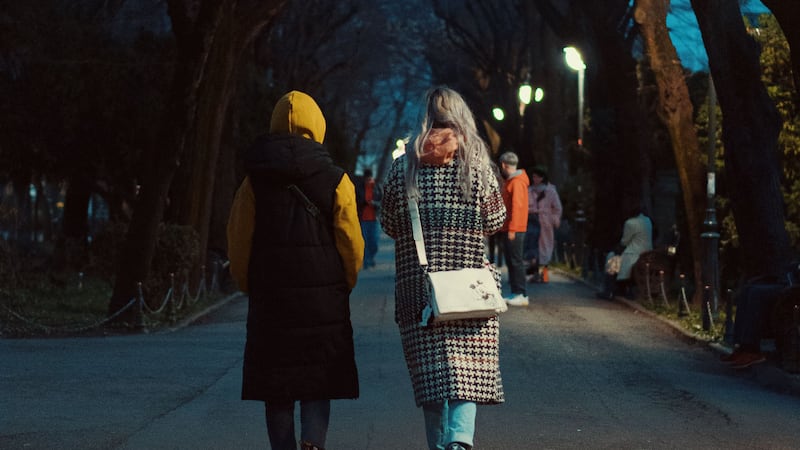
It may come as no surprise that women are less likely than men to feel safe when walking outside after dark, but a recent study has concretized those sentiments into numbers. “Our findings indicate that although a large proportion of the Quebec population reports feeling safe when they’re walking alone in their neighbourhood after dark, so roughly 93 per cent, there are notable differences between men and women,” said Catherine Moreau, a researcher with the Institut national de santé publique du Québec (INSPQ). The study shows that 87 per cent of Quebec women reported feeling safe when walking alone in their neighbourhood after dark, compared to 97 per cent of men. When it comes to using public transit, 64 per cent of women said they felt completely safe, compared to 83 per cent of men. “Women report feeling less safe than men when they’re alone in public spaces after dark, and this is true across all age groups,” said Moreau. “These results are also consistent with those that we observe in the rest of Canada, and when we compare with previous survey cycles, we notice that these differences in proportions between men and women persist over time.” As such, the study finds that women are more likely to “routinely take precautionary measures to feel safer,” whether it be driving, taking a taxi or even staying home to avoid going out after dark. “It’s not every person or woman that can afford these types of measures,” lamented Moreau. “The fact that women often have to put in place these strategies, it can influence how they use and navigate public spaces, and it can negatively impact their health, as well as their mental and general overall quality of life.” She adds that people’s sense of safety didn’t necessarily go hand-in-hand with official crime data. Between 2018 and 2022, men accounted for 60 per cent of victims of crimes committed in public spaces; women made up the remaining 40 per cent. “When we take a closer look at the data, what we find is that men account for a higher proportion of offences that can lead to death, so homicides or attempted murders, whereas women are the primary victims of sexual offences,” said Moreau. “It’s approximately five out of every six sexual assaults and other sexual offences, like sexual contacts or voyeurism, that take place in public spaces that are committed against women.” The researcher says the goal of the study is to implore those in charge to consider women’s experiences when implementing measures to improve access to public spaces. “In order to make them feel safer, more equitable and inclusive,” she said, noting that municipalities, police forces, community services, public health authorities and women’s organizations need to work together. “But also, women’s perspectives themselves in these types of measures that are put into place to address the specific issues that they’re facing.”