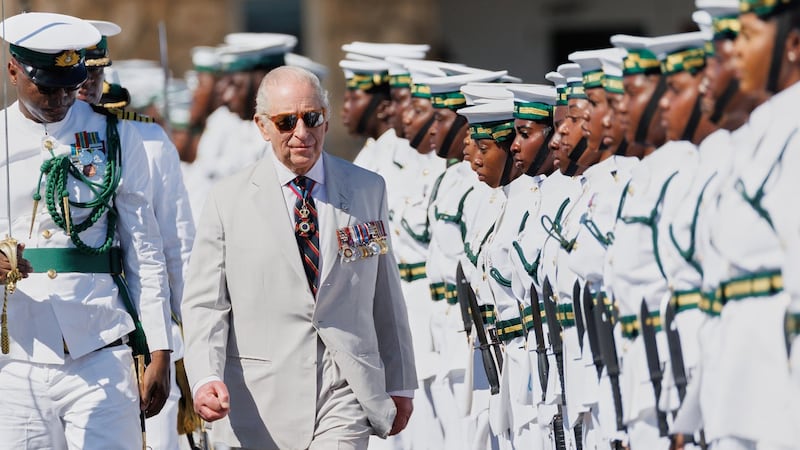
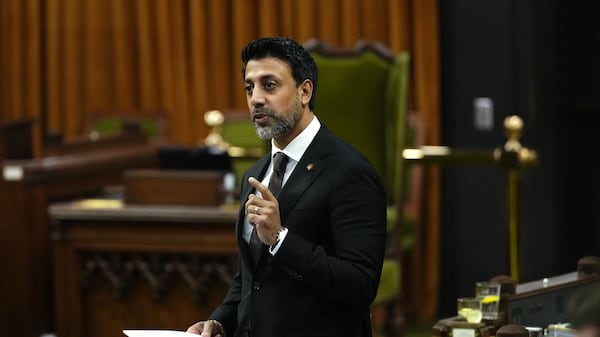
OTTAWA — Following this week’s Canada-EU Summit in Montreal, International Trade Minister Maninder Sidhu insists the gathering will bear fruit. But, on the question of how much so-called associate membership with the bloc could cost Canada, the minister wouldn’t say, insisting instead there’s an “opportunity cost” of not pursuing deeper integration with Europe. Prime Minister Mark Carney hosted European Commission President Ursula von der Leyen and European Council President Antonio Costa this week, with the goal of increasing ties and trade between Canada and the European Union to a level “not seen before.” On Friday, they signed a joint statement and launched an “alliance for the future.” In press conferences, they also said they’d work toward Canada’s eventual “associate membership” in the 27-member bloc, despite significant pushback from EU member states on that term. In an interview on CTV Question Period airing Sunday, host Vassy Kapelos asked Sidhu what concretely associate membership is expected to yield for Canada. Though trade between Canada and Europe has increased since the implementation of the Canada-European Union Comprehensive Economic and Trade Agreement (CETA), according to analysis this week from TD Economics Canadian products currently make up only about one per cent of Europe’s imports. “I think it’s about the opportunities this will create,” Sidhu said. “The European Union is our second-largest export market, $175 billion of two-way trade last year, and so we have room to grow that.” The summit took place on the 10-year anniversary of the CETA being signed. A handful of countries have still not ratified the deal, though it has been provisionally applied. Sidhu added that there is “room to grow” CETA’s utilization rates, and pointed to the defence, energy, mining, and consumer goods sectors as examples. “The summit today was about unlocking some of those opportunities,” he said. When pressed by Kapelos on what tangible results the federal government is hoping to see — whether there’s a set target for increasing Canada’s share of the EU’s market, for example — Sidhu didn’t directly answer. “The prime minister has given me a target to increase non-U.S. exports to the tune of $300 billion, and so the European Union presents ample opportunities,” Sidhu said. “In fact, I think it presents one of the largest opportunities for Canadian businesses that we need to continue building upon, and that’s what the summit was all about.” In a statement Friday, the Conservative critics for international trade and foreign affairs, and the Conservative Quebec lieutenant, criticized the summit as “Liberal theatrics.” They accused the federal government of trying to “distract” Canadians from the cost-of-living crisis and said the summit won’t help Canadians pay their bills. No clear ‘associate member’ cost In the weeks leading up to the summit, debate around how Canada and the EU would define their relationship going forward drew significant attention. Several European nations objected to von der Leyen’s unilateral invitation last month for Canada to become a so-called “associate member.” While they stressed that they support Canada and the bloc growing closer, they don’t support the term “associate member.” Carney, meanwhile, had cautioned against putting too much emphasis on the nomenclature. Despite that, both Carney and von der Leyen used the term in their press conference, with the latter explicitly stating: “Bilaterally we are exploring the idea of an associate member.” When asked by reporters during a press conference on Friday what an associate membership would cost, Carney didn’t directly answer, instead saying: “We don’t view this as paying for something, we view this as coming together.” When pressed by Kapelos to provide an answer and say what kind of cost associate membership would involve, Sidhu also would not directly answer. “There’s an opportunity cost not doing more with Europe,” Sidhu said. “To be honest with you, it’s fast growing.” He again pointed to the defence and energy sectors as examples of potential growth, calling the EU “a market that we cannot ignore.” “So, the opportunity cost is too high to miss in the second-largest market in the world, and we’re leaning in to seize those opportunities,” Sidhu said. The minister insisted the federal government will “be very transparent with Canadians” about anything it buys into and what those costs are expected to yield, but he wasn’t specific about where those talks currently stand, again pointing only to “the opportunities in different sectors.” You can watch International Trade Minister Maninder Sidhu’s full interview on CTV Question Period Sunday at 11 a.m. ET. With files from CTV News’ Brennan MacDonald