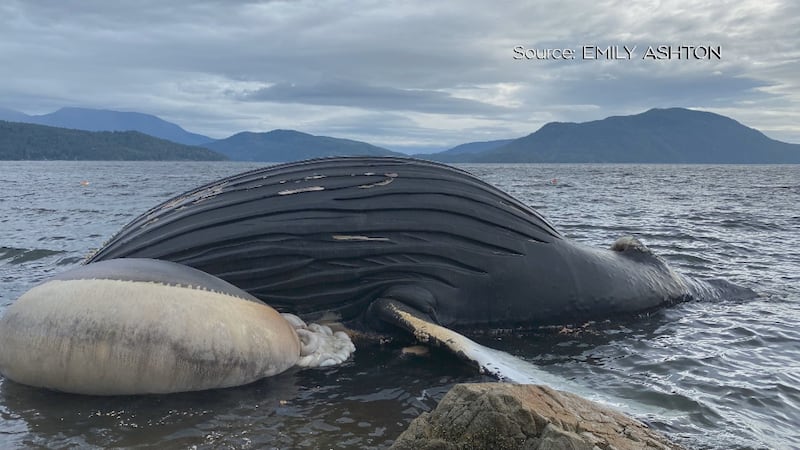
The death of a humpback whale believed to have been struck by a BC Ferries vessel is adding urgency to a new commitment by the company to reduce the impact of its operations on marine life. BC Ferries announced Thursday it is partnering with Fisheries and Oceans Canada and Transport Canada on a plan that aims to cut underwater noise from its vessels by 50 per cent in Southern Resident killer whale critical habitat by 2036, compared with 2019 levels. The announcement comes after a humpback found dead near the Grace Islands was identified as Notcho, an animal believed to have been struck by the Queen of Surrey during a sailing between Horseshoe Bay and Langdale on Oct. 18. The Marine Education and Research Society confirmed the identification on behalf of the Canadian Pacific Humpback Collaboration, using distinctive markings on the whale’s fins. While the new agreement addresses a range of threats to whales, including underwater noise and vessel strikes, the two issues present different challenges for marine conservation. Fisheries and Oceans Canada identify underwater noise as a significant threat to Southern Resident killer whales, noting that it can interfere with their ability to communicate, navigate and use echolocation to locate prey. The endangered whales rely heavily on sound to hunt Chinook salmon, and research has shown vessel noise can reduce their foraging opportunities. Under the agreement, BC Ferries will develop an Underwater Radiated Noise Management Plan. Reaching the 50 per cent reduction target could involve replacing older vessels, retrofitting existing ships and introducing quieter technologies. The company also intends to investigate changes to vessel maintenance and operating practices that could further reduce noise generated by its fleet. The partnership goes beyond sound reduction. BC Ferries will work on an adaptive monitoring and mitigation framework aimed at reducing the risk of vessels striking whales and other cetaceans. “BC Ferries has a responsibility to connect customers and coastal communities while protecting the marine environment we all value,” Brian Anderson, interim president and CEO said in a release. Transport Canada will provide technical expertise on quieter vessel designs, monitoring technologies and operational approaches. Fisheries and Oceans Canada will contribute scientific knowledge about the effects of underwater noise and collisions on at-risk whale populations. The three parties also plan to share research and findings with the marine transportation industry in hopes of encouraging wider adoption of quieter technologies and practices. The agreement builds on existing conservation initiatives, including the Enhancing Cetacean and Habitat Observation Program, known as ECHO, which brings together government and marine industry partners to address the effects of shipping on whales. For whales living in some of B.C.’s busiest marine corridors, the goal is to make the waters they depend on quieter and safer.