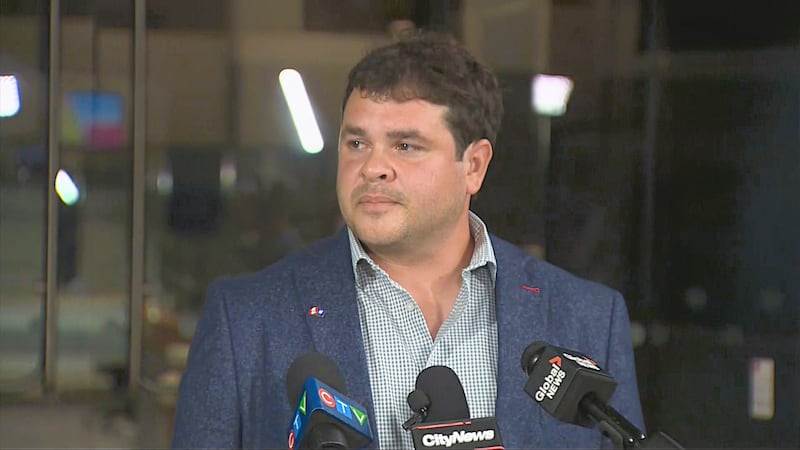
DrinkSmart, a student-led initiative operated by Smart Serve Ontario, has shared survey results showing that financial concerns are the biggest source of post-secondary student stress in northern Ontario. Of the more than 4,000 responses, roughly 48 per cent of northern students in post-secondary education said they never drink. But the survey found that mental health, financial security and other external factors are taking a heavy toll on their campus life. “Financial stress is a top issue just everywhere for students,” said Zach Rychlik from DrinkSmart. “Seventy-four per cent of northern students cite the cost of living as a major stressor.” Students we spoke with at Cambrian College agreed. “I really, really get stressed during exams about like finances, everything,” said Ciera Bellemare Hamelin. “I usually take time off work to prioritize my studies.” However, she recommended students look at bursary and financial aid options, which she has found to be a big help. Money worries can be ‘pressing’ “It has really made an impact on my life, and yeah, it’s helped me manage,” Bellemare Hamelin said. “When you don’t have to really worry about finances, you can really prioritize what you’re studying.” Similarly, Matt DeVuno said financial concerns are “probably the most pressing thing students have on their mind.” “If you don’t have money for school, you’re not going to get school. If you don’t have money for food, you’re not going to eat.” A total of 56 per cent of students said mental health is a top stressor, but only 18 per cent of students said they were accessing supports. Dan Lessard from Cambrian College said students seem to be talking with family or friends rather than health-care professionals about their mental health. “So we try to cover both, actually, on campus in-person support and also online support,” Lessard said. Realities of student life “We’ve got to bridge that gap of self-support and self-care versus helping others and reaching out to find those resources. " I think a lot of students on campuses don’t know where to look and don’t know where to engage,” said Rychlik Rychlik said the 2025 DrinkSmart survey can help students, parents and policymakers better understand the reality of student life. Other findings include the fact 22.5 per cent of students said they have used cannabis in the last six months, while 48 per cent said they never drink alcohol. Rychlik said it’s amazing that students are not drinking as much as previous generations. “But there are other issues that are rising, such as gambling, cannabis use, and other support or mental health issues that are going on,” he said. “The data shows that 6.7 per cent of students have driven after drinking, and 14.9 per cent have been a passenger with an impaired driver.” Eight per cent of students have said they have driven after consuming cannabis, while 13.5 per cent have ridden with a driver who had used cannabis.