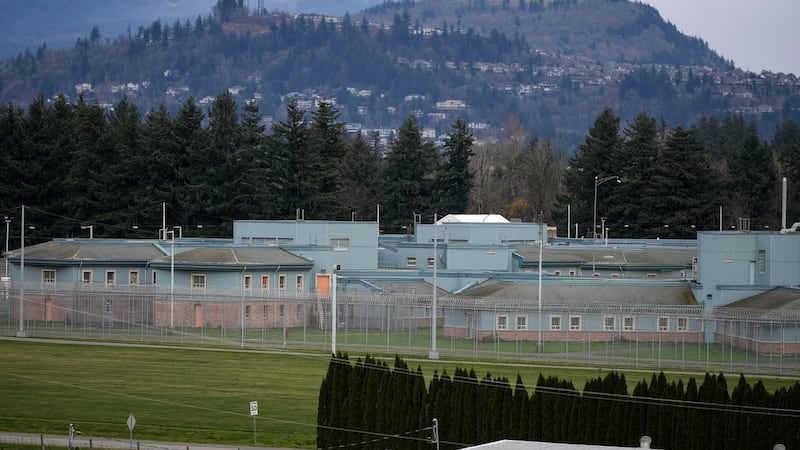
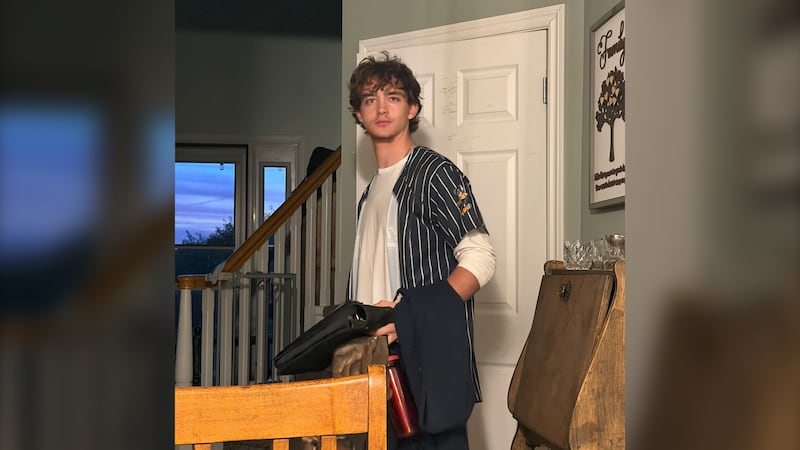
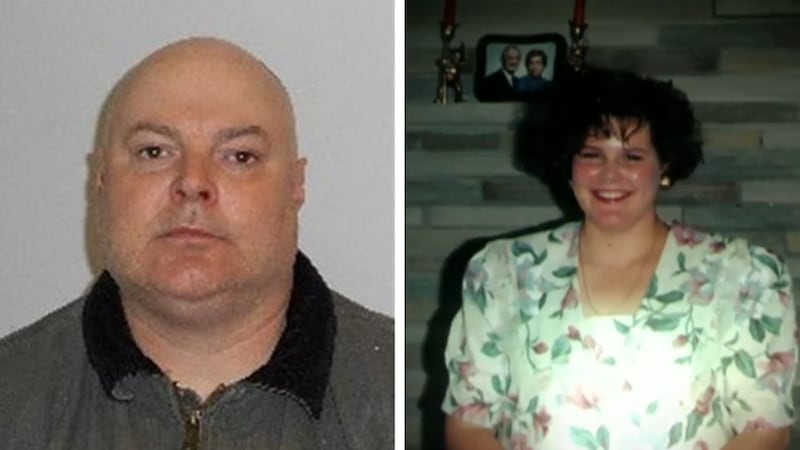
Dr. Isabelle Gaston, whose two children, Olivier, 5, and Anne-Sophie, 3, were brutally killed by their father in 2009, says she doesn’t “feel ready to face this” as Guy Turcotte prepares to appear before the Parole Board of Canada (PCB) to request escorted absences from prison. “I knew this day would come, and I’ve been trying to prepare for it for a long time,” she wrote on social media. “Yet here it is, after what seemed like such a short time and four postponements in one year.” According to an information sheet sent to the media on Tuesday, Turcotte, a former cardiologist, is expected to have a hearing on Sept. 22 to evaluate his request for an Escorted temporary absence (ETA). The parole board’s decision will remain a secret. Correctional Service Canada (CSC) describes ETAs as limited, temporary absences from prison under the supervision of a CSC member or authorized volunteer for a variety of reasons, including medical, family contact, personal development, among others. ETAs can be no longer than 15 days, and before they are granted, the PBC must be satisfied that the offender will not pose a risk to the community and will fulfill specific conditions. After reviewing the request, the parole board can either authorize, deny, postpone or take no action. The PBC normally records all its decisions and reasons in a register to promote transparency and help the public understand the decision-making process. In some cases, decisions can remain confidential if releasing them would jeopardize the safety of a person, reveal sources of confidential information or adversely affect the reintegration of the offender into society. “This decision is not among those accessible through a request for access to the Register of Decisions,” the information sheet stated. The Turcotte case in February 2009 shocked the province. At the end of his second trial, Turcotte was sentenced in 2015 to life imprisonment without the chance of parole for 17 years for stabbing his two children to death following his separation from his wife. At his first trial, the jury found him not criminally responsible due to mental disorder. His case was then brought before the Quebec Court of Appeal, which ordered a new trial that ended with two guilty verdicts. ‘No worse violence’ Despite her personal emotions, Gaston confirmed that she plans to be at Turcotte’s hearing on Sept. 22. “I will read my letter and outline what I believe is essential for us to take a genuine first step toward rehabilitation,” she said, noting that Turcotte’s request has forced her to relive her trauma all over again. “In my view, access to privileges must go hand in hand with the fulfillment of certain fundamental responsibilities.” Gaston said she doubts that a person convicted of such heinous crimes can “recover in such a short time.” “The grief and trauma associated with extremely violent crimes such as murder — especially when legal proceedings drag on — last a lifetime,” she said. “Victims must be able to receive support tailored to their actual needs — just as is provided for the offender.” She added that she continues to suffer “from the silence of many fellow psychiatrists, experts, representatives of the College of Physicians and other stakeholders who have chosen the easy path of silence and have failed to take action to correct and speak out.” “There is no worse violence to endure after my ordeal than the violence inflicted by institutions meant to protect us,” she argued. Gaston said she is counting on Correctional Service Canada to look at the situation clearly and ignore what she called a “media circus that was particularly gruelling for our family — and for society as a whole — without facing any consequences.” “Olivier and Anne-Sophie deserve for this process to be conducted with the utmost rigour,” she insisted. “They deserve it as victims, but also as representatives of our society and all those who find themselves in vulnerable situations.” Gaston pointed out that over the years, she has been “disappointed countless times” but understands that she has “no control over the proceedings or the outcome.” “I nevertheless allow myself to hope that it will be conducted with all the rigour and seriousness that a decision of such importance demands,” she said, stating that the parole board’s secrecy threatens to reopen old wounds “and fuel the misunderstanding of a society that remains deeply scarred.” “I have faced worse — the violence of a judicial system that protects criminals more than it protects victims — and I have read about and learned from these experiences,” she said. “If the law requires that this decision remain confidential, we will unfortunately have to accept it. But that doesn’t stop me from hoping that the process will be rigorous, prudent and worthy of what Olivier and Anne-Sophie deserve.” With files from Noovo Info