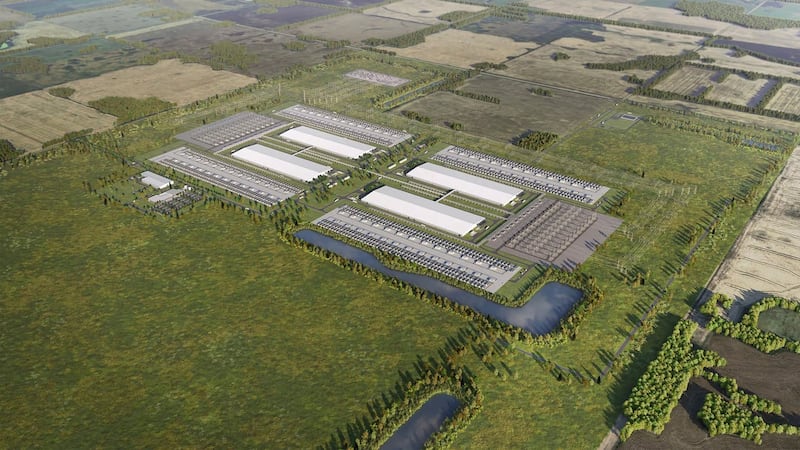
The province has set up an online hub for its information on artificial intelligence (AI) data centres and will be staging a series of town halls over the next month on them. Such data centres are facilities that house computer hardware needed to store and distribute information for programs and apps using AI. The Alberta government has set up a “concierge” service to attract so-called hyperscale developers to set up shop in the province and help companies navigate provincial regulations. Local concerns have been raised about water use, noise, pollution and utility bills as these facilities tend to use large amounts of electricity and water to cool and power computer chips. Data centre developers say some environmental damage can be mitigated with sustainable design choices. The town halls hosted by Minister of Technology and Innovation Nate Glubish are slated for Ponoka on Aug. 19, Sturgeon County on Aug. 20, Grande Prairie on Sept. 11 and an online one on Aug. 27 in which Glubish will be joined by Premier Danielle Smith. The province said in a Friday media release that taxpayers will not pay for AI data centre projects, that “the grid comes first, water use is tightly controlled and Albertans share in the financial upside through municipal tax revenues, royalties and a data centre computing equipment levy.” “Albertans deserve real answers on what these new infrastructure investments mean for them,” Glubish said in the release. “This website puts the facts about power, water and community impact in one place, so people can see for themselves how Alberta is responsibly developing AI data centres on our own terms.” Meta, the tech giant behind Facebook, announced early last month it plans to build a $13-billion AI data centre in Sturgeon County, which borders Edmonton to the north. It expects the facility will go online in the next two to three years, and will be powered by a natural-gas-fired plant that’s due to open by 2030. The data centre is planned to be about 270,000 square metres in size, taking up the equivalent of about 42 per cent of a quarter-section of land or 33 football fields. It would use one gigawatt of electricity each year. By comparison, the city of Edmonton uses 1.4 gigawatts annually. The county’s mayor said it welcomes the development, while the province says it worked with both the county and Meta to identify and mitigate electrical, environmental and economic concerns. A group of people protested the plan to build the Meta data centre last weekend in Morinville, the county seat. The facility is among several popping up across Canada amid the AI boom, and it is the first one Meta is building in Canada. Data centres of similar sizes have been proposed this year and last in other parts of Alberta, including Olds, Rocky View County and Vulcan County. Academics consider Alberta the epicentre of the data centre boom. With files from CTV News Edmonton’s Hannah Kavanagh and The Canadian Press