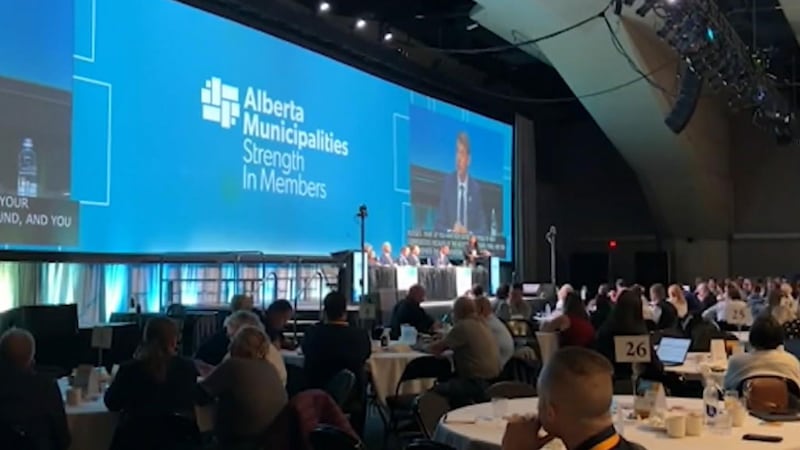
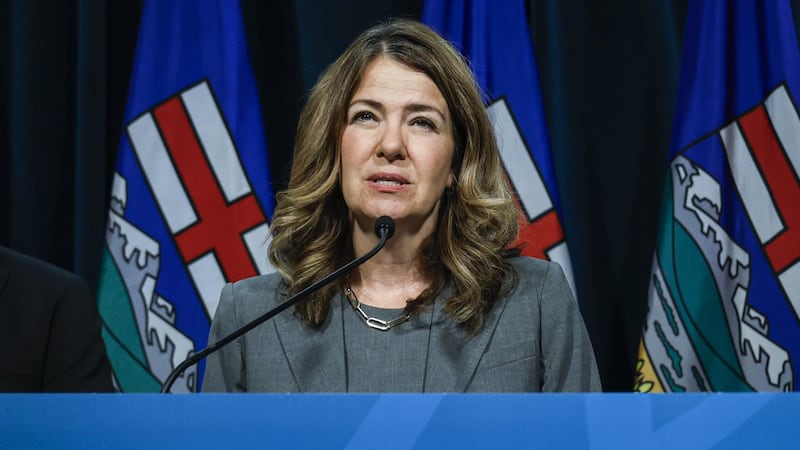
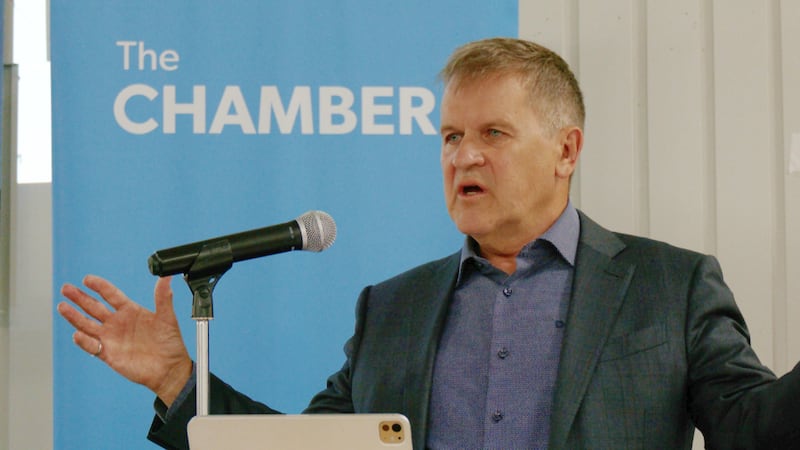
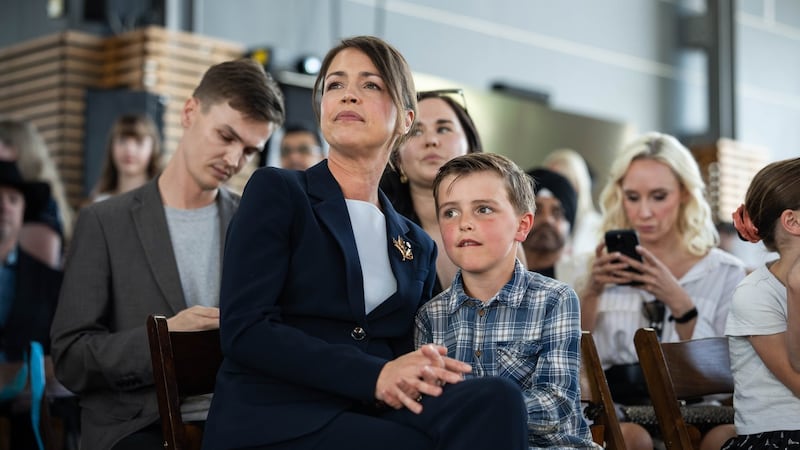
Fourteen United Conservative Party cabinet members met with urban municipal leaders for the last day of the Alberta Municipalities’ (ABmunis) annual convention in Edmonton on Friday. Over the three-day event, provincial officials fielded questions and requests on a wide variety of topics, including health care, public safety and municipal autonomy. A top priority: carving out a slice of the province’s projected surplus – and any future surpluses – to help address municipal infrastructure funding gaps. “One of the best places you can invest is in municipal infrastructure. Our roads and pipes are what allow our economies to keep on going,” ABmunis vice-president Dylan Bressey said on Wednesday. “If we’re taking care of those roads and pipes now, it actually saves us money in the long term.” Citing aging systems, roads and facilities, as well as rising construction costs, ABmunis passed a resolution asking the province to create a framework to put a portion of any surplus toward “critical municipal infrastructure projects.” “With municipalities owning and maintaining almost 60 per cent of Alberta’s public infrastructure, the need for sustainable capital funding is critical,” the resolution said. The resolution argues year-end surpluses create “opportunities for strategic one-time investments in municipal infrastructure without compromising ongoing program funding or fiscal sustainability.” Bressey said ABmunis has proposed an allocation-based formula it would like to see used to efficiently divide and distribute 10 per cent of those extra dollars for infrastructure needs. “Municipalities are dealing with increased costs from tariffs, for example, while they’ve got a capital season that’s coming up pretty quick,” Bressey said. “So we want to get this money out the door … we also want to make sure that every community benefits.” Rural and urban municipalities have been raising concerns over growing infrastructure deficits since Budget 2026 was released in February. In June, Minister of Municipal Affairs Dan Williams announced a council that would explore ways to expand fiscal tools to fund municipal infrastructure. Bressey said at the convention that he was “excited to have more tools in the tool belt,” but claimed the fundamental issue was a lack of dollars. “We’ve seen provincial infrastructure funding for municipalities go down by about 50 per cent over the last 10 years, and it just simply isn’t adequate to keep up with our population growth and our aging roads and pipes,” Bressey said. Edmonton Mayor Andrew Knack added a lack of funds is making it hard for municipalities of all sizes to provide the infrastructure residents need and expect. “We’ve been seeing this consistently across the province that municipalities have had to have larger property tax increases to make up with the drop in provincial infrastructure funding,” Knack said. “Our ask for the provincial government is about … bridge renewal. It’s about new roadways. It’s about making sure we can grow our industrial tax base and getting more land industrial ready.” The Alberta government announced in July that its fiscal outlook had improved by $14 billion, putting it back into the black with a projected $2 million surplus. Smith said during a Q&A at the conference on Wednesday that her preference is to put surplus revenue into the Heritage Fund. “(Or) pay down debt,” Smith added. “But also doing one-time projects. “It’s really difficult for us to increase permanent spending on the basis of one-time revenues, but if you’ve got some proposals around that, I’d be really interested in hearing them.” “There is a surplus spending proposal for how we think municipal infrastructure should be enabled on Mr. Williams’ desk right now from us,” Bressey said in response. CTV News Edmonton reached out to Williams’ office and is awaiting a response. Other suggestions Other local asks to the province over the course of the convention included new rules to enforce the use of privately owned e-scooters and e-bikes. “What we could see from the province is legislation around maximum speed, how those are designed, access to youth who are using these very high-speed devices, and we’re seeing injuries from that,” Knack said. As well as a request from Edmonton Coun. Ashley Salvador that municipalities be given more flexibility to impose higher tax rates to address problem properties. “We want to be able to have enough flexibility so that’s actually going to incentivize these property owners to clean up their properties,” Salvador said. “Sell to someone who will redevelop it or demolish it. Because, quite frankly, these properties are often hazardous in our neighbourhoods.”