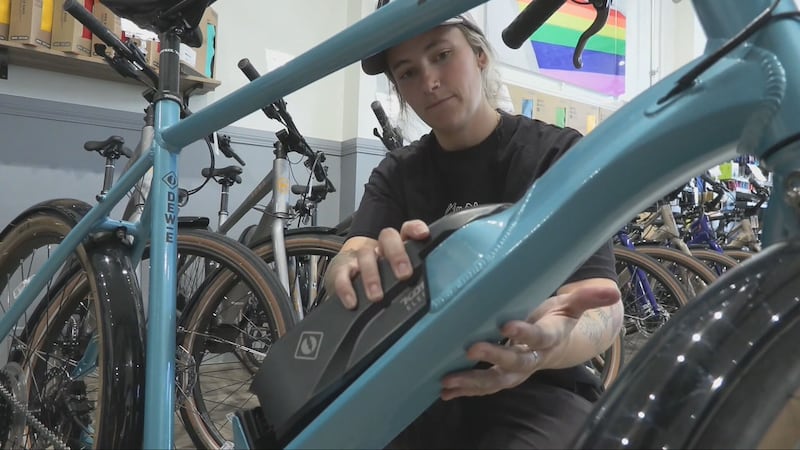
In the days after a fire tore through a Cumberland bike shop, it wasn’t a shock to learn a lithium battery was to blame. Rechargeable lithium-ion batteries can overheat, fail and, in some cases, ignite or explode. Chances are, most people have at least one lithium battery in their home. They’re commonly found in e-bikes, laptops, power tools, toys and other devices. “They’re great for their purpose when they’re working, but when they fail, they fail on a big scale,” said Anne Marie Thomas, director of consumer and industry relations with the Insurance Bureau of Canada. Thomas said people could be held financially responsible if a lithium battery-powered device causes a fire that damages their home or neighbouring units. “If your e-bike, scooter, whatever causes a fire to a building that you’re living in and it causes damage to that building or surrounding units, you could be held responsible for all that damage,” she said. That’s one reason the Insurance Bureau of Canada recommends renters have tenant insurance. “Your insurance company will pay the cost to defend that through your tenant policy,” Thomas said. How to reduce the risk of a lithium battery fire For people worried about the safety of lithium batteries in their homes, experts recommend buying high-quality, certified products and following the manufacturer’s charging and storage instructions. The team at Victoria Electric Bikes recommends e-bike shoppers look for a UL certification mark on the battery or frame. Products with the certification have undergone safety testing by an independent certification organization. Victoria Electric Bikes sales associate Toni Black said her team won’t work on uncertified bikes or batteries. “As much as we want to help those folks who are buying those bikes from other places, we’re just not sure about what is the quality of the battery and the cells that are going into that bike, let alone the components,” Black said. Black also recommends keeping batteries away from extreme heat and cold, avoiding drops or other physical damage, and watching for warning signs such as swelling or excessive heat. She also advises against charging an e-bike battery immediately after a ride. “Because it’s going to be warm,” Black said. “And that could overload the charger and the battery itself.” Black recommends using the charger supplied with the device and never leaving an e-bike battery charging unattended overnight. “Charge them until they’re full. Then you should unplug them,” she said.