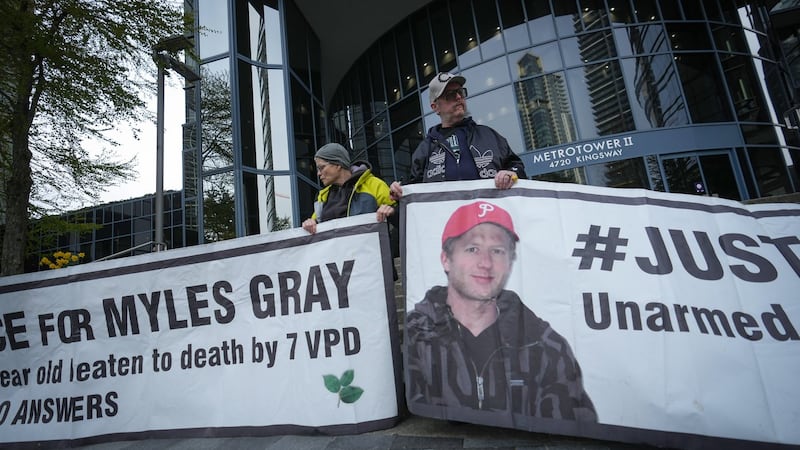
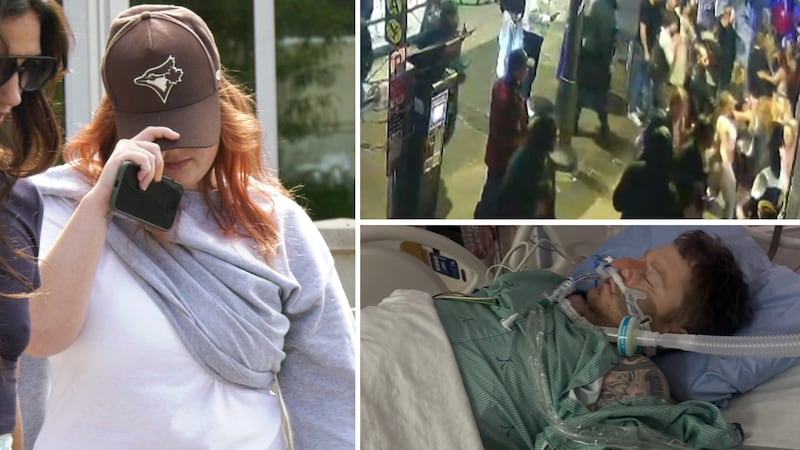
A retired Vancouver police officer who now works as a use-of-force instructor for the department took the stand Thursday at the public hearing into the death of Myles Gray. John Roberts is the first witness in the Office of the Police Complaints Commissioner hearing called by David McKnight, counsel for the Vancouver Police Department’s chief constable. Under questioning from McKnight, he told the hearing the VPD has instituted recommendations made by a jury at a coroner’s inquest into Gray’s death. One of those recommendations was expediting the implementation of body-worn cameras for all patrol officers. Hearing counsel Brock Martland asked Roberts questions about whether officers are trained to take time to step back and reassess certain situations before acting. Roberts said officers should do that in situations where it is possible. “Often officers are facing rapidly unfolding violent situations where you are forced to make split-second decisions regarding the outcome of someone in crisis,” he said. Ian Donaldson, who represents the Gray family at the hearing, asked Roberts if de-escalation is paramount in police interactions. “De-escalation is always the goal, and it is always desirable,” Roberts said. “The goal is to resolve a situation using less force than more force.” Gray died in August of 2015 after a violent altercation with seven VPD officers in a Burnaby backyard, after police were initially called about a man who had sprayed a woman with a garden hose in southeast Vancouver. Gray’s injuries included a crushed larynx, broken eye socket and nose, a dislocated jaw, and ruptured testicles. Just before the first three responding VPD officers entered the yard, one of them radioed dispatch. “He’s gone up into housing here…We’re just going to go up there and challenge,” the officer said in the transmission. Donaldson takes issue with the approach of those officers. “That doesn’t feel like de-escalation. Certainly, they didn’t have a plan,” he said. “Nobody was addressing, or apparently addressing, a person who might have been in crisis.” Gray’s mom, Margie Gray, told CTV News she believes her son may still be alive if the officers had approached the interaction through a mental health lens. At the hearing, Martland walked Roberts through a document titled “Vancouver Police Mental Health Strategy Document.” It offers guidance on things officers should consider when responding to an incident involving a person in mental health crisis. “Evaluate the need for specialized resources, mental health professionals, and/or the assistance of those with specialized training in crisis intervention,” part of the document says. Margie Gray said she has visited the backyard where her son died and that it was a small, confined space where he could have felt trapped and cornered. “There was nowhere for him to go. And then he was swarmed by multiple police officers,” she said. “They didn’t need to rush in on him and pepper spray him twice. They could have just backed off and gave him space.” The public portion of the hearing has now adjourned until mid-October. When it resumes, four of the seven officers involved will give their testimony about what happened in that backyard the day that Gray died.