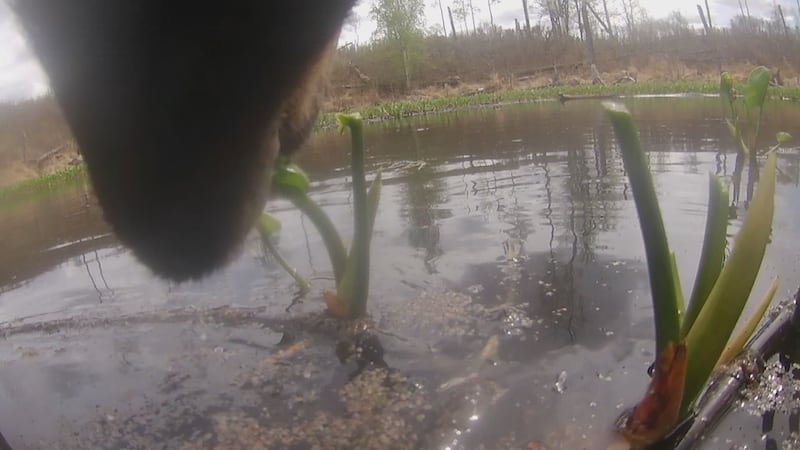
With more and more black bears spotted in Alberta, their daily activities are being monitored in Elk Island National Park to better understand their behaviour as they return to a new landscape. Ecologist and biology instructor at Red Deer Polytechnic Sandra MacDougall is leading research into how the bears are adapting and impacting the Beaver Hills biosphere. “We have bears returning to a landscape that has existed without bears for over 100 years … So we want to understand what that means and how that will restore balance to this landscape,” said MacDougall. Black bears were eradicated from about a third of their habitat across North America due to hunting, but they are returning to altered ecosystems. “I want to understand how they are going to survive around this changed system and what that looks like for the people that live in this area as well,” said MacDougall. Cameras provided by Parks Canada are attached to a dozen bears in the area by collar. The camera takes a short video from the bear’s perspective every hour in the daylight. “I think it’s how delightfully ordinary the bears are as they try to go through their year and meet their energetic needs, get enough food for hibernation and all the rest of that,” MacDougall told CTV News Edmonton. During hyperphagia, as black bears prepare for their winter slumber, they scavenge incessantly for berries and nuts like chokecherries, Saskatoons and beaked hazelnuts while also engaging in something called kleptoparasitism. “One of the things we learned very quickly is that they can’t be bothered eating the beaked hazelnut right from the shrubs,” said MacDougall. “Instead, they go around and dig up these caches the squirrels have carefully made.” MacDougall is also monitoring how frequently black bears predate and how it will impact other wildlife populations. “We found they’re primarily vegetarian, but they do feed on beaver when they can access a beaver that’s away from the water, and that they are predating elk calves within Elk Island Park,” said MacDougall. The research has found black bears to be exceptional seed dispersers that help with forest regeneration. “During hyperphagia, they’ll eat 20 hours a day, and as you can imagine, they’re passing a lot of berries right on through, so they have an incredible role in that way.” Videos from late June through early July have shown black bears ripping open downed dead logs to feed on ant larvae, recycling nutrients back into the forest in doing so. MacDougall’s study will wrap up next year with a few more radio collars going out before then. With files from CTV News Edmonton’s Miriam Valdes-Carletti