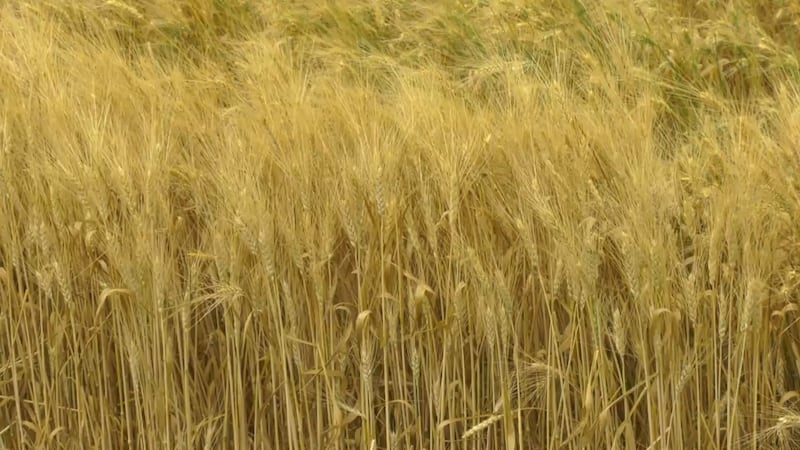
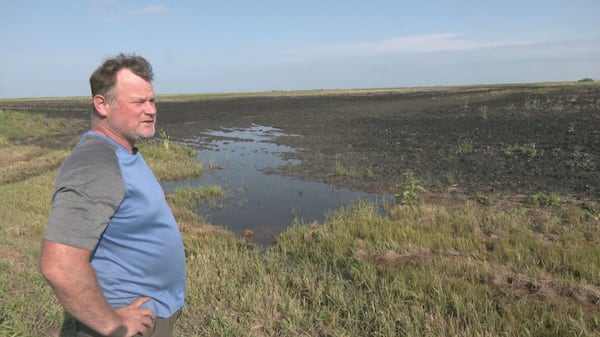
Saskatchewan harvest progress remained slow this past week due to rain and thunderstorms and early-morning humidity across parts of the province. Cool weather and humidity slowed crop development and harvest operations, the province noted in its weekly crop report. Harvest is underway in some areas, mainly early seeded pulse crops and spring and winter cereals, but most crops aren’t ready to combine. “Producers noted that warmer temperatures are needed to help advance crop maturity,” the province noted in the report, saying harvest is about four per cent complete. The Browning area received the most rain at 115 millimetres. The Enniskillen and Coalfields areas were closed behind, with over 100 millimetres each. Showers did result in slight improvements to topsoil moisture conditions across the province. Cropland topsoil moisture is estimated at two per cent surplus, 54 per cent adequate, 37 per cent short and seven per cent very short. The southwest area of the province is in the lead when it comes to harvest progress, at nine per cent complete. The east-central portion of Saskatchewan sits in last at just one per cent. Nearly 44 per cent of fall rye is in the bin, and 33 per cent of winter wheat has been harvested. Triticale is by far the most harvested spring cereal so far at 37 per cent. When it comes to pulses, field peas are 18 per cent complete, with lentils at 13 per cent. Crop damage over the last week was mostly due to dry conditions, disease pressure, and insect pest activity. Gopher activity continues to cause field damage in some areas. Most livestock producers aren’t currently concerned with water quality, with 81 per cent of reporters saying no water shortages are occurring or anticipated. Producers with concerns are asked to contact the Agriculture Knowledge Centre. The province is encouraging producers to take safety precautions during this busy and stressful time. “This includes having fire suppression equipment readily available and exercising caution when working around powerlines,” it noted in the crop report. “The Farm Stress Line is available to provide confidential support to producers, toll-free at 1 800 667-4442.” Drivers are also asked to use caution if they encounter farm machinery and equipment on highways. 2026 harvest remains well below the five-year average of 15 per cent but is ahead of last year at this time, when three per cent of the crop was in the bin. The full report can be found here.