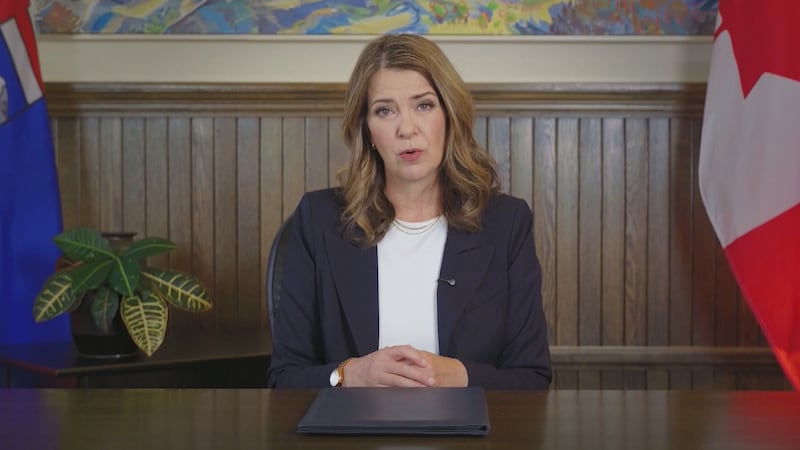
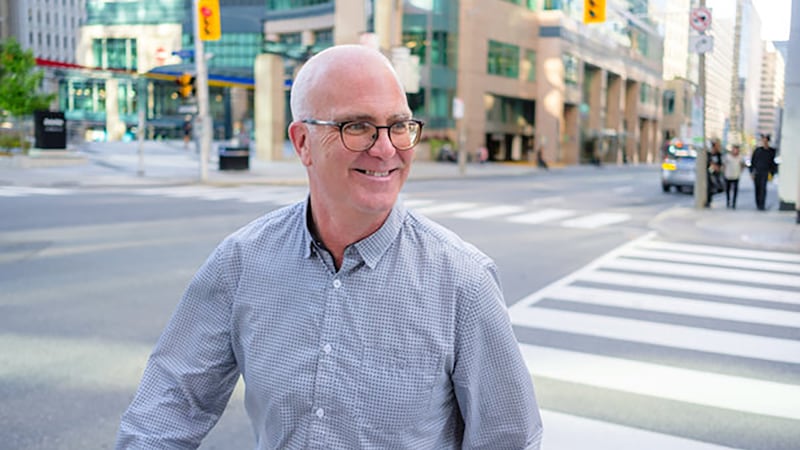
CALGARY - An New Democratic Party byelection victory in a longtime Conservative stronghold in Calgary is raising questions about the United Conservative Party’s support in Alberta’s largest city, as the province heads toward a referendum on separation next month and a general election next year. Kyle Campbell narrowly won Calgary-Shaw on Monday, flipping a riding the United Conservative Party (UCP) carried by more than 3,000 votes in the 2023 provincial election. Speaking to reporters Tuesday, Campbell said he heard from some longtime Conservative voters who had changed their minds. “I certainly heard on multiple occasions people saying, ‘I voted Conservative my whole life and cannot any longer because of separatism,’” Campbell said. “It certainly is feedback that was received somewhat frequently.” Stacey Davis is one of those voters. She was grocery shopping in Calgary-Shaw on Tuesday when she spoke to CTV News. “We have voted Conservative our entire lives. My husband has never voted not Conservative,” Davis said. “And we voted for the first time with the NDP this year.” She pointed specifically to the debate over Alberta separation as one of her concerns. “I think that the contentious attitudes that has been created because of the separatist talk, I think that that’s created a lot of contention,” Davis said. “I think that it has hurt our province in ways that most of us don’t even really understand.” However, Campbell said separation was not typically the leading issue at the doors. “They told me about the pressure of rising costs of living and the bills that seem to be piling up, about their struggle to access health care,” he said. CTV News also spoke with Richard while he was out shopping in the riding Tuesday. He did not want his last name published. Richard said he was unable to vote because of an injured leg, but members of his family supported the UCP. “I would have voted against (the NDP). I wouldn’t have voted for them. That’s for sure,” he said. The result comes just five weeks before Albertans are scheduled to vote in a referendum that includes a question on separation. Mount Royal University political scientist Lori Williams cautioned against reading too much into a single byelection but said the Calgary-Shaw result highlights challenges facing the UCP. “We know just looking at polling that the priorities for Albertans are health care, education and affordability, and that the government has not been performing up to expectations on those files,” Williams said. “We also know that the referendum is unpopular. And if those kinds of sentiments persist, then that makes things more challenging for the UCP government going into the next election.” Premier Danielle Smith congratulated Campbell following the result, saying her government would work constructively with the new MLA to address the needs of Calgary-Shaw. In a statement to CTV News, the UCP attributed said “a split of the Conservative vote along with a low overall turnout were the primary reason for the byelection result.” A Progressive Tory candidate also ran in Calgary-Shaw, raising questions about whether the presence of another party on the right affected the result. Williams said it is impossible to know how those voters would have cast their ballots had the Progressive Tory candidate not been in the race. “We don’t know if they would have held their nose and voted for the UCP, or held their nose and voted for the NDP,” she said. “We’ve seen moderate Conservatives do both in previous elections.” NDP Leader Naheed Nenshi, who appeared alongside Campbell, characterized the victory as evidence his party can compete in parts of Calgary that have historically been a difficult territory for New Democrats. “The Alberta New Democrats had not won a byelection in Alberta since 1999. We had not won a byelection off of a Conservative party since 1966. We have now won four urban byelections in a row,” Nenshi said. Nenshi said the result shows the party should now consider Conservative-held Calgary ridings competitive. “Last night’s vote proves that there’s no safe Calgary seat for the Conservatives. Every single Calgary seat is a target,” he said. Williams said the loss could also make the UCP’s political balancing act more difficult. She said Smith has so far managed to appeal to moderate Conservatives and undecided voters while keeping the party’s more right-wing and separatist supporters within the fold. “But that challenge, I think, got harder,” Williams said. Nenshi also sought to connect the result to the upcoming separation referendum. “At a time when Donald Trump threatens our sovereignty, where he wages a trade war against us, where we talk about 51st state stuff, Albertans want leaders who will stand up for the country,” Nenshi said. The UCP said its government will continue working to grow Alberta’s economy and strengthen social services. “In five weeks, the referendum vote will be over, and we’re confident Albertans will be ready to move forward and fight for a stronger Alberta within a united Canada,” the party said. “It’s more important than ever that Alberta Conservatives remain united to avoid an economically ruinous NDP government.” Williams said there is still considerable time for the political environment to change before Albertans vote in the next provincial election. “That said, the UCP government also has a lot of cash coming in from high oil prices and we’ll have a lot of money to throw around to try to win voters back between now and the next election,” Williams said. “So there’s a lot that can happen between now and then.”