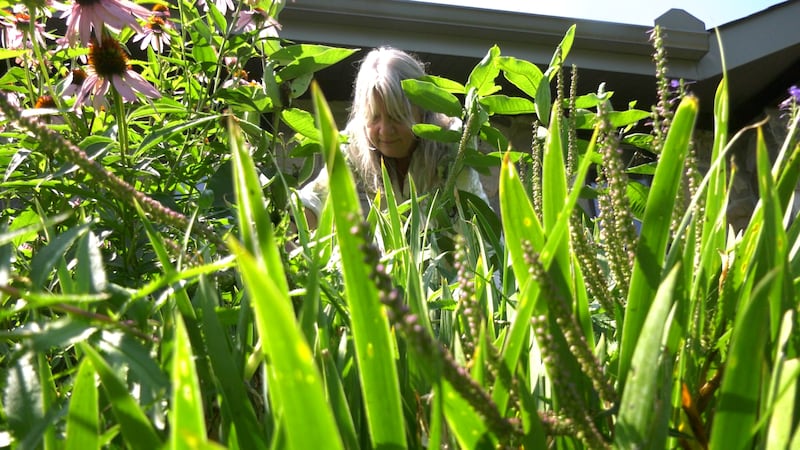
After years of watching monarch butterfly numbers fall, an Ottawa woman says this summer is giving her reason to hope. Wendy Daniels has been counting monarchs for years. She remembers growing up when flashes of orange and black seemed to fill the sky. Then, little by little, she says they were becoming harder to find. Inspired by a documentary more than a decade ago, Daniels began keeping her own annual tally. This year, she has already counted 87 monarchs. “My count is up significantly. I haven’t got over 50 monarchs since the pandemic,” she said. “Monarch butterflies are the epitome of fragility and strength, they’re miraculous and I love them.” Experts say favourable weather conditions in Mexico helped boost monarch numbers this year. But say populations can fluctuate from one season to the next. “This is pretty natural with such a small species making such a large migration,” said James Pagé with the Canadian Wildlife Federation. “Populations from one year to the next will just naturally fluctuate, so being higher doesn’t mean we’re fully out of the woods, but it’s definitely a good sign.” The endangered species has faced long-term pressures from habitat loss, pesticides, herbicides and climate change. Daniels has turned her own garden into a haven for pollinators, planting native flowers and allowing milkweed to grow. The only plant where monarchs lay their eggs and the only food the caterpillars eat. “If there is one thing I can ask people to do, you don’t have to rewild your whole yard, but leave a corner, have some milkweed. There are three kinds of milkweed but the only one that can help in the biggest way, is the traditional one with the pods,” she said. Despite weighing less than a paperclip, monarchs born in the fall will fly nearly 4,000 kilometres to their winter habitat in Mexico. “They need enough fuel to make their way all the way down to Mexico from here in Canada,” said Pagé. “So, they need enough pollen flowers or nectarine flowers for them to feed on. If they don’t have that habitat and those flowers on the route they can’t survive the migration.” No single monarch completes the full round trip. One generation flies south, while it takes several generations of their descendants to return north. “Essentially we’ve got these butterflies that are following essentially the reverse path of their great-great grandparents and coming back to the same areas back here in Canada,” said Pagé. In February, Daniels followed part of that journey, visiting the forest where millions of monarchs spend the winter. “It was magic,” she said. “Nature is amazing if you just stop and wait for it.” This year also marks the 10th Monarch Monitoring Blitz, an international citizen-science effort between Canada, the U.S.A. and Mexico, that asks volunteers to record monarchs at every stage of life, along with the milkweed plants they depend on. Anyone can participate by photographing monarchs, caterpillars, eggs or milkweed and uploading the observations through an app such as iNaturalist. “In addition to creating a pollinator habitat for monarchs, everybody can play a role as a community scientist,” said Pagé. “Scientists can’t be everywhere and so by engaging the general public everywhere across Canada, every person can upload an observation to a platform where we can actually track the number and distribution of monarchs.” For Daniels, every monarch that finds her garden is another one worth counting. “I get so happy every time I see a monarch butterfly because I know the odds are against them,” she said.