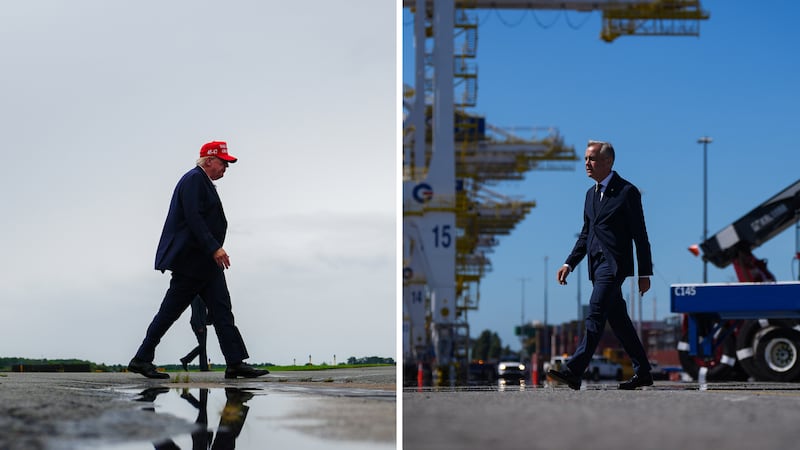
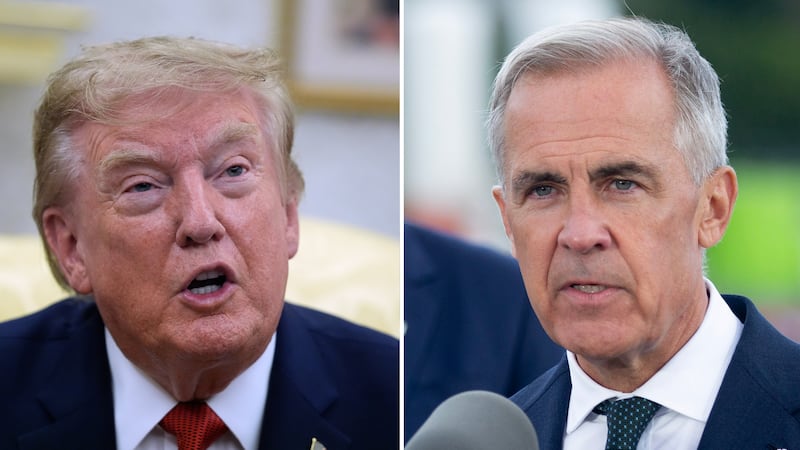
After expressing optimism earlier Friday over the prospect of a trade deal being reached between the U.S. and Canada, Alberta Premier Danielle Smith said late Friday that she was deeply disappointed when they fell apart. Smith posted on social media shortly before midnight as news broke that trade talks had broken off without a deal being reached. “I am deeply disappointed that Canada and the United States have not been able to reach a trade agreement,” Smith posted. “Alberta has always advocated for a tariff free relationship, and will continue to do so. No one benefits from a trade war. “Tariffs and counter-tariffs hurt businesses, workers and families on both sides of the border, while weakening one of the most important economic and security relationships in the world. “My first concern today is for the Albertans and Canadians whose livelihoods are at risk from these new tariffs and counter-tariffs. “I welcome the federal government’s intention to provide relief for those businesses that are impacted. Alberta will continue to advocate for a strong tariff free relationship between Canada and the U.S. and I will be urging the federal government to restart negotiations as soon as possible.” Talks collapse After weeks of intense talks, Canada and the U.S. have failed to strike a last-minute trade deal, meaning new 50 per cent tariffs on $28 billion-worth of Canadian goods are now in effect. Both Canada and the U.S. made the announcement in separate statements late Friday. Prime Minister Mark Carney says Canada intends to retaliate and match “those tariffs dollar for dollar to protect our workers and businesses.” While progress has been made, Carney says it has “not been enough” and trade negotiations will now be suspended, with additional support measures coming for Canadian workers and businesses. The prime minister also adds that “last-minute changes in the U.S. proposed terms were unfair, uneconomic, and called into question the reliability of any deal.” Relatively unscathed Alberta has been relatively unscathed by Trump’s tariffs, which first came down on Canada in February 2025. Smith says 97 per cent of Alberta’s products being exported to the U.S. have done so duty-free. It’s a stark contrast from the effect the levies have had on other Canadian provinces. Ontario has seen massive supply-chain disruptions and major layoffs in its steel and auto industries, while the cost of British Columbia’s lumber has exploded due to severe levies. Smith’s response has been less severe than those of her counterparts. While all provinces pulled U.S. alcohol from the shelves when Trump’s tariffs first landed, Alberta put that liquor back on the shelves three months later. “It’s one of the areas that’s been a source of contention… to not have discriminatory procurement policies,” Smith said. Other provinces: Ontario Premier Doug Ford weighed in on social media, posting “Team Canada needs to stand together more united than ever before. “The prime minister has my full support for a strong response—tariff for tariff, dollar for dollar. “As we fight to protect Canadian sovereignty and economic security, everything needs to be on the table. Ontario is ready to do its part.” B.C. Premier David Eby posted that, “British Columbians will always stand with Canada. Our politeness should never be mistaken for weakness. “We’ll always defend ourselves. We didn’t ask for this, but we’ll keep fighting for as long as it takes.” New Brunswick Premier Susan Holt said, “New Brunswick stands strong and united with Team Canada as we fight for a fair deal. “Some New Brunswick businesses have now been hit with an unjustified tariff that will hurt our economy, workers and families. “New Brunswickers have been fiercely loyal to our local businesses and producers. Now, more than ever, we need to double down on buying local and supporting New Brunswick businesses and workers.” Carney held an hour-long press conference Saturday morning, at which he said, “We are being attacked.” Smith will appear on her radio program Your Province, Your Premier later Saturday morning. This is a developing story that will be updated throughout Saturday. With files from CTV News’ Cassidy McMackon and Stephanie Ha