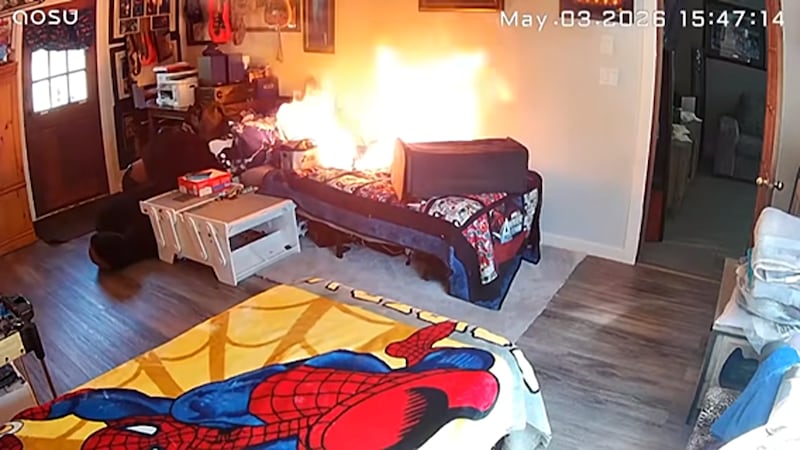
The Calgary Fire Department is warning residents about the growing risk of lithium-ion battery fires after an e-scooter overheated at a northeast home Thursday morning. Fire crews were called to a home on Covecreek Mews N.E., where an e-scooter began smoking inside the garage. One person was treated for smoke inhalation, but there was no fire damage to the home. “(The fire) did originate in the garage,” Calgary Fire Department spokesperson Alex Kwan said. “There’s no fire damage to the home. The smoke is just being cleared out with one of our fans.” The incident comes as firefighters continue to respond to more fires involving lithium-ion batteries. So far this year, the department has responded to 18 residential and commercial fires linked to lithium-ion batteries. That nearly matches the 19 fires reported in all of 2025. Officials say the increase is being driven by a combination of factors, including damaged batteries, improper charging practices and uncertified products entering Canada. “We are certainly seeing that, and every fire service around the world is seeing the exact same thing,” said Calgary fire chief Steve Dongworth. The trend isn’t limited to Calgary. Fire departments in Toronto, Montreal and Vancouver have also reported an increase in fires involving lithium-ion batteries. To reduce the risk, Calgary Fire recommends using the charging cable that comes with a device or a suitable replacement, avoiding overnight charging whenever possible, and charging devices on hard, flat surfaces instead of beds, couches or other soft materials. “Where there’s a concern is if you charge a device on soft material, like a mattress or a couch cushion, or under any blankets,” Kwan said. “The device gets hot enough to light those items on fire.” Doug Goble with Global Seismic Repairs said batteries can also become dangerous if individual cells fail, increasing the risk of overheating, smoke or fire. Fire officials are also calling for stronger regulations around lithium-ion batteries sold in Canada, particularly uncertified products. “We’re pushing for greater regulation both nationally, and we’re having those conversations locally as well,” Dongworth said.