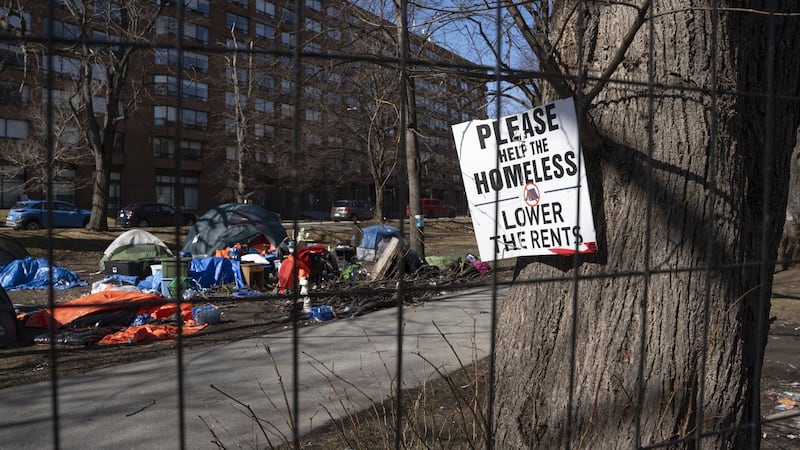
HALIFAX — The Nova Scotia government has made changes to its income assistance regulations to exclude homeless residents living in tents from getting access to enhanced financial support. The government introduced the change after the Nova Scotia’s Court of Appeal ruled on Aug. 5 that people living in tents were eligible for the enhanced support. The ruling overturned a Nova Scotia Supreme Court decision last year that found Bradley Lowe did not meet the eligibility requirements for enhanced income assistance because he lived in a tent. Lowe died in late 2023, but his family asked his lawyer Vince Calderhead to keep up the fight. Calderhead said the provincial government’s change to language in its employment support and income assistance regulations effectively overturns the Nova Scotia Court of Appeal’s decision. “It’s a very cruel policy decision by the province, and I think Nova Scotians will judge them accordingly,” he said in an interview Wednesday. The province could have allowed people living in tents to have a slightly improved standard of living, “or they could rewrite the law, pushing people desperately down into desperate poverty, and they chose the second route,” Calderhead said. The government introduced the regulatory change through an order-in-council filed Tuesday on the recommendation of Susan Corkum-Greek, the minister of opportunities and social development. The amended regulations remove the term “accommodation” and substitute it with “lives in a home.” It also repeals the prior definition for “home” and defines it as a self-contained unit someone rents or owns, a room in a lodging house or a single-occupancy room in a building. The department did not immediately respond to request for comment. Calderhead, a veteran human rights lawyer, estimates there are several hundred Nova Scotians on income assistance who are living in tents during the warmer summer months. The Aug. 5 Lowe decision likely gave these people a “measure of hope and optimism, and maybe an ability to get one step ahead. Now, this decision by the government dashes any of that hope,” Calderhead said. “It just reminds them that the government is largely indifferent to people in that situation,” he added. Lowe was living in an ice-fishing tent in Victoria Park, a green space in downtown Halifax, when he applied for income assistance in 2023, and was approved for an essential rate of $380 per month, the Appeal Court ruling said. With the help of a lawyer, he then asked for the enhanced rate of $974 per month because he had medical proof of a disability and he owned his own accommodation -- his tent -- as per the requirements for the rate. The province’s Department of Community Services, now known as Department of Opportunities and Social Development, denied his request because he was unhoused, the ruling said. The case wound through the assistance appeal board and landed at the Nova Scotia Supreme Court. There, a judge agreed Lowe’s tent disqualified him from the enhanced assistance rate. The Appeal Court ruling earlier this month said that was wrong, and ordered the province and the assistance appeal board to pay Lowe’s estate $3,000. Emma Halpern, executive director of the Elizabeth Fry Society of Mainland Nova Scotia, called the ruling a win that recognizes the humanity of the most vulnerable people in society. “I feel like this is a win for all Canadians in that I really, deeply believe that we are only as healthy as our most vulnerable people,” Halpern said in an interview earlier this month. This report by The Canadian Press was first published Aug. 26, 2026. Lyndsay Armstrong, The Canadian Press