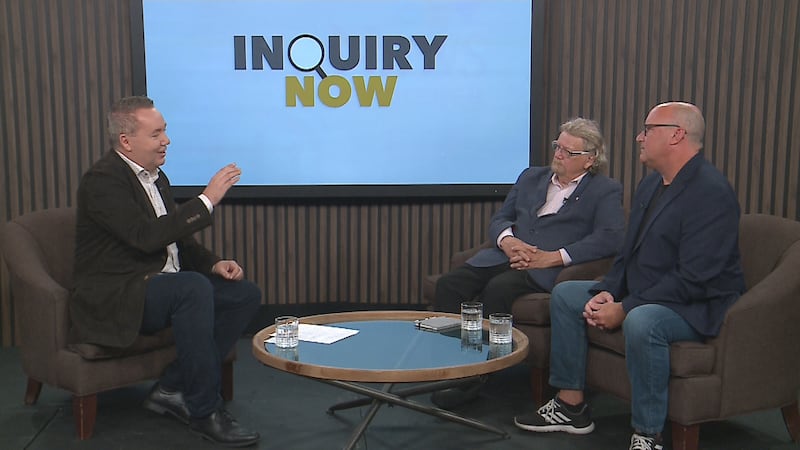
Victoria voters will have several chances to cast their ballots this fall as they choose the city’s next mayor, council, regional representatives and school trustees. General Voting Day is Saturday, Oct. 17, with advance voting and mail-in ballots available for those who want to vote earlier. Beyond the logistics of voting, political scientist David Black says this election could put a greater focus on how municipalities are governed and the role they play in addressing issues that affect residents. Black, an associate professor in the School of Communication and Culture at Royal Roads University, said the 2022 election was largely defined by housing, growth and development. This year, he expects questions around transparency, accountability, political slates and the relationship between municipal governments and the province’s new housing mandates to play a larger role. “As far as we recognize that government can actually do some things about these problems, I think people have realized at the civic level that municipal government isn’t just a utility. It’s actually a political actor that can get certain important things done,” Black said. In Victoria, Black expects public safety and conditions in the downtown core to be among the issues that shape the campaign. “You’ve seen some challenges in the downtown environment, and I speak as a downtown resident myself,” Black said. “And it’s really only government that can actually address and actualize issues.” Across the Capital Regional District, Black said housing and development will remain important, particularly as municipalities make decisions about zoning, development requirements and the pace of growth. He also identified several mayoral races he will be watching, including contests in Saanich, Langford, Sooke and Victoria. In Saanich, he described a competitive three-way race involving two sitting councillors and a candidate backed by the Save Our Saanich slate, which has challenged the municipality’s approach to growth and development. In Langford, former mayor Stew Young is facing a rematch with incumbent Scott Goodmanson, who defeated Young in 2022, ending his 30-year tenure as mayor. Black also pointed to Sooke, where two slates – groups of candidates running together – are competing for control of council, and Victoria, where incumbent Mayor Marianne Alto faces challengers Bruce McGuigan and Mike Harris. Another issue that could draw attention is the non-binding question asking Victoria and Saanich voters whether the two municipalities should amalgamate. Black said the question is part of a longstanding debate over the region’s fragmented municipal structure. The Capital Regional District has 13 municipalities, creating a complicated system of local government. He said amalgamation could potentially create savings by combining services and functions but could also raise questions about local control and whether residents want to take on the advantages and disadvantages of another municipality. Because the question is non-binding, Black does not expect it to be the top issue for most voters. Still, he said it speaks to a larger question about how the region is governed. What’s on the ballot in Victoria Victoria voters will choose one mayor, eight councillors, three Capital Regional District directors and two School District 61 trustees. The ballot will also include a non-binding question asking whether voters support Victoria and Saanich becoming one municipality. To vote, you must be at least 18 years old, a Canadian citizen, a resident of Victoria and have lived in B.C. for at least six months. People who own property in Victoria but live elsewhere in B.C. may also qualify as non-resident property electors. When and where to vote General Voting Day is Oct. 17, with polls open from 8 a.m. to 8 p.m. Eligible voters can cast their ballot at any of the city’s designated voting locations, including schools, community facilities and the Crystal Garden. Five advance voting opportunities are scheduled before election day. Voting will be available at the Victoria Conference Centre on Oct. 7, followed by opportunities at the Crystal Garden on Oct. 13, 14 and 15. An additional advance voting opportunity will be held Oct. 14 at the University of Victoria’s Student Union Building. That location will be open from 10 a.m. to 4 p.m., while the other advance voting locations will be open from 8 a.m. to 8 p.m. Voters can also cast a ballot by mail. Applications must be submitted by 4 p.m. Oct. 9 through the City of Victoria’s election website, by phone or in person at City Hall. Completed mail ballots can be returned by mail, placed in the drop box at City Hall, returned during advance voting or taken to a voting place on election day. Mail ballots must be received by 8 p.m. Oct. 17 to be counted. What to bring Registered voters need one piece of identification to prove their identity. Anyone registering to vote needs two pieces of identification, with at least one showing a signature. The city has a list of acceptable identification available online, along with information about checking whether you are on the voters list. Accessible voting The City of Victoria says all voting locations will be wheelchair accessible, with priority lines available for people who need them. Voters who cannot enter a voting place can cast their ballot from a vehicle or another accessible location outside the building. Accessible voting machines will be available at the Victoria Conference Centre on Oct. 7 and at the Crystal Garden on Oct. 13, 14 and 15, as well as on General Voting Day. Voters who need help marking their ballot can bring another person to assist them. That person will need to sign a declaration. Election officials can also provide assistance. Candidate information and results Voters looking to learn more about the people running for office will be able to use the city’s online Candidate Profile Guide, which is expected to be available by the end of September. Candidates have been given the opportunity to submit a brief profile, photograph and information about their platforms. Black also emphasized the importance of turnout in municipal elections. Turnout in civic elections across B.C. is historically low. In the CRD, it averages around 30 per cent, he said. Municipal elections can be harder for voters to navigate because, outside larger cities, candidates generally do not run under established provincial or federal party labels. But Black said that lack of party structure should not make municipal elections seem less important. “This is where people can actually make a difference, because a few votes can really matter,” he said. Municipal decisions can have an immediate effect on residents’ everyday lives, from streets and policing to waste collection, housing and development. “It’s going to affect your life as soon as you walk out the door of your home,” Black said. Election results will be available online after polls close on Oct. 17. For complete information about registration, voting locations, identification, mail ballots and the election, visit the City of Victoria’s election website.