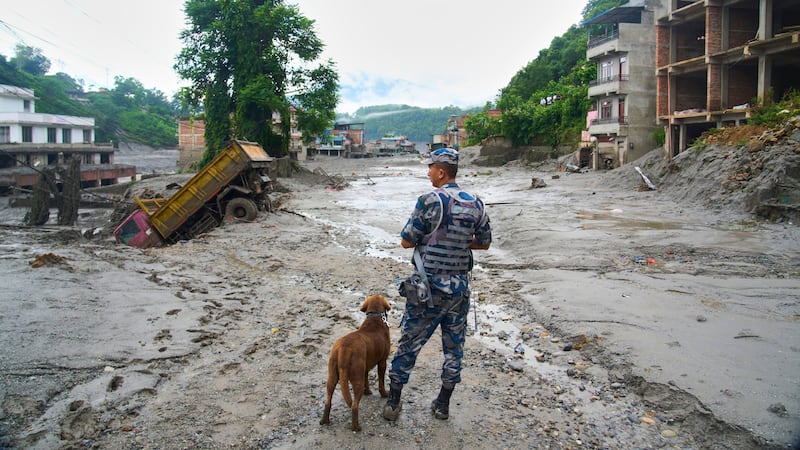
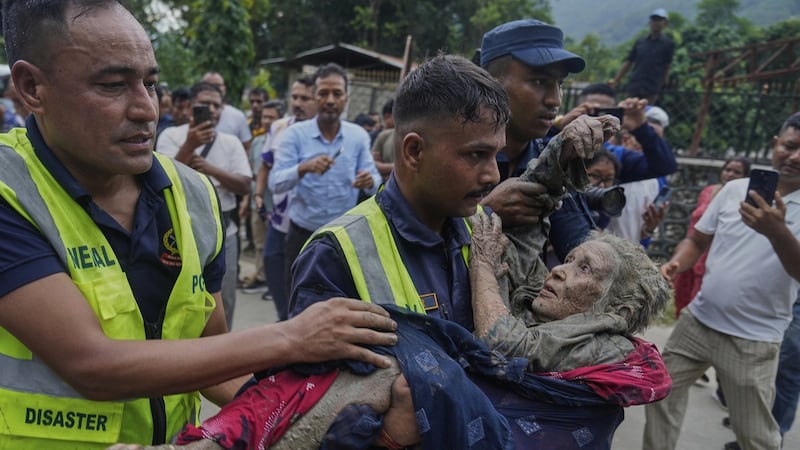
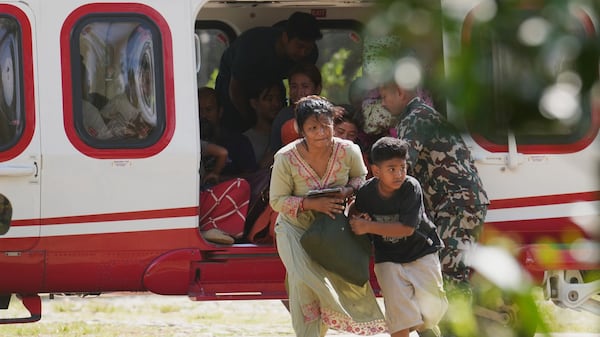
Rija Gautam had recently returned to Canada from Nepal when she started seeing the images. Villages buried in mud. Roads washed away. Communities cut off. “At first I didn’t believe it, I was just in Nepal a month ago,” she said. Rija was born in Nepal and moved to Canada in 2018. During her recent visit, she saw how much of the country had been rebuilt since the devastating earthquake in 2015. Now, she is watching another disaster unfold. More than 350 people have been killed and more than 1,000 remain missing or unaccounted for after catastrophic flash floods and landslides tore through communities along the Nepal-Tibet border. About 30 Canadians are among those whose whereabouts have not been confirmed. The disaster sent a massive surge of water, mud, rock and ice through the mountainous region, destroying villages, roads and bridges and cutting off key routes. The waters are estimated to have raced down the mountainside at more than 65 kilometres per hour, with the force of the event registering seismic activity equivalent to a 5.2-magnitude earthquake. Rija has been checking in with friends whose families live in the affected areas. The people she knows are safe, but she is worried about what comes next for survivors. “I am very concerned about the potential diseases that might come out of the area because of the flooding that happened,” she said. The disaster is being closely followed at Himalayan Flavours restaurant in Saanich B.C. The owner Kiran Gautam, Rija’s father, has family in Nepal about 200 kilometres from the hardest hit area. They are safe. “It is a devastating situation for Nepal,” he said. “Many people have lost their lives.” He says the scale of the destruction is difficult to comprehend. “According to the Nepalese news, one entire village has been wiped out,” Kiran said. Nishan Kharel was born in Nepal and experienced the 2015 earthquake before moving to Canada. He says watching the latest disaster has been difficult. “It’s just devastating, like, just crazy,” Kharel said. The immediate focus is now on finding those who are missing and getting help into communities cut off by the destruction. Rescue crews are using helicopters, drones and search dogs to navigate areas buried under mud and debris. At least 19 bridges and about 40 kilometres of roads have been destroyed, making access to some of the hardest-hit communities particularly difficult. There are also concerns about further flooding after debris blocked parts of the river system, creating the potential for another surge downstream. While the search continues, members of the Nepali community on Vancouver Island are turning their attention to relief. Kiran is directing people to a GoFundMe organized by the Non-Resident Nepali Association of Canada. “Every single penny will matter for Nepali people at this moment,” he said. Rija is also urging people to contribute if they can. “I hope as many people help out as much as possible,” she said. For those gathered at the Nepali restaurant thousands of kilometres away, the disaster is a reminder that distance can never truly separate communities from the people and places they call home. The search and rescue effort for those still missing continues in Nepal. Here in Greater Victoria, the call is now for help to reach the families and communities left facing the devastation. With files from Brendan Strain