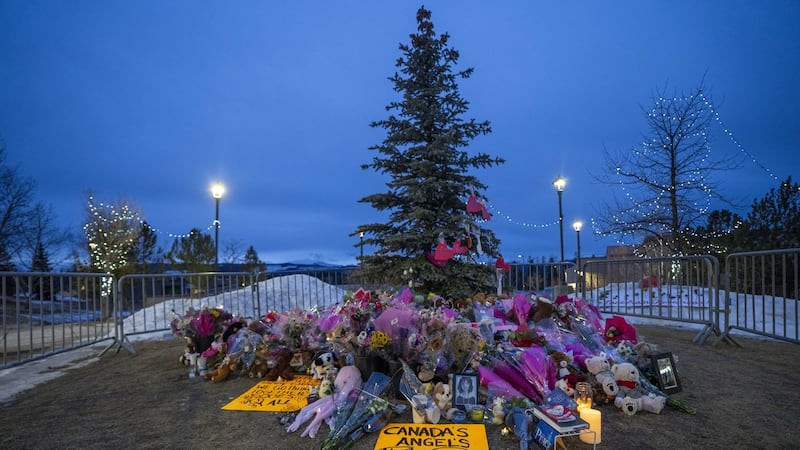
Tech company OpenAI has filed dozens of motions asking a U.S. court to dismiss lawsuits filed by victims and families of the Tumbler Ridge mass shooting. The civil claims were filed in California, where OpenAI is headquartered, and allege the artificial intelligence giant was negligent for not reporting shooter Jesse Van Rootselaar’s concerning chat history to police prior to February’s attack. OpenAI argued the lawsuits should be tried in B.C. because the shooting “implicates British Columbian institutions, law, an public policy, including local law enforcement, mental-health treatment, firearms regulation, and schools.” “British Columbia courts and jurors are best suited to assess these significant issues of British Columbia law and public policy,” reads one of the company’s motions. The province’s interest in understanding the circumstances surrounding the tragedy “far outweighs California’s generalized interest in regulating companies headquartered in the state,” the filing adds. OpenAI also noted the witnesses and records are located in B.C., and said evidence can be more easily compelled if the lawsuits proceed in the province. Vancouver law firm Rice Parsons Leoni and Elliott LLP, which filed dozens of lawsuits in U.S. District Court on behalf of the victims, declined to comment on the motions Friday. Van Rootselaar, 18, killed two family members at her home in the northern B.C. community on Feb. 10, then travelled to the school where she shot six others dead before killing herself. The shooter’s use of OpenAI’s ChatGPT chatbot before the shooting was concerning enough for the account to be banned, the company has admitted. That ban was bypassed when the shooter opened a second account. Addressing the lawsuits earlier this year in a statement, Rice Parsons Leoni and Elliott LLP said: “OpenAI’s own safety team identified the shooter as a credible threat of imminent gun violence eight months before the attack, recommended that the company call the RCMP, and were overruled by OpenAI’s leadership.” None of the allegations against the company have been proven or tested in court. Seven lawsuits were filed against OpenAI in April, followed by another 30 this month. B.C. Premier David Eby blamed the company for the second wave of claims, alleging the tech firm had walked away from mediation. “It underlines why these companies cannot be trusted,” Eby said at the time. “They can’t be trusted to regulate themselves, they can’t be trusted in what they say.” With files from CTV News Vancouver’s Todd Coyne and The Canadian Press