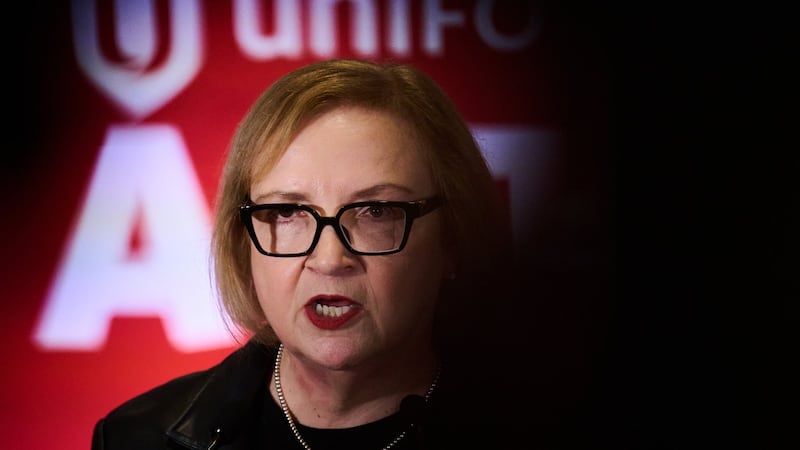
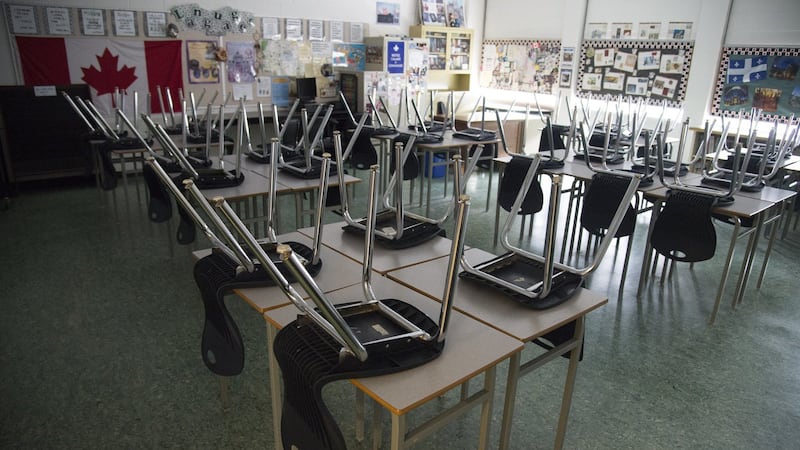
Teachers are reporting a state of unfettered violence in B.C. schools, prompting concerns about long-term mental injuries and a potential exodus from the profession. Greater Victoria teachers say they’re regularly physically assaulted and screamed at by students, sometimes daily. “I have seen myself and my colleagues hit, kicked, bitten, slapped, pinched, punched,” said one teacher, who CTV News is calling Lily. Another teacher, who CTV News is calling Sarah, said she’s been punched in the face and kicked by students. CTV is protecting the identities of the educators in this story because they fear retaliation from their employers. “We see kids throwing chairs at each other (and) at adults. There’s hitting, swearing, threats, everyday objects used as weapons,” said Sarah, who has worked as a classroom and special education teacher. “I talk to my teacher colleagues in town and also across the province and it’s everywhere.” Despite the apparent ubiquity of classroom violence, educators said it’s an overlooked occupational hazard — one the general public is largely unaware of. “A large part is that we have to maintain the confidentiality and dignity of our students and our families that we work with,” Sarah said. Lily echoed that sentiment, saying she worries violence is becoming normalized, as teachers can’t be frank about what’s happening. “If a parent asked me what happened, I have to say, ‘I’m sorry, I can’t discuss what’s happening with another child,’” she said. “You might say, ‘An evacuation occurred in the classroom today; everyone was safe.’ But we can’t say, ‘An evacuation occurred and the room was destroyed with chairs everywhere and bulletin boards ripped down and supplies on the floor.’” In hopes of addressing the issue, the Greater Victoria Teachers’ Association (GVTA) released a report on the matter Wednesday morning. ‘I’m prepared to take that punch’ The GVTA is the union that represents roughly 2,000 educators who work in the Greater Victoria School District or School District 61 (SD61). Its report says the level of violence in schools is unacceptable. Through a freedom of information request, the report’s authors obtained violent incident reports filed by staff from 46 SD61 schools between Sept. 3, 2024 and March 2, 2026. During that time, the GVTA says there were 6,187 reports of student or parent violence against school staff. Union president Carolyn Howe said that amounts to an average of 21 violent incidents against district staff per school day. “We’re talking about students who are extremely dysregulated. They don’t know how to manage and cope with what we sometimes call ‘big feelings,’” said Howe, noting she’s been scratched, bitten and bruised while working as an elementary teacher. “This is very much an early education problem. It starts to resolve as kids get older.” This spring, the teachers’ union surveyed 165 teachers who work in the Greater Victoria School District, which represents eight per cent of its membership. Howe said it’s likely teachers who regularly experience violence were more inclined to complete the survey. The results show 95 per cent of respondents experienced violence in the past year, while 46 per cent said they experience violence more than once a week. SD61 said it’s had a violence prevention program since 2020, which includes reporting mechanisms, risk assessments, and strategies to mitigate risk. More than half of the teachers who responded to their union’s survey said the program isn’t effective. “The Greater Victoria School District offers safety-related training including non-violent crisis intervention training for all staff,” an SD61 spokesperson said in a statement. “Beyond internal training, the district also works collaboratively with community supports and services to ensure our schools are equipped to support every student and family.” Lily said it’s not enough to prevent teachers from leaving the profession, though she doesn’t plan to call it quits any time soon. “My worry for the kids outweighs my worry for myself,” she said. “I’m prepared to take that punch if it means I can regulate a student and calm a student down.” Inclusion done wrong? In the first 20 years of Lily’s career, she said violence was a non-issue. Over the past decade, it’s become routine. Sarah shared a similar timeline, saying once-isolated physical and verbal attacks have become common over the past five to 10 years CTV News obtained data from WorkSafeBC about the number of claims filed by Vancouver Island school staff, where the accident type was violence or force. It shows 513 injury claims were accepted over the past decade. The numbers climbed from 19 accepted claims in 2015 to 64 last year. They peaked in 2024, with 78 claims approved by WorkSafe. Howe said the growing prevalence of violence in schools isn’t because kids are bad, but because the education system is failing to meet their needs. She said it’s an unfortunate and ironic consequence of B.C.’s shift to an inclusive learning model, which moved many students with special needs into mainstream classrooms. “We’ve eliminated a lot of the specialized programming we used to have,” Howe said. “In some ways, it’s a human rights win not to take kids out of a program. But in other ways, not every kid needs the same thing every day.” As a result, the union said teachers are managing classrooms with a significant number of special-needs learners, often without help from an educational assistant. Lily said she’s had classes of 25 students, where up to nine are neurodivergent or have learning disabilities. She said they would thrive with individualized support from specialized educators. “We want inclusion, but we can’t have inclusion without proper supports,” she said. “So, to me, that’s when the violence started.” A school and clinical psychologist said the bumpy transition to an inclusive learning model is one of several factors at play across the country. Dr. Todd Cunningham said mental health problems are on the rise in young people, partly due to stressors linked to their lives online and at home, including the cost of living. “So when students are coming to school stressed, it’s more likely that they’re going to be dysregulated and it’s more likely something is going to set them off within a classroom,” said Cunningham, an associate professor in the University of Toronto’s teaching stream. ‘We don’t have the data’ A representative for the Victoria Confederation of Parent Advisory Councils (VCPAC) said classroom-based violence can’t be adequately addressed if its scope isn’t fully understood. “If our staff are experiencing violence at schools then that means our children aren’t getting the support they need to have a good learning experience,” said VCPAC chair Saloumeh Pourmalek, who is a mother of two. “As a parent, I’m frustrated that we don’t have the data to reflect on as parents to have that discussion.” Pourmalek wants the province to require school districts to track and report the number and nature of violent incidents against staff and students. “I want teachers and staff to know that parents care deeply about what they’re experiencing in schools and how they’re feeling,” she said. “It’s very important for us as community members to stand behind and beside our staff.” Pourmalek and her team are planning on hosting public discussions, so community members can weigh in on possible solutions. In the meantime, the report from the Greater Victoria teachers’ union lists several recommendations for the school district and province. Recommended solutions The GVTA is calling on the district to implement alternatives to regular full-class instruction, which could include small-group and one-on-one instruction. That recommendation is paired with a request to the province to drastically improve the ratio of students to educators, particularly for specialized staff such as educational assistants, inclusive education teachers, and counsellors. Both the province and school district declined CTV’s interview requests. In a statement, BC’s Ministry of Education said it’s committed to inclusive education. It said since 2017, it has dedicated an estimated $1 billion in funding to support students with special needs. “Boards of education decide how best to allocate funding and deliver services within their districts based on the needs of their student population,” a spokesperson wrote. “School boards in B.C. are responsible for local staffing decisions, and, as the employer, are directly responsible for their staff’s safety.” SD61 said on top of its violence-prevention program, it offers mental health support to staff. Still, educators say the problem persists. Lily said she hopes to see improvements by speaking about it publicly. “It’s interesting that the professions that are often underpaid are female-dominated — teachers, nurses, right? And we’re the ones that will be quiet and not speak up,” Lily said. “So now I’m speaking up. I’m afraid, but I’m speaking up because I really need people to listen and understand. We need to take action. We need to increase funding in classrooms.”