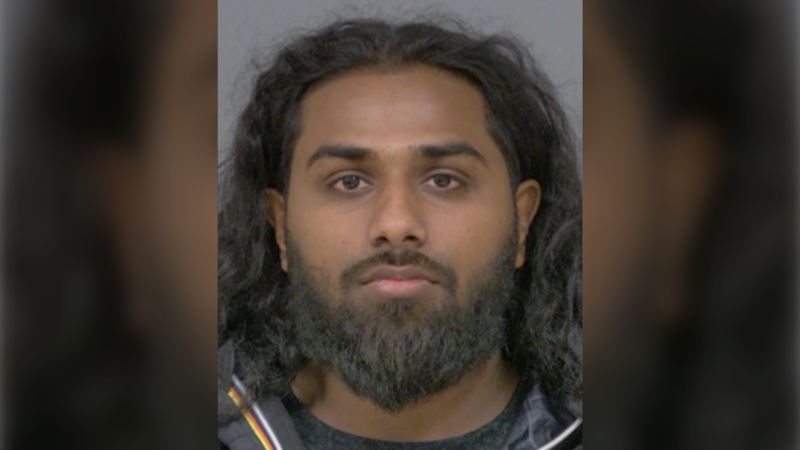
An RCMP officer from B.C.’s Lower Mainland who was charged with threatening his unwitting affair partner after she told his wife about their relationship has been cleared of discreditable conduct. Const. Amarinder Grewal resolved his criminal case through alternative measures, a program that allows an accused to avoid trial under certain circumstances, provided it is their first offence. “You must accept personal responsibility for your behaviour and agree to make amends,” reads an explanation on the B.C. government’s website. Years later, when the RCMP’s internal conduct board considered some version of the allegations against Grewal—which date back to October 2021—it found they were “not established” on a balance of probabilities, in a decision that largely focused on the credibility of his alleged victim. Kevin Harrison, a retired RCMP chief superintendent who presided over the case, found the woman’s evidence was, “for the most part,” not reliable. “The complainant stated repeatedly that she only recalled the traumatic events and had little recollection of other events,” reads Harrison’s August 2025 decision, which was posted online last month. “However, even in the traumatic areas, she was not consistent. She also repeatedly stated that her memory had faded due to the passage of time, she was tired, and that she did not have sufficient time to prepare for her testimony.” The allegations The board heard Grewal and the woman, whose identity is protected by a publication ban, first became friends in early 2020 while they were both working for the Surrey RCMP. The woman was in a civilian role but told Grewal she wanted to become a police officer, and he offered to help. The colleagues then started meeting outside work, going to dinners and walking Grewal’s dog together, according to the decision. “The casual relationship quickly progressed into an intimate relationship, which included a weekend in Whistler and a night at a downtown Vancouver hotel,” Harrison said. The board heard the woman only learned Grewal was married with children the following year, and soon after called his wife to confirm and apologize. Grewal’s wife asked for evidence of his infidelity that the woman was apparently unable to provide—but in October 2021, the wife received a mysterious phone call letting her know her husband would be meeting the woman at the Langley Events Centre. She went to the venue’s parking lot to “catch her husband in the act,” according to the decision. “When he saw her, he panicked and just wanted to extricate himself from the situation and avoid a confrontation,” the document reads. The board heard Grewal, who was off-duty at the time, drove away with the other woman in his pickup truck. He eventually told her to get out because his wife had called his cellphone and he wanted to call her back, according to the decision. His affair partner alleged Grewal later pulled up beside her and began threatening her, saying things like, “I’m going to (expletive) you up,” “You better watch your back from now on,” and “I’m gonna make sure no police agency hires you.” She also claimed the officer suggested he would expose explicit images of her, saying, “Remember, I have those photos, I didn’t delete them.” Grewal then drove away, but tried calling the woman twice shortly after. She testified that she walked into a nearby forest, even though it was getting dark, and waited approximately 15 minutes out of concern that he was still nearby. The woman said she was afraid because “he had previously told her he always had a loaded firearm and kept a knife in his truck,” Harrison wrote. Not established In his testimony, Grewal denied threatening the woman—except with a lawsuit for viewing his medical records, which is how she admittedly discovered he was married with children—and Harrison found the officer to be the more credible witness. “He was forthright and consistent in his evidence,” Harrison said in his decision. “He made admissions about his behaviour and his role in what occurred. He did not portray the complainant in a negative light. Most importantly, his evidence accords with the objective evidence.” In contrast, the retired chief superintendent highlighted a number of inconsistencies in the accuser’s evidence, including differences in the way she recounted details of Grewal’s alleged threats to various people—first to her friends immediately after the October 2021 confrontation, then to police investigators, and later to the conduct board. He also gave several smaller examples that he found undermined the woman’s credibility, including that she couldn’t remember “the posted speed limit” or “how many vehicles” Grewal passed while they were driving away from his wife. “She provided little or no evidence about the weather, the road and traffic conditions or the surrounding area,” Harrison added. By the time of the hearing, the woman was in RCMP cadet training, and didn’t want to testify—in part because she worried she would face professional repercussions. After being forced to do so via summons, she reported suffering an anxiety attack after seeing how many people were present at the hearing. “I appreciate that the day the complainant testified was a long day for her,” Harrison wrote. “It was difficult to ascertain whether her inadequate responses or her refusal to respond to some questions was because she was tired or because she was being obstructive. I believe it was a combination of both tending toward the latter.” He ultimately found her allegations were not established. Harrison also noted that no evidence was presented that Grewal carried a gun off-duty or kept a knife in his pickup, apart from the accuser’s account of their conversations. Different processes The conduct board decision briefly references Grewal’s alternative measures agreement, and that he “accepted responsibility for the acts that formed the basis of the uttering threats offence.” It’s unclear, however, whether the details of that agreement were weighed in Harrison’s findings. A spokesperson for the RCMP told CTV News he could not comment on the specifics of Grewal’s case, or if a member’s participation in the alternative measures program can, generally speaking, be admitted as evidence against them. “How alternative measures agreements are treated depends on a number of factors and the RCMP is not in a position to speculate on how, or if, certain evidence is or would be admissible,” the spokesperson said in an email. Defence attorney Molly Shamess of Stern Shapray Criminal Lawyers reviewed the RCMP’s decision and found the apparent discrepancy in outcomes between Grewal’s criminal case and his conduct board case “notable.” “Two types of proceedings occurred—based on, it sounds like, if not identical at least similar underlying allegations—and they had different results,” Shamess said. Alternative measures are intended to address harms done while allowing an accused to be rehabilitated, such as through mandatory counselling, without adding to an overburdened justice system, the lawyer said. If the terms of the agreement are met, prosecutors withdraw the charges, the accused has no criminal record, and the details of the case are not publicized anywhere. Because the conduct board decision only mentions Grewal’s alternative measures briefly, without sharing any specifics about what behaviour he admitted to and apologized for, Shamess said it would be difficult to draw any conclusions about the RCMP’s process. “It does not strike me, immediately, as though something fundamentally wrong has gone on here,” she added. “That these two outcomes could exist at the same time is interesting, but the details really matter.” The lawyer also pointed out evidence that seems strong on paper doesn’t always hold up during a live cross-examination. Alternative measures agreements are different from guilty pleas as well. If someone resolves a criminal case through alternative measures but fails to fulfill the terms, they can be forced to face trial on the original charges—but their agreement can’t be used against them in court as an admission of guilt, Shamess said. The conduct board is not a court, but a court-like process the RCMP uses to decide whether to discipline members for behaviour that can reflect poorly on the force. Whether alternative measures can be admitted as evidence under those circumstances, Shamess said it doesn’t appear Grewal’s agreement was a significant factor in his case. “It certainly wasn’t the focus of anybody’s argument,” Shamess added. “The hearing seems to have been based on evidence from live witnesses, and it’s very clear from the decision that the adjudicator did not find that the (accuser’s) evidence was something that they could rely on at the end of the day.”