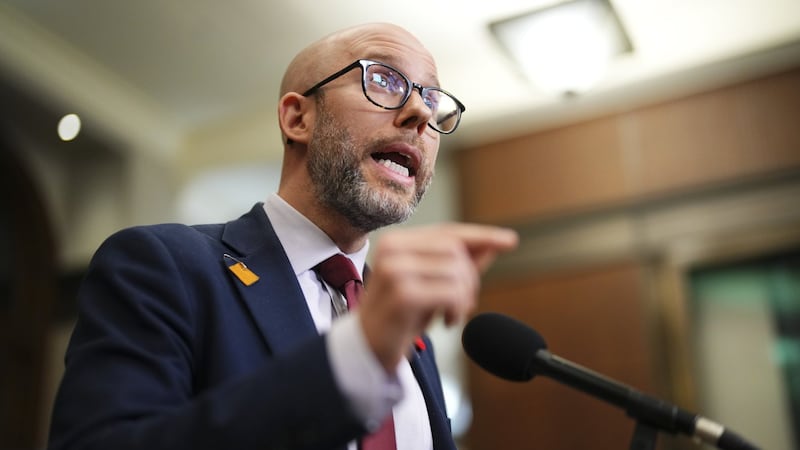
The union representing Saskatoon firefighters is asking for more provincial support as overdoses prove to be a recurring challenge. “Your Saskatoon firefighters have responded to a dramatic increase in emergency calls. Much of that increase is being driven by the overdose crisis, with our members answering more calls than ever before to save lives in our community. The reality is simple, demand for service has grown significantly, but staffing levels, resources and funding have not kept pace,” Jay Protz, president of IFF Local 80, said. Protz said when fire crews respond to a person experiencing an overdose, there are measures in place to connect that person with additional resources. However, it’s an added challenge for crews when that person does not wish to be connected with those services. “It could be very common where they just walk away...for said person when they just walk away after we get them Naloxone. Trying to track that person down and try to give them the resources needed, that’s probably not up to us,” Protz said. He added that while the Saskatoon Fire Department (SFD) will continue helping everyone in need, the rising issue of overdoses in the city has had an impact on the mental health of firefighters. “The comment that we get a lot is, ‘why are we going to the same person over and over? Where are those wraparound supports?’ And again, that’s where we’re asking the province to help us out and step in,” Protz said. According to the City of Saskatoon, there have been nearly 1,800 overdose calls between January 1 and June 5 this year. The SFD told CTV News that while the 656 overdoses in April exceeded the spike seen in March of 2025, the current situation differs from the circumstances in 2025. “In March 2025, firefighters were managing a high volume of patient transports to hospital, prompting a request for support from the Provincial Emergency Operations Centre. At that time, a specific combination of drugs reduced the effectiveness of Naloxone, requiring frequent advanced interventions such as CPR, assisted breathing with oxygen, and multiple doses of Naloxone...the department is closely monitoring the situation in collaboration with health-care partners. At this time, there has been no need to request activation of the Provincial Emergency Operations Centre,” the fire department said. Protz said many SFD members are experiencing burnout and frustration as they strain to meet the demand that the increase in overdoses has put on first responders. “There comes a point where dedication alone cannot compensate for the lack of investment from our province....We are responding to an unprecedented wave of overdose calls that demand more time, more specialized equipment and more emotional toll than ever before. Despite this crushing reality, budgets remain frozen. We’re operating with the same staffing levels and same shrinking resources we had years ago,” Protz said. The provice said under the action plan for mental health and addictions, it is focused on getting more people the addictions treatment they need. “Reducing wait times for addiction services continues to be a priority for the Ministry of Health. This includes adding 500 addiction treatment spaces across the province. To date, 370 of the 500 new spaces are available to Saskatchewan residents,” the province said in a statement. Protz is calling for additional resources, specifically from social services, as firefighters struggle to handle situations that are falling increasingly further outside of their job description. “We didn’t sign up for that part of the job. We signed up to be firefighters. We signed up to help with cardiac arrests, car accidents, those sorts of things. Social work is not our realm of expertise. And yet here we are providing some of that,” Protz said.