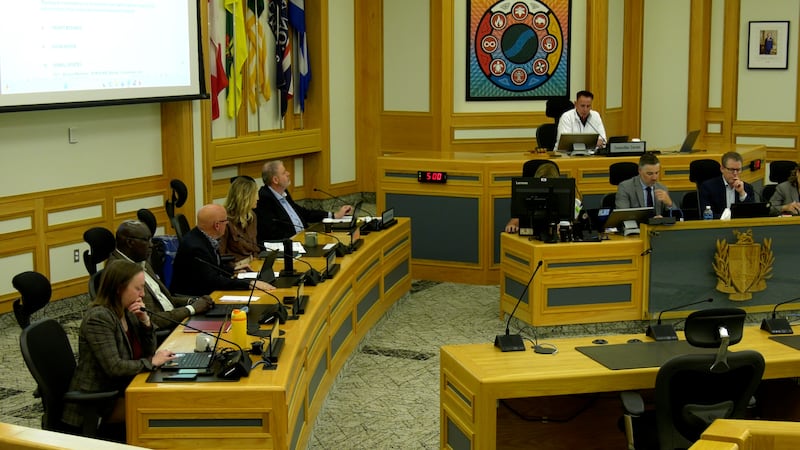
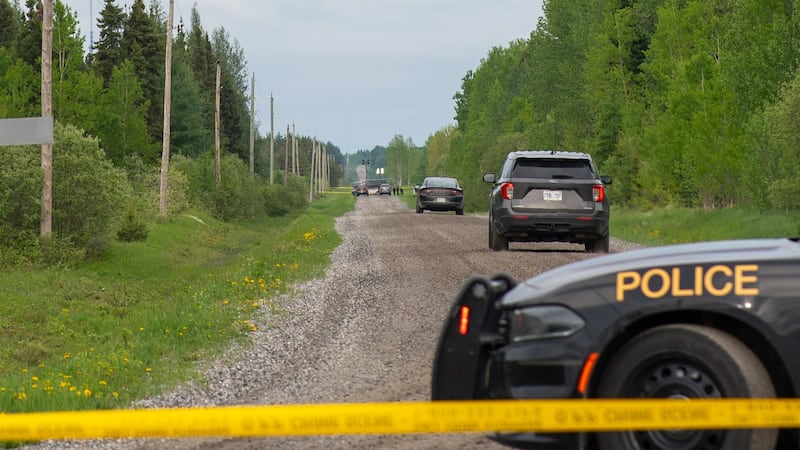
The Saskatchewan Public Safety Agency (SPSA) claims it’s well prepared going into 2026, after a record-breaking fire season last year which saw widespread evacuations and much of the community of Denare Beach destroyed. “Heading into the 2026 season, the agency is more prepared than ever,” SPSA vice president Steve Roberts told reporters Wednesday. “Since last fall, our focus has been on prevention, planning and proactive response measures. Preventative work began in winter and continues today.” According to Roberts, forest thinning and the construction of fire guards have been constant around communities deemed high-risk. The agency also commenced hiring its seasonal staff in December – one month earlier than usual. Personnel who staff the province’s 42 fire detection towers are due to begin their spring training this week, while work continues to ready the agency’s fleet of water bombers and other aircraft. The province currently operates four retardant tankers in addition to six water scooping aircraft. To assist with firefighting efforts at the onset of the fire season, the SPSA has contracted an additional helicopter – bringing the province’s total to eight. The SPSA reported 507 wildfires during the 2025 fire season – burning nearly three million hectares in total. The agency reported that 102 of the fires were larger than 100 hectares. More than 50 communities were forced to evacuate and over 50 municipal volunteer fire departments aided the SPSA in the battles against the numerous blazes. The outlook for the province’s north is an improvement from years previous. “Overall wildfire conditions have improved compared to last year in parts of the north and central regions, the forested parts of the province. However, the south remains relatively the same as the onset of 2025,” Roberts explained, singling out southwest Saskatchewan as being especially dry. Independent review A review of the SPSA’s performance during the 2025 fire season was due to be completed by February – but has been since delayed until late spring. According to Michael Weger, the minister responsible for the SPSA, the inclusion of certain experts was the reason for the delay. “In consultation with MNP, it was determined that some additional time would be required to ensure that the review was comprehensive and also included the involvement of some fire behavior specialists as well,” he explained. “So, they’re just again, taking some extra time to ensure that when we do receive the report, it’s a fully comprehensive report.” Environment Canada meteorologist Danielle Desjardins told CTV that spring conditions in the province are different than last year, and that’s a good thing for wildfire season in the north. “Last year we actually had warm anomalies in northern Saskatchewan,” she explained. “So, warmer temperatures than average, and colder than normal temperatures in the south.” Desjardins said this year, it flipped. “Especially as we headed into March, we saw extremely anomalously cold temperatures in the north and warmer temperatures especially in the southwest,” she said. “So, that leads me to believe that, leading into wildfire season, at least meteorologically, it’s looking like it’s a better situation altogether.” There may be an upside to this week’s spring blizzard. North and central Saskatchewan saw more precipitation than last year, but how quickly the snow melts will determine its full impact on ground moisture. “Snowfall and snowmelt is a good thing in the spring, and a slow snow melt as well so that the soil can absorb the moisture.” RELATED STORIES: