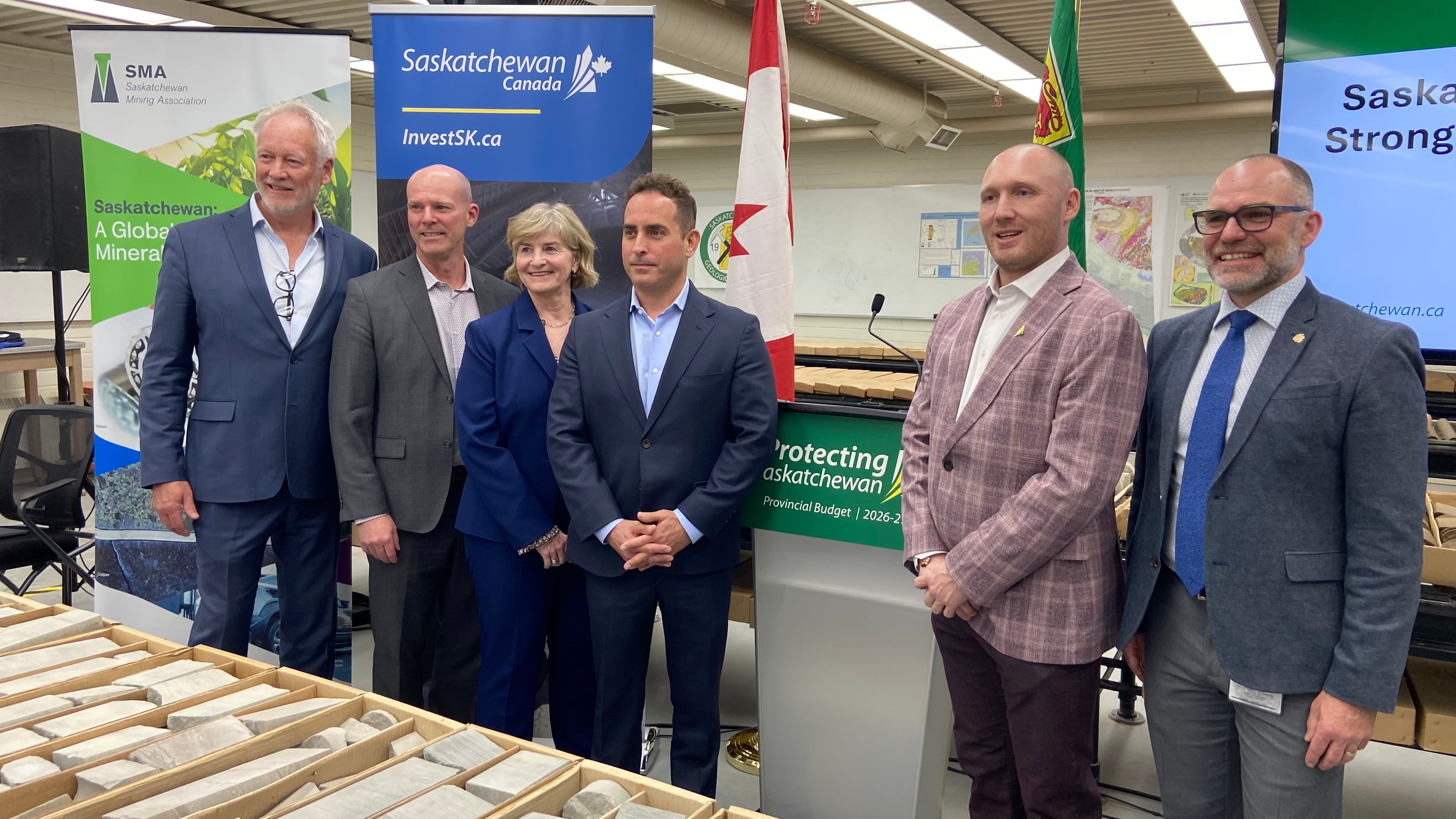
The Government of Saskatchewan is looking to build on a strong 2025 for its mining sector. As part of the 2026-27 budget, the province is extending the Targeted Mineral Exploration Incentive (TMEI) in hopes of spurring further mineral discoveries and exploration this year. In 2025, the sector generated over $12.8 billion in mineral sales, which was a 19 per cent increase compared to 2024, mainly due to gains in the value of potash and uranium sales. A new industry record was set with potash sales rising over 18 per cent to a total of $9.3 billion and uranium sales rising 24 per cent to $3.2 billion. Chris Beaudry, the minister of energy and resources, said both potash and uranium industries have been foundations of the provincial economy for decades, with Saskatchewan residents continuing to reap the benefits the sectors generate each year. “Our strong and reputable industry partners like Mosaic, Cameco, Orano, Nutrien, KNS and BHP have invested tens of billions of dollars in our great province over the last two decades. Those investments help us to ensure economic growth and a better standard of living for all the people of Saskatchewan,” he said. According to the province, 2025 was the second year in a row that uranium sales exceeded the Saskatchewan Growth Plan’s 2030 target. Saskatchewan’s mineral resource development spending totalled $6.7 billion in 2025, which contributed 25 per cent of the national total. In 2026, the province’s exploration spending is expected to grow to $483 million – a 23 per cent increase from 2025, the province said. The TMEI program supported 34 exploration projects in 2025, with companies investing about $70 million. Since launching in 2018, the program supported 131 exploration projects, which garnered about $245 million in project expenditures. In 2026, the province is expected to see new commercial production of copper, zinc, and lithium in 2026, critical minerals that have never been produced in Saskatchewan before. Beaudry said the royalties and taxes the provincial government collects each year from resource development supports the development of priority services in health care, education, and transportation. “The economic growth the sector brings also supports tens of thousands of quality jobs, meaning the people of this province can continue to enjoy a more prosperous way of life,” he said.