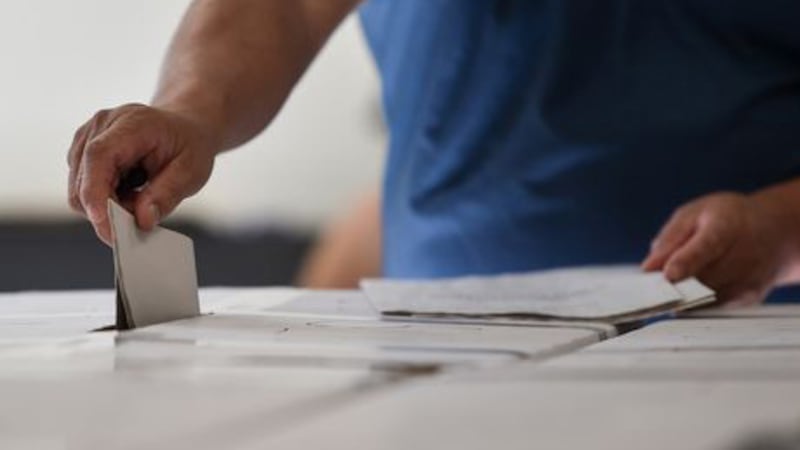
Provincial elections rarely have consequences that cascade across the country. The one British Columbians will decide on in a few weeks, on Oct. 24, is an exception. The snap election called by Premier David Eby has drawn early political analysis about the ethics of calling an election less than two years into an existing majority mandate, and whether voters will be so offended as to punish the government and reward the Conservative alternative. We are two weeks into the campaign and voters have yet to hear anything resembling a coherent thesis from Premier Eby as to why this election is happening. Worse, there has been no coherent framing of a desired mandate that he is seeking that warrants the election. Put it simply: What are you asking voters to give you a mandate to do? In the early going he says he wants voters to express their anger at U.S. President Donald Trump by voting for him. Well, it seems to me that voters have found other ways to express their anger: by buying Canadian goods, not travelling to the United States, venting on social media, and perhaps, most meaningfully, by raising their standards of expectation for political leaders to offer a pathway forward through and beyond the orange fog. This election needs to be a substantive contest on British Columbia and Canada’s future together as partners in making Canada more prosperous and united. Time is still left in the campaign for the public to get what it deserves: accountability for where we are, and a plan for moving forward. B.C. is Canada’s Pacific gateway and its place in Canada’s economic future is becoming more important than ever before as we seek greater economic stability around the world by restabilizing our export profile with better balance away from the United States. This is an existential national need: that British Columbia understand this role within the Canadian family and be part of the solution of finding Canadian prosperity by supporting more world sales of Canadian goods, services, and products through our West Coast opportunities. The Port of Vancouver moves more cargo than Canada’s next five largest ports combined. It connects the country to more than 170 international markets, and over 85 per cent of the cargo it handled in 2025 supported trade beyond the United States. B.C. is crucial to the country’s success Most of that volume didn’t come from British Columbia. Grain, crude oil, and potash are all at record levels of outbound demand. In fact, oil exports through the port have effectively doubled in Trans Mountain’s first full year as a twinned pipeline to the West Coast. With the apparent consensus — at least rhetorically — that this capacity needs to grow in the coming decade, this puts Vancouver and British Columbia as a truly critical part of Canada’s economic profile and makes the province central to Canada’s prosperity and, increasingly, to national unity. The federal government often talks in vague rhetorical terms about diversifying trade, but British Columbia is where the bulk of that diversification really happens More than three-quarters of the port’s international trade is with Indo-Pacific countries, led by China (36 per cent), Japan (13 per cent), and South Korea (9 per cent). That means Prairie farmers, Saskatchewan potash, and Alberta oil all depend on B.C. rail corridors and port terminals to deliver for Canada in an increasingly important export diversification strategy. It’s no accident that many of the major projects announced by the federal government reside in British Columbia. LNG Canada reached 50 export shipments by February of this year. Among the national interest projects referred for fast-tracking by Prime Minister Mark Carney are four in British Columbia: Ksi Lisims LNG, LNG Canada Phase 2, the North Coast Transmission Line, and the Red Chris mine expansion. Roberts Bank Terminal 2 is framed the same way, with proponents saying it will unlock an additional $100 billion a year in West Coast trade capacity. These are all positive developments that have happened in the last 18 months or so, but they are only a drop in the bucket of what needs to happen within British Columbia to reconcile the three big economic challenges that the province faces. A ‘deterioration’ in B.C.’s credit The first challenge in British Columbia is the state of public finances. B.C. has gone from one of Canada’s best-rated borrowers to a province with repeated credit downgrades. The 2026-27 budget projected a record $13.3 billion deficit, and Moody’s downgraded the province in March, citing “a marked deterioration in the province’s credit fundamentals.” S&P’s April downgrade was its fifth consecutive cut to B.C.’s rating, and Morningstar DBRS also lowered B.C.’s rating in April. Moody’s also says B.C. has gone from having one of the lowest debt burdens among its peers to one of the highest. It projects interest costs rising to 6 per cent of revenue this year and 7.9 per cent by 2028-29, up from just 4.7 per cent in 2025-26. The path that British Columbia is on is financially unsustainable, and the practical risk is that debt servicing costs are crowding out everything else, just as the economy slows. Unstable finances are putting everything at risk: health care, education, social services, infrastructure, climate change mitigation, everything. This first challenge of British Columbia’s public finances needs a serious plan. The second great challenge in British Columbia is the status of the forestry sector, which is in the worst shape of any major industry in the province. The Council of Forest Industries (COFI), which is the voice of the B.C. forest sector, counts 15,000 forest jobs lost since 2022 and 21 permanent or indefinite mill closures since 2023. When Canfor announced its plans to close the Northwood pulp mill this summer, it was devastating news for the city of Prince George. As Lana Payne, the national president of Unifor, said, “B.C.’s forestry sector is teetering on the brink.” Peter Lister, the executive director of the Truck Loggers Association, which represents independent timber harvesting contractors and road builders across B.C., says the forest industry is “on the verge of completely shutting down.” On Sept. 4, seven industry groups plus the United Steelworkers jointly asked Premier Eby for a forest crisis action group with real authority to cut costs and get more wood moving within the province to our mills and onward to export markets. For years, the industry has stressed that not everything is a consequence of Donald Trump and trade disputes. They have argued for predictable economic fibre supply and regulatory efficiencies that need to be modernized, and that these are all within British Columbia’s control. The beginning point for dealing with this second great challenge is for the province to decide once and for all whether it wants to have a forest industry going forward. A third great challenge for British Columbia is the investment uncertainty around the Declaration on the Rights of Indigenous Peoples Act (DRIPA) and land title. To say that this matter is complicated and fraught with political and legal complexity would be the ultimate understatement. Much of the debate mixes together two legal issues that are separate: DRIPA itself and Indigenous title litigation. The government’s handling of the issues has made uncertainty within the province worse. Premier Eby first called changes to DRIPA “non-negotiable.” When First Nations called that approach unacceptable, he proposed suspending parts of the new law for up to three years. Premier Eby has since said that pushing for changes in the spring was a mistake, but he still believes changes to the legal uncertainty must be fixed. The province is now left with a broken framework and ongoing legal actions where the Supreme Court of Canada may end up ruling on both DRIPA and title versus the private property question within the next couple of years. Until then, the uncertainty has now been made structural and has hurt investment in B.C. In the Business Council of B.C.’s May survey, 74 per cent of respondents said they are cutting investment plans, and mining investment in B.C. fell from $2.5 billion in 2023 to a projected $2.1 billion in 2025. What this election should be about The politics of this is complicated. Conservatives want DRIPA repealed. The NDP is in a fog of uncertainty. First Nations leaders argue that weakening DRIPA would increase legal risk because it could invite constitutional challenges based on commitments the province has already legislated. Meanwhile, public opinion is split but tilting against the DRIPA narrative. In an Angus Reid poll, 53 per cent of British Columbians said DRIPA goes too far in limiting provincial authority over land and resources. For investors, what matters is that no settled consensus is likely before the Supreme Court of Canada rules. And this legal dynamic will require its own reconciliation efforts in good faith if the province is to draw in the investment and growth necessary to diversify our economy going forward. Public finances, forestry, and investment certainty. These are the three questions this election should be about. They are made-in-B.C. challenges with needed made-in-B.C. solutions. So here is the mandate any leader should ask for: a credible path back to balance, a clear decision on whether this province wants a forest industry, and a workable framework that gives First Nations, investors, and property owners the certainty that partnership requires. Premier Eby called this election. The least he owes British Columbians — and Canadians who are keen to see B.C. get its act together — is an answer. The same goes for those who want to replace him.