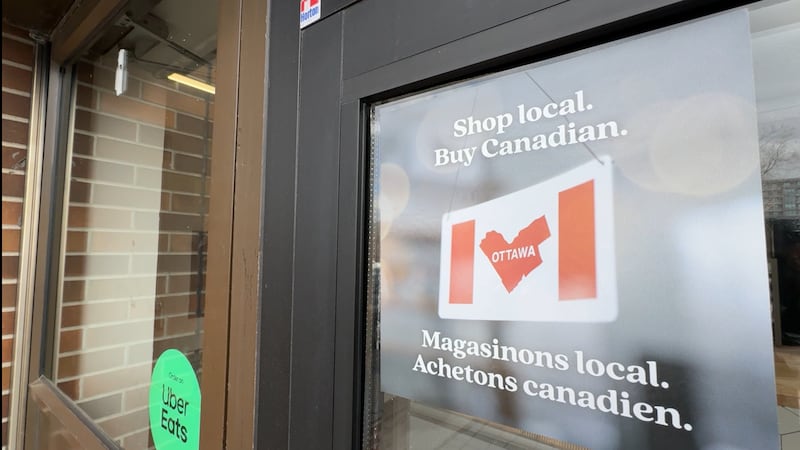
The City of Ottawa will be bringing back its “Shop Local. Buy Canadian” campaign in the coming days as Canada launches counter-tariffs to billions of dollars of American tariffs on Canada. City council directed staff to provide an update on its tariff response last month after U.S. President Donald Trump imposed 50 per cent tariffs on approximately $28 billion of Canadian goods. A memo, sent Tuesday, said the city is taking additional steps to support local businesses. “The city’s Tariff Toolkit has been updated with information and resources to help businesses respond to tariffs and help residents support local and Canadian businesses. The toolkit will continue to be updated as new resources become available,” the memo said. Debbie Stewart, general manager of the Strategic Initiatives Department, said the city’s “Shop Local. Buy Canadian” campaign will also relaunch within the next 10 days to encourage residents to support Ottawa businesses and Canadian products, including agricultural products to strengthen the local food system. “The campaign will include window clings, digital and out-of-home advertising and social media,” Stewart said. Last year, in the months after Trump’s swearing in, the city first launched the “Shop Local. Buy Canadian” campaign in response to the first round of tariffs imposed by the U.S. president. According to Stewart, the city has already taken measures to help local businesses, including reducing industrial property taxes and requiring three quotes—one of which must be from an Ottawa vendor—on purchases between $25,000 and $125,000. “The city has also aligned its procurement practices with provincial initiatives, including the Buy Ontario Act, and introduced new solicitation language requiring consideration of Canadian content and non-tariffed alternatives. Additional measures include monitoring tariff-sensitive contracts, introducing supply-chain transparency and encouraging vendors to identify alternative sources of supply that can reduce tariff exposure,” Stewart said. Other items Stewart said the city is working on include appointing a dedicated economic development officer as a single point of contact for businesses affected by tariffs and continuing to engage with small and medium-sized businesses to determine impacts and needs. The city is also looking at possibly holding trade shows or information sessions for local businesses to match suppliers with city contractors and help businesses understand how to work with the city, including how to identify and successfully respond to competitive solicitations. “Staff will continue to engage with the business community, including small and medium-sized enterprises and the agriculture sector, to promote these enhanced supports and resources and to assess the impacts of tariffs on Ottawa businesses and identify emerging needs,” said Stewart. Partners such as Invest Ottawa, Ottawa Tourism, the Ottawa Film Office, and the Ottawa Board of Trade are also contributing to business advocacy and engagement, market diversification and investment attraction to bolster the local economy. “Staff will also pursue opportunities for greater regional collaboration through the new Ottawa-Gatineau Economic Cooperation Agreement, including initiatives to reduce interprovincial barriers and facilitate the movement of goods, talent and investment across the National Capital Region.” According to Statistics Canada, Ottawa’s unemployment rate to 7.4 per cent in August—largely before tariffs were implemented—up from 7.0 per cent in July. Prime Minister Mark Carney officially launched counter-tariffs on the U.S. on Tuesday. Speaking to the nation, he warned of tough times ahead, as the country pivots away from the U.S. economy.