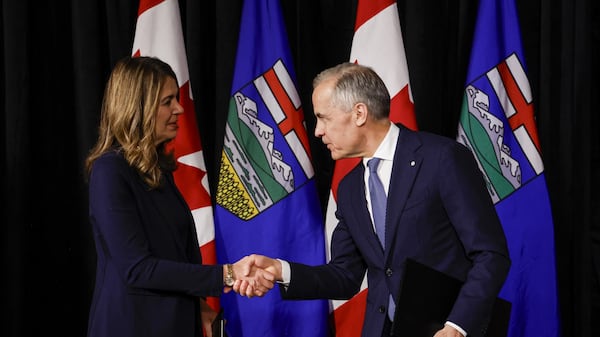
The economic impact of heightened U.S. tariffs is already being felt in one northern Ontario city as steel tariffs had previously been doubled. Now, other goods are seeing tariff hikes after former U.S. President Donald Trump followed through on his threat to impose steeper trade penalties on countries that failed to reach a new agreement with the U.S. by his deadline. The new 35 per cent tariff applies to all Canadian-made goods non-compliant with the current U.S.-Canada-Mexico Trade Agreement (USMCA). Canadian Prime Minister Mark Carney responded to the new levies Friday in a statement, expressing disappointment while reaffirming Canada’s commitment to the trade pact. In Sault Ste. Marie, while local officials are expressing frustration over the increased costs – not everyone views the lack of a deal as entirely negative. “I think the only thing worse than not having a deal would be having a bad deal,” said Sault Ste. Marie Mayor Matthew Shoemaker. Jason Naccarato, an executive director for the Sault Ste. Marie Chamber of Commerce, echoed concerns about unpredictability. “To be honest with you, even if a deal was signed last night or today, who’s to say what we wake up to next week,” he said. Local steel industry at the forefront Mayor Shoemaker emphasized that while securing a trade agreement is urgent, it must not come at the expense of local industry. “We need a deal that’s going to, from Sault Ste. Marie’s perspective, reduce the tariffs on steel and aluminum, hopefully to zero. But at the very least to a level that the steel plant says makes them economically viable,” said Shoemaker. Algoma Steel, a cornerstone of the local economy, reported second-quarter losses exceeding $100 million. In a statement to CTV News, CEO Michael Garcia expressed confidence in federal support. Economic anxiety grows in border city The additional tariff hike exacerbates financial pressures in Sault Ste. Marie, where businesses and consumers are bracing for further instability. “It brings more uncertainty. It crushes consumer confidence,” Naccarato said. “And just puts a lot more anxiety into the economy as a whole. With that being said, people withhold spending, especially discretionary spending. There’s more nervousness around businesses, whether they’re looking to expand or get loans.” Shoemaker stressed that federal intervention is critical not only for Algoma Steel’s survival but also for sustaining the city’s recent growth and preventing population decline. As negotiations remain unresolved, Sault Ste. Marie waits anxiously for a resolution that hopefully balances economic viability with long-term stability.