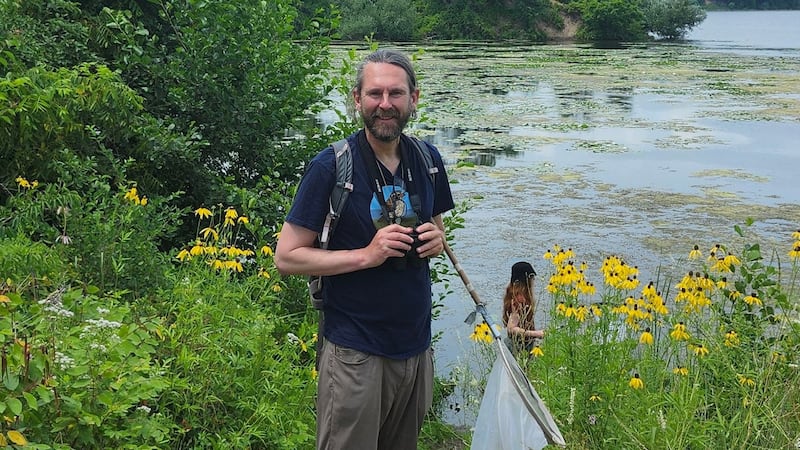
La Tourbiere-du-Bordelais is a popular spot in St-Lazare for morning joggers and dog walkers. While it might first appear like other leafy parks in the city, below the cedar boardwalk lies 80 centimetres of peat. “It’s a place that took 8,000 years to be created to what it is today,” said St-Lazare Mayor Genevieve Lachance. The 12-hectare peatland only came into St-Lazare’s possession 20 years ago. Mayor Lachance said it was a land swap deal with a developer, and with help from a Hydro-Québec grant they were able to create an educative and recreative space for the public to experience this rare wetland. But now, she said, it is drying up. “Both draining from development over the years and also climate change is a reason why it’s dry,” she said. “There’s also the human impact from people just walking through and bringing invasive plants and animals.” Aerial photos show the degradation of the wetland has occurred over decades, but Clara Galan, the city’s Environmental Project Manager, said much of the damage is happening below ground. “Fens are fed by mineral-rich groundwater as well as by precipitation, which is what distinguishes it from bogs,” said Galan. Fens improve the quality of the water, are useful for flood control, store carbon, and are home to rare and endangered species. While lack of water is one problem, the other is invasive species, according to Galan. “We see red maples, white pines, and gray birches — species that are not typical for this kind of environment,” she said. What’s worse are the common reeds, and exotic invasive species, that have started to populate the fen. “They are very difficult to combat,” she said. “It is crucial to act as quickly as possible to try and dislodge them.” St-Lazare has been working with the conservation group Ducks Unlimited to come up with a plan to save the wetland, which they estimate will cost close to $2.7 million. They have applied for funding from a wetland fund set up by the province. “We know that at one point it’s going to be too late to save it so we want to be sure that we catch it in time so we can bring back the ecological value that we’ve had over the years,” said Lachance. They are also educating residents about the value of the site and how to protect it, including keeping dogs on leashes. The restoration is expected to take several years.