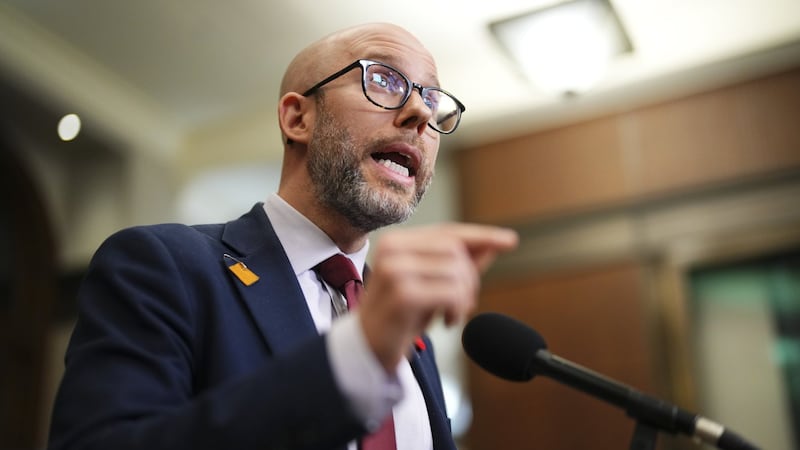
Some daycare managers say they’re worried about Quebec’s proposed ban on religious symbols and the impact it will have on their hiring abilities and the quality of care. On Thursday, Secularism Minister Jean-François Roberge confirmed the provincial government will table legislation to ban daycare workers from wearing the symbols in order to act in the best interest of children. But Sabine Tutellier-de Peyrelongue, who oversees two early childhood centres in downtown Montreal, says five of her employees who wear religious symbols are feeling increasingly left out and anxious about what will come next. “This is shaking their confidence … making them feel they no longer belong, all because of what they wear,” said Tutellier-de Peyrelongue, executive director of CPE du Centre-Ville. Her priority is quality care for children but she worries that will suffer if the government’s plan pushes experienced educators away. “Hiring is already hard,” she says. “This will make it even tougher — and could deter people from pursuing a career in the sector.” In a statement to CTV News, the association representing public daycares said there’s little evidence religious symbols influence children. “We have recently concluded a significant event (Le Grand rendez-vous de la petite enfance) that brought together hundreds of professionals, researchers and partners from the early childhood sector. Over the course of these three days, participants expressed a strong commitment to discussing numerous priorities and challenges facing the network; however, the question of prohibiting religious symbols was not identified as one of them," the association said. It adds: “It is clear and well documented that low-quality early childhood services have a negative effect on young children.” For Shaheen Ashraf, who’s been in Quebec for nearly 50 years, the message to Muslim women is crushing. “If I wasn’t old, I swear I would leave this province because every day I’m made to feel that I’m not part of this society,” said Ashraf, board member of the Canadian Council of Muslim Women. Ashraf, who is Muslim and wears a hijab, argues the measure isn’t about secularism, but about imposing a set of beliefs. “It’s their values, it’s their ideals that they are imposing on us so that’s not secularism to me,” Ashraf said. The Federation of Women of Quebec agrees, accusing the government of using secularism as a tool to limit women’s freedom. “It’s the state deciding which version of womanhood is acceptable and which isn’t ... this isn’t about protecting women, it’s about controlling them, especially those who are racialized, immigrant or visibly Muslim,” said Vé Mikaelian, the federation’s mobilization coordinator. Minister Roberge’s office declined CTV News’ request for an interview. On X, Roberge wrote: “Our children have the right to secular public services — we’ll make no compromise on our values." The government has promised a grandfather clause for current workers who wear religious symbols, but for some critics the damage, they say, is already done.