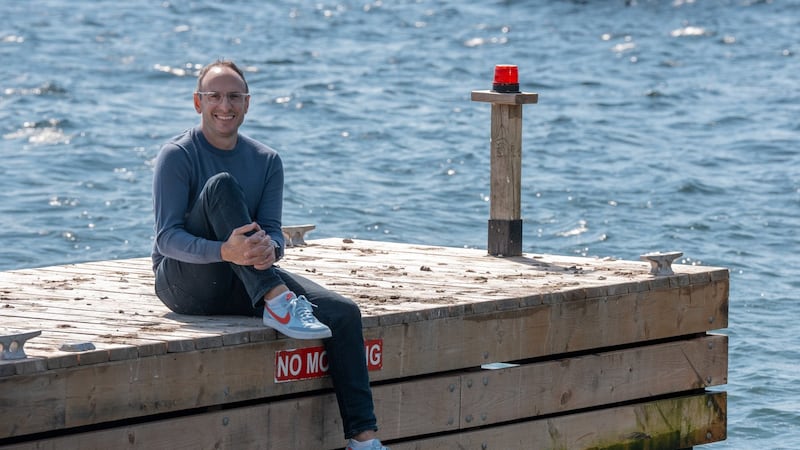
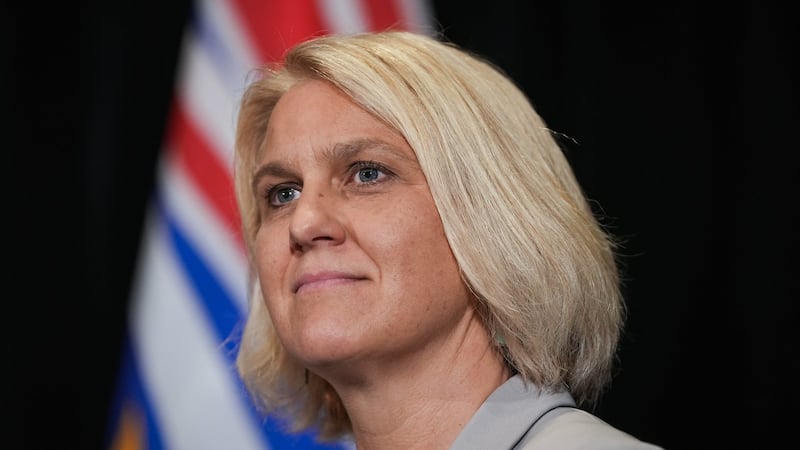
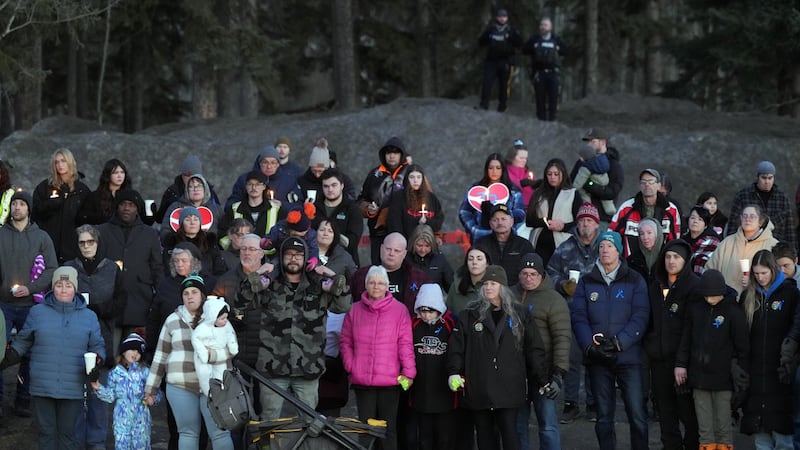
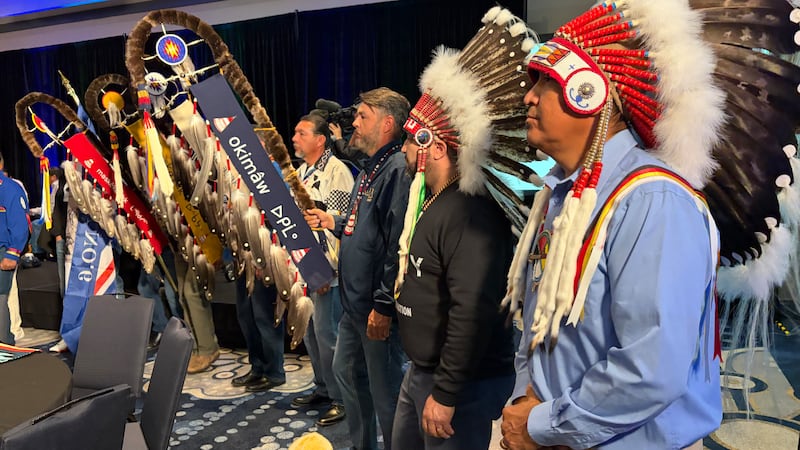
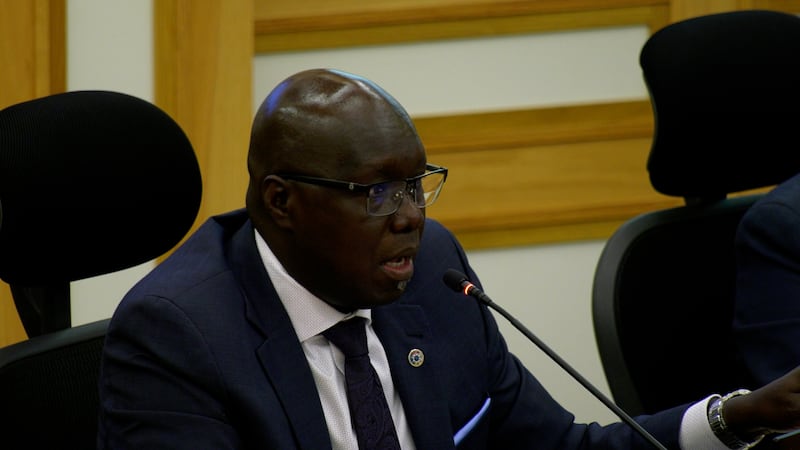
Tension wove through treaty celebrations in Enoch Cree Nation on Thursday. The event was held to mark 150 years since the signing of Treaty 6 with a viewing of the original manuscripts and adhesions. Treaty 6 territory includes lands stretching from western Alberta to Manitoba. Signed in parts in 1876 and 1877, it predates Alberta as a province and includes 50 First Nations. Speaking to a crowd of First Nation leaders and members, government officials and RCMP, Enoch Chief Cody Thomas touched on the significance of the foundational document and expressed his disappointment, saying its promises have not been fulfilled. “The intent was to look after one another. This is a peace treaty. This is something historical where our ancestors had the opportunity to look out for us today, but none of those treaty rights are being honoured, in my opinion,” Chief Cody said. “We got to do better, and it’s a good opportunity to engage and we’ll continue to push those conversations as we go forward.” The celebration came amid strain on the relationship between First Nations and the Alberta government, fueled in part by the upcoming referendum question on separation that has spurred court battles and questions over Indigenous consultation. “Our treaties basically trump Canadian law, provincial law,” said Enoch Cree Nation council member Charlton Thomas. “Our treaties were agreed upon even before Canada was Canada and the province was a province. “We are going to get out there and vote against it,” he added, “We don’t agree with it. It shouldn’t have even actually come to the table.” Alberta NDP leader Naheed Nenshi spoke at the event, commending Treaty 6 First Nations for their efforts to fight separation. “If you had asked me 18 months ago, if I thought that all of the First Nations of Alberta, all the chiefs in council, would stand up unanimously in defence of the colonial government. I probably wouldn’t have taken that bet,” Nenshi said. “No one has been more harmed by Canada than First Nations people, and yet no one is standing up for Canada as strongly as First Nations people.” Alberta’s Minister of Indigenous Relations Rajan Sawhney did not attend the event. Nor did she attend Treaty 6 celebrations in August, sparking backlash and calls for more respect for First Nations from the United Conservative Party government. Alberta’s Minister of Children and Family Services Searle Turton said Sawhney was “called away for another engagement,” but that he was honoured to attend and see the treaty in person. “It just really hit me hard about the sense of history that these treaties have lasted for so long, and we continue to work towards a spirit of reconcili-action,” Turton said. Turton told CTV News Edmonton afterward that he and the premier have both been vocal about their intentions to vote to stay in Canada; he said conversations with First Nations are “always ongoing.” “They’ve been happening for over 150 years. I also am optimistic that those conversations will continue,” he said. “There’s always areas that we can improve upon,” he added. “I remain committed, and I know the premier does as well, to making sure that those lines of communication remain open,” he said. Charlton said communication has not been open and accused Danielle Smith of failing to consult with First Nations before putting a question that would impact treaty people on a referendum. In May, a judge quashed the Alberta separatist’s question asking if Alberta “should cease to be a part of Canada to become an independent state” due to lack of consultation with First Nations. Instead, the upcoming referendum will ask whether Alberta should begin the legal process to hold a binding referendum on leaving Canada. Smith has said First Nation consultation was not required because the question is not binding. “I don’t think the relationship is good at this time,” he said. “It kind of seems like Danielle Smith does what she wants to do without consulting us as First Nations,” Charlton said. “There’s a treaty obligation on our end and also our treaty partners.” In a statement to CTV News Edmonton, Sawnhey’s press secretary Zoe De Jonge said the Alberta government remained committed to working with First Nations leadership on priorities that matter to their communities. “We continue to undertake consultation where required, including when projects or decisions may impact the exercise of Aboriginal and Treaty rights. “Our commitment to respectful dialogue and constructive engagement has not changed. We remain available to meet with First Nations leadership and look forward to continuing to strengthen these important relationships.” CTV News Edmonton has reached out to Smith and is awaiting a response. With files from CTV News Edmonton’s Chelan Skulski