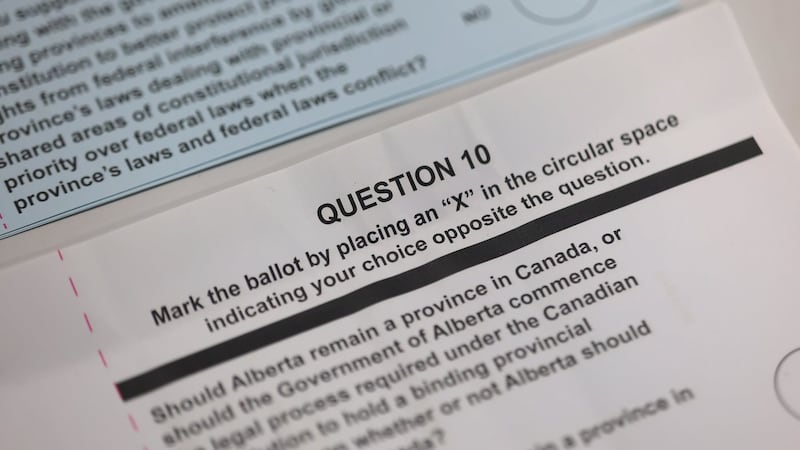
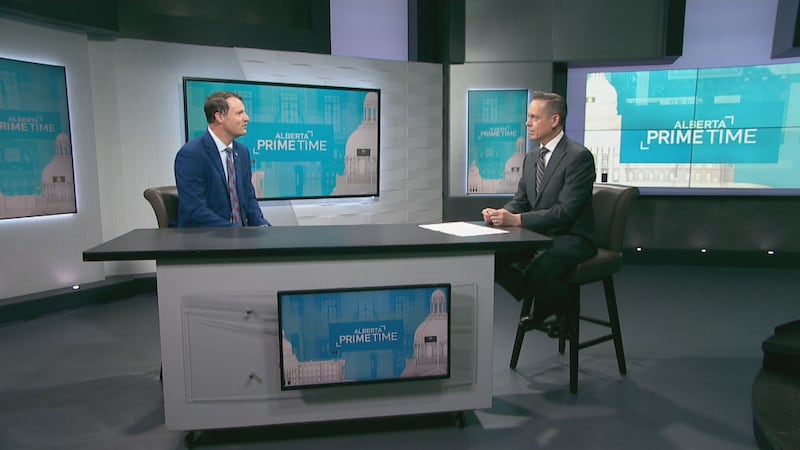
Alberta Primetime’s Michael Higgins sits down with Alberta Municipalities’ vice-president Dylan Bressey ahead of the ABmunis’ Convention and Trade Show to talk about the referendum, budget, data centres and e-scooters. This interview has been edited for length and clarity. Michael Higgins: We’re catching you ahead of the fall convention, we just heard the premier addressing the issue of the referendum, the issue of separation. How much of a focus do you expect there to be on that as your members meet this week in Edmonton? Dylan Bressey: Oct. 19 is the noisy background to everything going on in politics in Alberta right now. So it’ll definitely be some conversation, I’m sure, in the professional networking times we’re having. But my observation is that a lot of what’s fueling it is people don’t feel listened to, and they’re worried about their economic future. What our assertion would be is, if we want to help people be listened to, we need to strengthen local governments as the order of government closest to them. And if we want to be fueling Alberta’s prosperity, that means strong investment in the pipes and the roads that we need to flush the toilets in our homes and get the trucks, the industrial shops that we’re building out in this province right now. MH: I know Alberta Municipalities is urging voters to get out and participate, exercise their democratic right. Is that as far as you are willing to take the issue in terms of where your organization stands? DB: Well, we certainly are encouraging people to show up on Oct. 19, and just like Albertans, we definitely do have some diverse views in our membership of how people are going to be voting on all 10 questions coming out on Oct. 19. What we’re focused on, and what I think our councils are focused on every day, is building the roads, building the pipes, running the local programs that Albertans need to have a good quality of life and be affordable and run their businesses. For us, we really do want to get a lot of this conversation behind us, so we can get back to just building our communities in the ways that our residents expect. MH: How do you feel about some municipalities maybe taking a stance on their own, individually? How does that sit? DB: I know that many many municipalities and individual councillors have taken stances. For example, I’ve been very on the record that I think that Canada is an important part of the way that I was brought up, and I want to be Canadian for the rest of my life. So I know many of us have taken those individual stances, but every council is navigating this in different ways in their chambers. And I think what everybody agrees with, though, is people do need to take part in this voting exercise on Oct. 19. Show up, make their voices heard. MH: You do expect it to be a big topic on the floor I’m sure. DB: I don’t know if it’ll hit the floor. It sure will be the chatter in every networking opportunity we have, and it’s the chatter everywhere in Alberta politics right now. MH: Always the chatter when it comes to municipalities is the issue of sufficient funding. You’re bringing something new to the table that a portion of the anticipated $2-billion budget may be allocated to infrastructure projects with municipalities. This is something you’re bringing to the agenda, correct? And how do you see that going over with the government? DB: That’s right. We’ve heard from MLAs saying that ‘hey, when Alberta’s got its upsides, that’s when a municipality should be coming to ask for investment in infrastructure.’ So we are asking for investment in our roads and pipes because that’s a way that we can invest money today and actually save money in the long term. However, for us, it also is an example of why we think our entire province needs to have a look at how we collect revenues here in Alberta. We’re on this big spiral of ups and downs, and that’s why we’re excited for a plenary we’re having called Crude Awakening, where we’re inviting Travis Toews as well as some real economic powerhouses in this province to come talk about how do both the provincial government and municipal governments, how do we generate our revenues, and are there better ways we can generate revenue to create more predictable budgets, but also better support productivity and affordability for Albertans. MH: The current municipal affairs minister is apparently talking about making up shortfalls with a suggestion of municipalities selling stocks and bonds. How does that hit the radar? DB: Right now we’re working alongside our colleagues at RMA (Rural Municipalities of Alberta) and the Midstate City Mayors Caucus to work with industry and the minister to look at alternative ways of funding infrastructure in this province. And in this conversation, there are potentially some opportunities to make. Borrowing for developers and municipalities–less expensive than it is now–which could fuel more housing growth in Alberta. However, as we’re having this conversation, what’s really important to our members is that we’re not just asking taxpayers to pay more money for infrastructure that would usually be funded by other orders of government or by industry. It’s also really important that as we’re having this conversation, we’re supporting not just affordability, but also we’re still building good quality communities that people actually want to live in. MH: Out and about in Alberta, one of the big topics of discussion right now: data centres. I don’t recall seeing it on your agenda. Is that something that is up for discussion this week? DB: It’s not anywhere formal on our agenda, but where that really lends into our voice is we’re talking a great deal about municipal autonomy, and we are talking on our agenda a lot about how to make sure that local councils have the ability to make decisions that work for their unique communities. So when it comes to data centres, we really want to make sure that municipal zoning and municipal voices are respected, so that we can have a say in where these make sense and where they don’t make sense in the development of Alberta’s industry. MH: Plenty of dialogue, especially in the bigger cities right now, but I understand maybe in some of the midsized cities as well – e-scooters. Is the government working on something that is going to give municipalities more of a say in enforcement? Are you going to be able to crack down on some of the, shall we say, violations going on here? DB: So right now, e-scooters are kind of the wild west. There’s absolutely no rules about them that municipalities are able to practically enforce. We know that this fall, the government’s going to be bringing out some legislation and regulations that will create rules for e-scooters. We’re excited to see that. We hope there’s some reasonable, understandable rules around things such as what kind of protective equipment you need to use, what speed they can go, but we also hope that there’s the ability of local councils to make decisions for themselves about where and where not these are allowed in their local communities. It should be the local council, not the province, deciding which roads, which paths they make sense on. MH: Is that done then on an individual basis, or do you need some kind of framework from the province to build off of so that you can enforce? DB: We’re hoping that there’s an overall framework the province has. It would be really confusing for Albertans if there were different rules about what speeds are allowed, or do they have to wear helmets or not wear helmets? So we hope there’s some overriding framework for e-scooters in general in this province, but still local power for council to decide exactly where they’re allowed and not allowed. MH: And this is not just e-scooters, correct? In my neighbourhood, I see young kids, youths running around on electric dirt bikes on sidewalks, on streets, unlicensed, ripping around. Does that fall into the same category? DB: That’s right. So all of these micromobility devices, all of these electronic devices that are becoming a big part of our daily life, need to be regulated. People should be able to use them for recreation and their daily commutes, but they need to use devices that are reasonable on the roads and sidewalks they’re on, and that do respect not only their own safety but also the safety of people around them. MH: The premier is to address your members on Wednesday, what’s the one key thing you hope to hear from Danielle Smith? DB: Well, the big thing I’m going to be asking her is this whole conversation around municipal autonomy and what our relationship is with the province. Are we a creature of the province? Are we an equal order? Are we a duly elected order of government that’s a partner with the province? What’s her philosophy on that, and how does she view us as municipal governments being involved in future conversations about Alberta’s fiscal framework of how we’re going to fund both municipal and provincial programs?