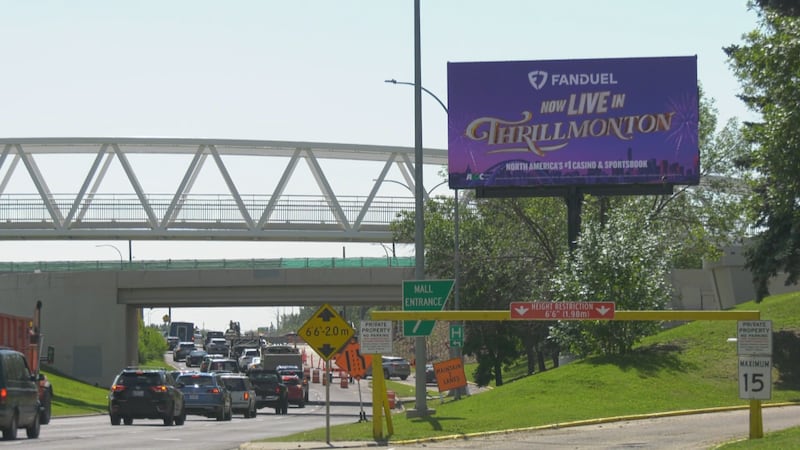
An addictions researcher is worried more opportunities to gamble in Alberta might mean more problems. Louis Hugo Francescutti, a professor in the School of Public Health at the University of Alberta and the chair of the Canadian Centre on Substance Use and Addiction, says the proliferation of online betting ads three weeks since the Alberta government made them legal could result in a rise in gambling addiction here. “We see people in emergency that are suicidal,” he told CTV News Edmonton on Friday. “You’re getting 20-year-olds that are coming in with $200,000 to $300,000 of debt and ... they don’t know how they ended up there.” Francescutti, who also serves as an emergency room doctor at Edmonton’s Royal Alexandra Hospital, points to the example of Ontario, where online betting was legalized four years ago and where addiction to gambling has risen, especially among young men. Every year since, iGaming Ontario, the provincial regulator, has reported significant growth in overall betting, revenue and active accounts. Ontario has also seen significant increases in the number of people seeking help for gambling. A University of Toronto study in March suggested that the rate of men under age 24 who called Ontario’s gambling helpline increased by more than 300 per cent since 2022. It also found that the number of active online accounts per 100,000 people increased by 239 per cent in the first three years, to about 7,300 from 2,160. Service Alberta Minister Dale Nally, who oversees the Alberta Liquor, Gaming and Cannabis Commission, said in July it’s possible Alberta will see the same. But he said Ontario’s numbers could be explained by higher public awareness of gambling addiction and the resources available. “Those problematic gambling behaviours didn’t begin the day that (Ontario’s) market launched,” he said. “They existed previously, but there wasn’t as much awareness.” Nally said last month that the province’s regulated market comes with meaningful safeguards for users. The province estimates online gambling will generate $76 million in revenue in its first year, with revenue expected to rise in the future. Nally said in July one per cent of gross online gambling revenue would be set aside to spend on problem gambling programs, resources and treatment. Francescutti thinks the government should put 10 per cent of all revenue from it towards prevention and treatment. “That’s how big the problem is,” he said. Nally said in a statement to CTV News Edmonton on Friday that the government will continue to monitor gaming advertising closely so it doesn’t normalize gambling. With files from CTV News Edmonton’s Jeremy Thompson and The Canadian Press