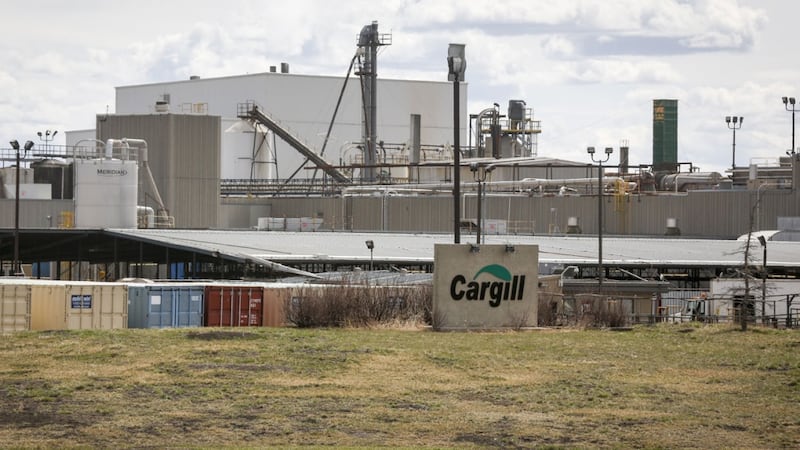
The COVID-19 outbreak at the Cargill Plant in High River, Alta., which ultimately lead the deaths of six people, is being labelled as a “catastrophic failure” by the province in a new report. The Parkland Institute, a research centre at the University of Alberta, which published the report, looked at how Alberta handled a COVID-19 outbreak where more than 950 workers at the plant contracted the illness. The report is dedicated to 67-year-old Bui Thi Hiep and 51-year-old Benito Quesada, who both worked at the plant and died because of the outbreak. “In 2020, both lost their lives to COVID-19 and, ultimately, to Alberta’s catastrophic failure to place worker safety above industry interests,” the report read. Dozens of workers also ended up in hospital due to the outbreak, the report found. It also explores how and why the outbreak occurred and what can be done to prevent incidents in the future. It calls the outbreak at the meat planting pack a forgotten tragedy where the government of Alberta’s pandemic review panel reports (2023) nor Alberta Health Services’ (AHS) internal review (2022) made any mention of the tragedy. Further, no charges were brought under Alberta’s Occupational Health and Safety (OHS) Act or as a result of a separate RCMP criminal investigation. It also puts blame on Alberta’s minister of agriculture and forestry at the time, Devin Dreeshen, who gave assurances that meat-processing plants would be declared essential services throughout the COVID-19 pandemic. “A formal designation — with no basis in law — followed, making these ‘essential industries’ exempt from any public health measures related to gathering sizes, physical distancing and, importantly, temporary closure orders,” the report read. To help incentivize workers to take shifts, a one-time $500 “attendance bonus” and a $2 hourly wage top-up were offered during the beginning of the pandemic. “There was nothing inevitable about the scale of the outbreak,” says Sean Tucker, lead author of the new report from Parkland Institute at the University of Alberta. A public apology to Cargill workers and their families is one of the 36 main recommendations. It also calls for Alberta’s health agencies and OHS to adopt the precautionary principle when responding to new respiratory illnesses. ‘An unprecedented time’ In response to requests for comment from both the provincial government and Cargill, both entities said they were reviewing the Parkland Institute’s report. The meat packer went on to say the COVID-19 pandemic was “an extraordinarily difficult period” for its workers. “We are deeply saddened by the loss of colleagues and the impact the pandemic had on their families, friends and those who worked alongside them,” the company said in a statement. “Throughout COVID-19, protecting the health and safety of our people was—and remains—our highest priority. We implemented extensive safety measures as information and public health guidance evolved, including screening and temperature checks, physical barriers and distancing, changes to shift and break schedules, and enhanced cleaning and sanitizing. The breadth of actions we took, which are not fully reflected in the report, were guided by our values of putting people first and doing the right thing, and our responsibility to protect our people during an unprecedented time.”