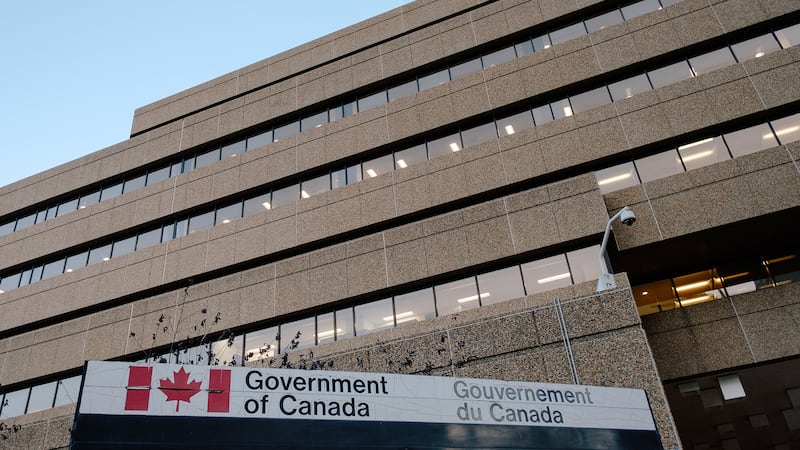
As Alberta has loosened restrictions on doctors practicing in both the public and private sectors, a new report suggests the concept doesn’t violate the Canada Health Act. The Montreal Economic Institute (MEI) said Monday Alberta has already begun the process of dual-practice health care, also known as mixed practice. “Mixed practice has not developed everywhere that it is permitted, for a number of reasons, but it is important to remember that there are already four provinces that authorize it,” said Renaud Brossard, vice-president of communications at the MEI in a news release. “Indeed, it is not so much the Canada Health Act that obstructs its development and deployment, but rather a series of provincial laws and administrative practices.” Talk of mixed practice is also alive in Quebec, which is in the middle of an election. MEI says some of the main political parties there “were considering” the idea. If both provinces sign on, they would join Manitoba, Nova Scotia, Prince Edward Island and Newfoundland and Labrador in removing the prohibition. Alberta’s Bill 11 took effect on Sept. 1 and critics of the legislation suggest it could contravene the federal law by giving individuals who can pay for services faster access to care. That’s what undermines the principles of the Act, opponents say. Some retired doctors say the policy would also give doctors more incentive to take on private procedures, where they can potentially earn substantially more. Instead, critics say Alberta needs to put more funding into increasing the capacity of the public system. It’s estimated that roughly one-third of operating rooms in Alberta are sitting unused because of staffing and funding limitations. ‘Scare tactics’: MEI Brossard says when it comes to mixed practice, the Canada Health Act is “much more limited.” “Unfortunately, over time, too many people have tried to make this law mean anything and everything,” he said. The key, MEI says, is publicly covered services remaining fully funded so that the public system remains “universal and accessible to all.” “Insofar as the services delivered by physicians in mixed practice are uncovered and entirely paid for by patients or their insurers when they are provided in a private clinic, but are still provided free of charge in public facilities, the introduction of mixed practice respects the conditions of the Canada Health Act,” MEI said. It says the provisions of the Act have gone unchanged for 20 years. “People are reading into Canadian law prohibitions that do not exist,” said Brossard. “It is the combining of public and private funding that the law essentially aims to prevent, which would for instance allow patients to pay to get publicly funded care more quickly. “It concerns overbilling and copayments, not whether a physician can work in both the public and private systems.” According to its research, MEI says Canada’s health-care system is behind 11 comparable countries in terms of performance. Those include Australia, the Netherlands, the United Kingdom, New Zealand, France and Sweden. The MEI cited a study from the National Library of Medicine, which found that mixed-practice physicians increase overall treatment capacity by adding an average of 5.2 extra hours in private care facilities per week. “Instead of resorting to scare tactics, Ottawa should ask itself why Canadian health care struggles so much to meet patients’ needs,” Brossard said. “Mixed practice is in full compliance with the Canada Health Act, and would help provide more care, more quickly, to more patients.” With files from Mark Villani