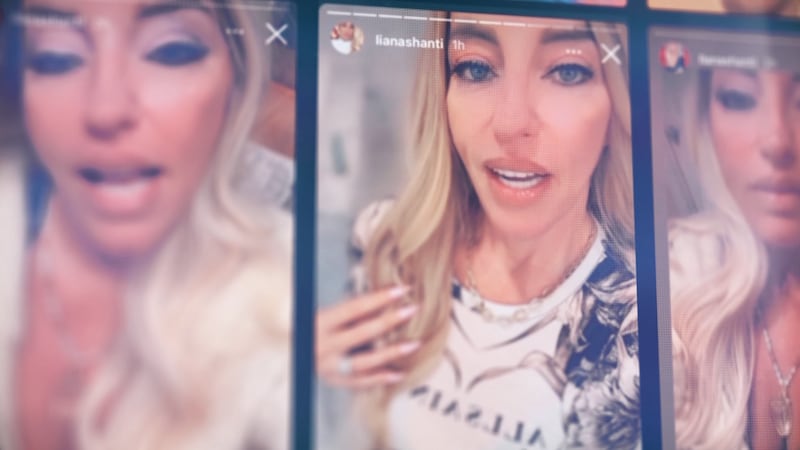
In the final installment of this five-part W5 investigation: “Fake Filtered Cult Leader,” CTV News’ investigative unit examines a self-described spiritual teacher whose online presence helped attract followers around the world. Drawing on interviews and extensive reporting, W5 explores concerns raised by former members and the questions surrounding the organization behind the carefully curated public image. There are many things Liana Shanti is not. She is not, as she claimed in the past, a certified clinical nutritionist. She does not have a doctorate. Some things are more difficult to disprove, but are perhaps questionable, such as her claims of being psychic. It’s also hard to prove that she had a “visitation” from Jesus when she was two years old. Liana Shanti isn’t even Liana Shanti. Her real name is Liane Wilson. Shanti is, however, a self-described spiritual instructor, a convicted felon for concealment of bankruptcy assets, and the losing defendant in one of the largest civil damage awards in Hawaii history. But is she a cult leader? How followers sucked in to Shanti’s world It started with the juice cleanses. Shanti attracted several followers through preaching detoxes, wellness and veganism. She also sold “illuminations” — astrological forecasts that helped followers navigate their lives. Students were encouraged to listen to Shanti’s audio recordings on repeat, even when they were sleeping, says Liverpool-based cult expert, Kacey Baker. For some, “they did lose a bit of weight and they did feel revitalized,” says Baker, who interviewed more than 30 people including ex-followers of Shanti for an 11-part podcast called The Instascammer. “And it’s that initial success that I think may encourage an individual to maybe take the next program,” she says. Shanti’s sessions and courses can cost hundreds or thousands of dollars — one mentorship program costs US$111,000. Some students found themselves turning to Shanti for advice on their marriages, parenting and business — baring their soul to the spiritual leader in online chats, all while Shanti urged them to sign up for more. “It almost feels like a dangling-carrot situation where you just have to keep going one step further to get closer to that goal,” says Baker. Members would excitedly post about the next sessions they were attending. Those who didn’t were looked down on, she says. People took out loans, went into credit card debt and borrowed money from friends just to pay for the next program, Baker says. But when students exited Liana Shanti’s community, some found that those conversations weren’t so secret after all. In August, a jury ordered her to pay C$56 million dollars to three Canadians, whom she defamed online, for calling them “pedo supporters,” “Satanists” and child abusers. Shanti says she plans to appeal. These online attacks — which were filled with explicit details about her former followers and their loved ones, including their children — functioned as a way to keep the others in line, Baker says. “If it happens to somebody in front of you and you think, ‘Oh my goodness, I don’t want that to happen to me,’ that’s another way you can be trapped within the group,” Baker says. Psychic powers and a visitation from Jesus Shanti has described herself as a psychic and a medium, though she backed away from the term in court. “I wouldn’t call it psychic at all, because psychic implies that there’s a future,” she testified. “Psychic implies that you believe in the time construct, versus if you’re able to tap into the now, kind of like in The Matrix, if you’re able to just access what’s there, it’s already there.” In court, she claimed to have had a “visitation from Jesus” in the past. Former Shanti follower Amanda Brady says that Shanti’s claim about Jesus had a profound effect. “So now we all believe that if we don’t stick with her, we’re not ascending. We’re not getting off this planet. … We literally will lose our soul,” she says. Baker says that “former members have told me that she claims to be in communication with Jesus since the age of two.” She has used her supposed supernatural abilities to falsely confirm sexual abuse in her followers’ pasts. Former followers said she used to host hours-long Q&A sessions, allowing them to tap into her psychic powers. Shanti rewarded certain deeply invested followers with new names — a tactic Baker says can serve to fully embed people into cults. “One of the very last pieces of that individual that a leader can take away is their name,” Baker says. “You are then totalistically within the cult.” For Amanda Brady, there is no doubt. She says Shanti is “absolutely” a cult leader. “That is my firm belief,” says Amanda, who has now left the group after what she says was a heavy financial and emotional cost. In court, Shanti said she’s not a cult leader, “Because … to be a cult leader you have to exercise coercive control with a known outcome. … I literally teach the exact opposite.” She added, “I’ve never heard of any cult leader that doesn’t even meet any of the people in their supposed cult. They’re usually gathering together.” ‘You can be recruited … from your bathtub’ Perhaps that was true in the past. But the internet has dramatically expanded opportunities for cult leaders, Baker says. “You don’t have to be in a compound,” she says. “You can be recruited into a cult from your bedroom, from your bathtub, when you’re washing the dishes or when you are driving your car.” “It can be somebody that hides behind avatars and AI pictures. … This is something we are seeing more and more online. The dangers of digital cults and digital coercion and influence is something that is on the rise,” she says. Despite the recent ruling, Shanti hasn’t stopped going after the targets of her wrath — making the same types of posts that were ruled defamatory. Baker says she doesn’t think she ever will. “I don’t think Liana Shanti will ever stop trying to make money off of individuals in her community who are probably very vulnerable and who have been exposed to her influence for prolonged periods of time,” she says.