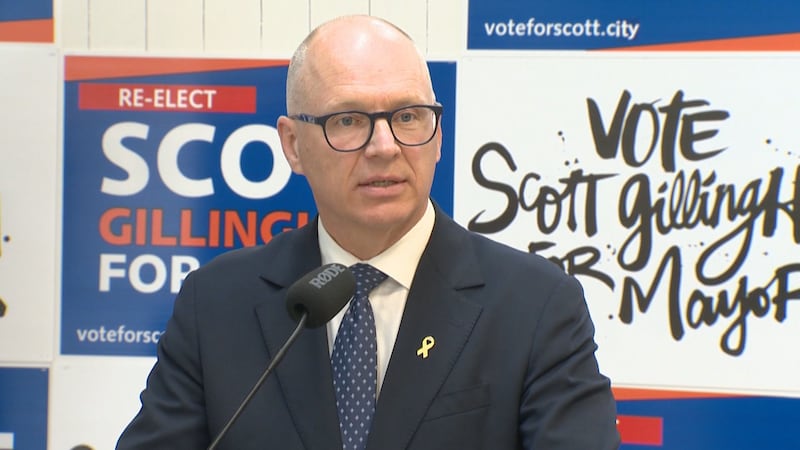
As election day looms, candidate Scott Gillingham rolled out his costed platform, which includes his property tax plan. “We can make meaningful improvements to city services within the confines of the property tax plan outlined in my platform,” Gillingham said on Monday during a news conference. Gillingham would stick to the 3.5 per cent property tax hike already in next year’s budget. But in 2028 to 2030, Gillingham is not committing to a set number. Instead, he said any rate hike will be close to inflation, while respecting affordability, and maintaining essential services. This comes after Gillingham raised property taxes in 2025 to 5.95 per cent, above the 3.5 per cent he promised. He has said that was needed to protect services. “People want us to maintain a measure of affordability and so to say today we’re going to set a target, set an amount, without knowing where the inflationary rates would go, would be irresponsible,” Gillingham said. His rival Kevin Klein questioned Gillingham’s plan to tie future property tax hikes to inflation. “I know what the game he is trying to play,” Klein said Monday. “He’s kind of a smooth talker when it comes to that, but we know inflation could go through the roof here.” Gillingham is also pledging to freeze sewer and water rates in 2027, pending federal funding for the north end sewage plant. He says in 2028, frontage levies could go up $1.00 per foot, costing homeowners $18 million. Those funds are dedicated to roads. The platform would also hold the line on the current business tax rate. “Route 90 is shovel ready, Chief Peguis Trail extension is shovel ready,” Gillingham said. The platform would also hold the line on the current business tax rate. Other commitments include a new annual council meeting to review road repair plans with input from residents and businesses, an inflation escalator to support the arts, new public service standards for key services, and more opportunities for Indigenous workers. Gillingham said the new spending in his platform will cost $4 million in 2027. He said that could be offset through a combination of measures, including one-time reductions to Communities Fund transfers, a 7 per cent increase in the corporate savings target, and unspent money from slow project rollouts.