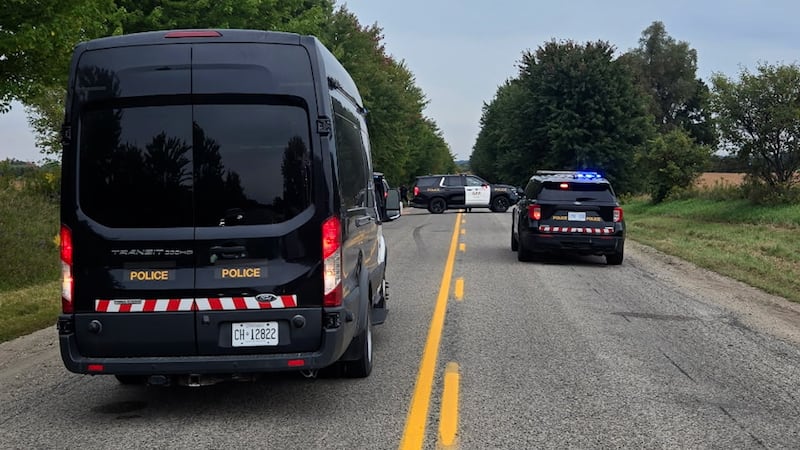
Ontario Premier Doug Ford says that anyone convicted of murdering a police officer shouldn’t be eligible for parole for a period of 30 years. In a letter sent to Prime Minister Mark Carney on Monday, Ford requested a number of “common-sense measures” that he said are necessary to “help protect our brave frontline officers” in the wake of a multiple violent incidents, including the shooting of an officer stationed outside a synagogue in Belleville, Ont. last month. That officer - Const. Jeff Smith - was critically injured after a suspect opened fire on him in an incident that police have described as “premeditated and targeted” attack on the Jewish community. “In the face of this mounting evidence, it is impossible to deny that more needs to be done to protect our frontline officers and protect public safety in our communities,” Ford said. In his letter, Ford called on Carney to amend the Criminal Code to increase parole eligibility from 25 years to 30 years for anyone convicted of first-degree murder in the death of a police officer. He also requested that a new mandatory minimum sentence of six months be introduced for “individuals who resist arrest, assault a police officer or flee from a police office when they cause bodily harm or endanger the life or safety of other persons.” Ford also wants the maximum penalty for violent home invasions set at life imprisonment, with changes to the criminal code that would stipulate that anyone convicted of multiple offences from the same incident would be required to serve those sentences consecutively rather than concurrently. “We owe it to the officers who have been killed or injured. We owe it to their families. And we owe it to every police officer who puts on their uniform knowing they may not make it home at the end of their shift,” Ford wrote. Ford has repeatedly called on his federal counterparts to take action to address violent crime and has expressed frustration with the pace of federal bail reform. In his letter, Ford said that he wanted to put “several proposals on the table” formally because “we cannot keep asking police officers to face these dangers without giving them the strongest possible protection under the law.” In addition to the sentencing-based changes proposed by Ford, he is also asking Ottawa to “permit judicially authorized access to encrypted communications” as it pertains to threats to law enforcement personnel.