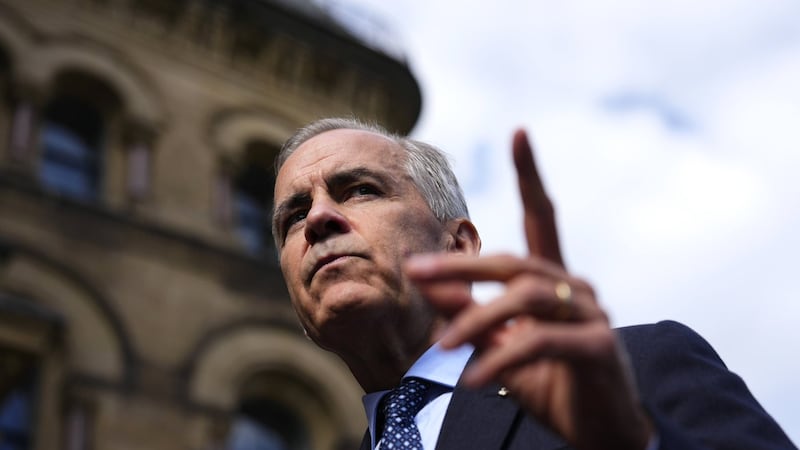
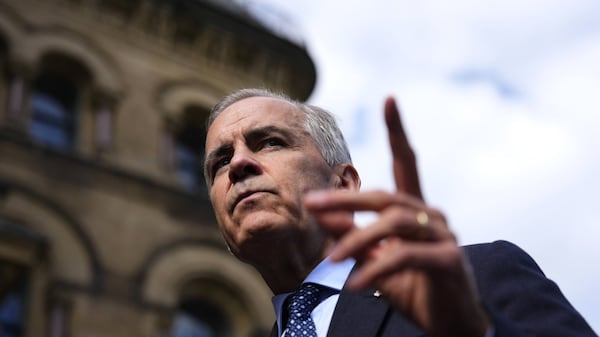
Dan Robertson is a veteran conservative strategist who served as Prime Minister Stephen Harper’s director of strategic communications in 2009, and is a founding partner at ORB Advocacy, a strategic communications company. This is his exclusive column for CTVNews.ca. In February, as a former director in Stephen Harper’s PMO, I was invited to Ottawa for the unveiling of his official portrait. It was a lovely and fitting occasion. As is customary, the current prime minister, Mark Carney, was also in attendance and gave gracious remarks. Watching the two men share a stage, I was struck by how similar their brands are. When I attend focus groups, the words people use to describe Carney are strong, smart, dependable, safe, and economically credible. Those are the same words people used to describe Stephen Harper 15 years ago. Many will even tell you, unprompted, that Carney is governing the country like a conservative. The shifting Conservative brand If a Liberal prime minister has annexed the brand of stability and economic competence that used to belong to the Conservative Party, and more Canadians believe he is governing from the right of centre, that is not a commentary on Carney. It is a commentary on what has happened to the party Harper built. Stephen Harper would not win a leadership race in today’s Conservative Party of Canada. It’s important to remember that the Conservative Party has never been an exact mirror of Conservative voters. Party memberships everywhere skew more ideological than the electorates they seek to represent, and the CPC has always been to the right of the coalition it needs to win a general election. That gap is normal. Every successful Conservative leader from Brian Mulroney to Stephen Harper has had to manage it. What changed was the size of the gap and the temperature of the people inside it. Radicalized members COVID-19 radicalized a significant slice of the Canadian right. The convoy, vaccine skepticism, and lasting distrust of public institutions did not stay confined to the protest. They moved into the party, riding associations, and the members who vote in leadership contests and nomination battles. This was not engineered. It was an organic reaction to government overreach during the pandemic, and conservatives were right to be angry about much of it. But anger is not a governing philosophy, and a party cannot let its angriest members set the agenda. Consider Jason Kenney. He was a tireless foot soldier for Stephen Harper and, for years, was effectively the unofficial leader of Canada’s small-c conservative movement, building bridges between ethnic communities, Western populists, social conservatives, and free-market conservatives. None of that mattered when it collided with a radicalized United Conservative Party (UCP) membership during COVID-19. Kenney was dumped as premier of Alberta, not by the province he governed, which still viewed him favourably, but by a membership base that had moved somewhere he could not follow. If one of the party’s most loyal and successful builders can be run out by his own base, anyone can. Conservative Leader Pierre Poilievre did not create this current, but he did exploit it. His flirtation with World Economic Forum conspiracy rhetoric, for instance, was not a slip. It was a calculated signal to a part of his base, and it worked, at least in the short run, by helping propel him to a resounding leadership victory. The cost was that it legitimized framing in which political opponents are not merely wrong, but immoral. And it imposed severe constraints on his ability to appeal to the voters who actually decide election outcomes. The base is Poilievre’s greatest source of support, but he is also its prisoner. Add the rise of a homegrown class of conservative social media influencers, operating almost entirely outside editorial structures, competing for attention rather than accuracy, and rewarded by platforms for being more extreme than the last person to go viral. They are now a bigger factor in Conservative politics than most traditional pundits and answer to no one. The result is a membership base shaped by an algorithm. This is the membership that would decide a leadership race today. None of this is comfortable for Conservatives to hear, and it will be tempting to dismiss it as the complaint of an old guard from which the party has moved on. It is not. Harper won three elections by holding together a coalition that only worked because he never let its angriest members set the terms for everyone else. That’s not the case today. Stephen Harper would not be elected leader of today’s Conservative Party, and that should trouble Conservatives far more than it currently seems to.