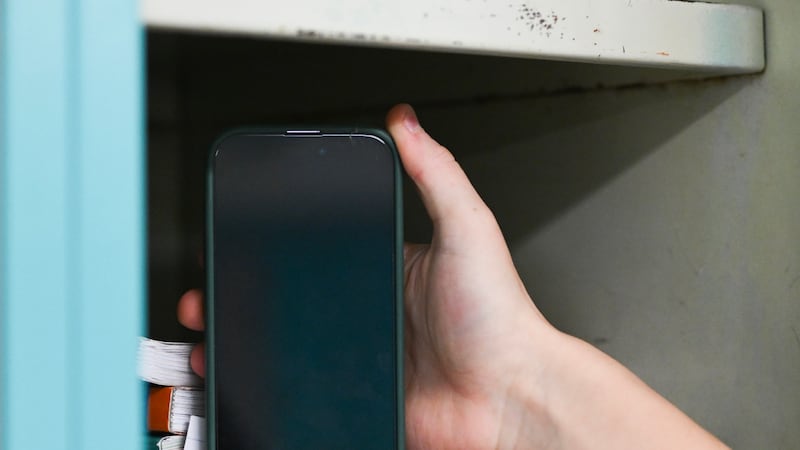
This school year marks the second since the Quebec government banned the use of cell phones in schools in 2025. The first year of this initiative went “very well,” according to Richard Bergevin, president of the Fédération des syndicats de l’enseignement. He notes that teachers are observing that students are more engaged in their learning and are socializing with one another more often. His observation appears to be corroborated by experts consulted by The Canadian Press and aligns with the findings of the report on the pilot program for this measure, conducted at Oka High School in 2024. The return to organic socialization may have revealed certain shortcomings among students, noted Carolane Campeau, a lecturer at the University of Sherbrooke and an adviser for the PAUSE initiative, which aims for a more balanced and mindful use of screens. She reported that people had mentioned “anecdotally” that certain social skills did not seem to have been practised well before. “I remember hearing a teacher in an interview even talk about the noise level when young people were talking to each other—that it was very, very loud,” she said. She added that some of these gaps in social learning could also lead to certain tensions. “It’s easy to hide behind a screen when you’re feeling a bit uncomfortable. Think about the students; chatting with each other actually takes a lot more effort than just picking up your cell phone and doing something else,” Campeau said. The researcher noted that this can be accompanied by difficulty managing anxiety among some students who were used to seeking refuge in their screens. The Oka report noted that nearly 40 per cent of girls cited difficulties with anxiety as a negative consequence of the cellphone ban, compared to about 20 per cent of boys. While students have faced certain challenges, Bergevin said that schools, too, have had to adapt to the new law. He gave the example that schools must now allocate additional resources to enforce the rules and provide alternatives to screens. Andréanne Gagné, a full professor in the Department of Teaching and Learning Studies at the Université Laval, also says she has observed that schools “have adapted very well. “In other words, most schools had little time to adapt, yet they did a good job working together,” Gagné said. She noted that this observation is primarily anecdotal, as no data has yet been released for all of Quebec regarding the cell phone ban. Maintaining parental support While schools must adapt to the new reality, parents must do the same. Cellphones, although they can easily distract a student at school, remain a fast means of communication that many parents have come to rely on. Gagné also reported this. “What parents—and children, above all—seem to miss most is the means of communication,” she emphasized. “It’s hard for parents not to be able to communicate with their children, and vice versa.” While data is still lacking in Quebec to officially corroborate these trends, a report from New Zealand’s Education Review Office—which has been advising schools to ban cell phones since 2024—notes that 54 per cent of students who violated the ban cited contacting a family member as their reason. This is the most common justification cited by those who violated the ban. Bergevin said that most Quebec parents seem to have adapted to the situation, changing their habit of texting their children throughout the day to instead try to reach them after school. However, parental responsibility is not limited to school, Campeau noted. In Oka, many parents reported having more difficulty managing their children’s screen time at home, as if there were a tendency to make up for the time “lost” at school. She argues that there needs to be a certain consistency in screen time usage. “If schools emphasize the importance of good digital habits and effective time management, there should be a corresponding approach at home as well,” Bergevin added. This report by The Canadian Press was first published in French on Sept. 13, 2026. Alexis Drapeau-Bordage, The Canadian Press