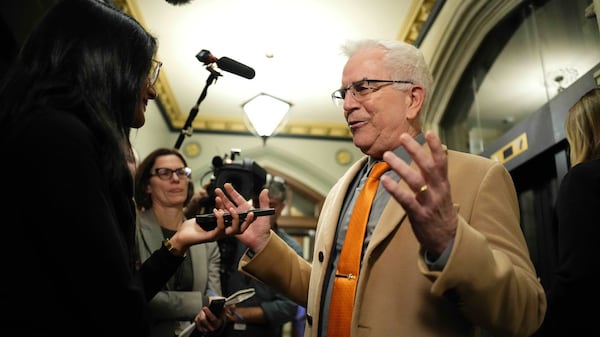
OTTAWA — The College of Physicians and Surgeons of Ontario says it’s not investigating a member of Parliament who received a complaint over comments he made about medical assistance in dying. The complainant, Claire Brosseau, is a 49-year-old woman who has reported attempting to access medical assistance in dying for persistent mental disorders that began when she was a child. She said she was triggered by Marcus Powlowski’s “irresponsible, thoughtless and dangerous” words. In a supplementary opinion attached to a special joint committee report on MAID published in June, the doctor and MP for Thunder Bay-Rainy River wrote that there are other options for people looking to end their lives, such as illicit narcotics like fentanyl. “To my dismay it is arguably easier for my teenage sons to access fentanyl in my hometown of Thunder Bay than it is for me (a doctor) to renew my Lipitor prescription (a cholesterol medication),” Powlowski wrote. The quote was included in Powlowski’s written argument against expanding access to MAID for mental illness until fundamental concerns are addressed. In it, he said it’s impossible to determine that a person’s mental illness is irremediable, as required by law. The MP also raised access to mental health services and social supports and said testimony from practitioners suggests there is no consensus on how to distinguish suicidality from rational decision-making. “He gave us information on how to kill ourselves,” Brosseau told The Canadian Press. Earlier this week, Speaker Francis Scarpaleggia said in the House of Commons that he asked the law clerk and parliamentary counsel to write to the college to remind it that members’ freedom of speech is constitutionally protected. “Members should not fear professional disciplinary measures will be imposed because of the ideas they express during parliamentary proceedings,” Scarpaleggia said. “Members must have complete confidence that they enjoy freedom of speech in our work, and such investigations could have a chilling effect on members of professional bodies. “I find that unacceptable.” Laura Zilke, a spokesperson for the College of Physicians and Surgeons of Ontario, did not say why the college isn’t pursuing an investigation. She said the college is aware of the Speaker’s ruling and will review any correspondence received from the House of Commons. Powlowski told The Canadian Press he was “happy” with the Speaker’s statement. “My understanding is a significant basis for privilege is to prevent exactly this kind of thing, which is somebody who disagrees with you over a decision made in Parliament tries to go after you using some other means through some other body,” he said. “I think it’s an important part of the democratic process and I think attempts to undermine the democratic process like this are something that has to be addressed.” The Speaker’s move to weigh in on the investigation came about a month after Conservative MP for Kitchener South-Hespeler Matt Strauss raised the issue as a question of privilege in the House of Commons. On Oct. 20, Strauss — who is a physician — said Powlowski was facing serious legal proceedings over his contributions to a parliamentary proceeding. He said he believes that “offends the constitutionally guaranteed freedom of speech in Parliament.” Powlowski said Thursday he wanted to thank Strauss for bringing the issue to the House and coming to his defence. “He did me a solid on that,” he said. The Liberal government’s bill proposing changes to Canada’s medical assistance in dying law will be studied by the House of Commons justice and human rights committee. It passed second reading on Tuesday. The bill would amend the Criminal Code to allow people to make advance requests to access MAID. It also would prevent a scheduled expansion of MAID access to those suffering solely from a mental illness. Members of Parliament voted 225 to 89 to send the bill to committee. Nearly 40 Conservative MPs voted yes, despite some raising concerns about the legislation. The Liberal government limited debate Monday on Bill C-41, which was introduced in the House late last month. MPs adopted a motion by Justice Minister Sean Fraser to limit debate at second reading to one more day, despite calls from the Opposition for more time to study the bill. Powlowski, who chaired the parliamentary committee on MAID, said he would have preferred to see the votes on mental illness and advance requests separated because Conservative MPs might support one but not the other. The bill needs approval by the Commons and the Senate by March 17 — the date on which the current law would extend MAID access to people whose sole underlying condition is a mental illness. With files from Hannah Alberga Catherine Morrison, The Canadian Press