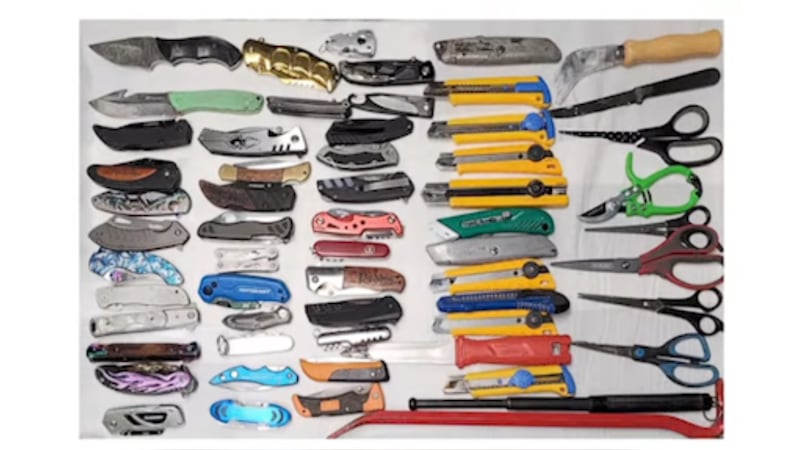
A weapons detection system at London Health Sciences Centre (LHSC) has screened more than 915,000 people and flagged 8,800 potential threat items since it was introduced last year. The AI-powered, touchless technology was installed at University Hospital in London, Ont. in April 2025 and Victoria Hospital in May 2025 as part of LHSC’s efforts to strengthen security at its emergency departments. Between April 2025 and September 2026, the system recorded 8,800 threat items, including approximately 4,200 knives or knife-like objects. Other items detected include brass knuckles and pepper spray. The system scans people as they enter the emergency department, identifying objects that could pose a safety risk. When an item is flagged, security staff are alerted and can conduct additional screening. LHSC says the initiative followed two high-profile incidents: a shooting outside Victoria Hospital’s emergency department in December 2024, which prompted a hospital-wide response, and a stabbing outside a Halifax hospital in January 2025. Chris Askew, LHSC’s director of facilities management, says the system is helping change people’s behaviour and reduce the number of items being brought into the hospital. “We saw average of 7.1 contraband items to the lowest average that we saw in September 2026 at 2.77 between our two sites,” Askew said. “So the implementation has done its job in decreasing, and we continue to see that downward trend of items or people leaving them at home and changing their behaviours and what they bring to the hospital,” Askew said. While LHSC says many of the items detected may not have been brought into the hospital with the intention of causing harm, officials say removing the potential risk is important. Sarah Muto, LHSC’s interim vice-president of facilities and support services, says the system gives security staff an opportunity to speak with people carrying flagged items. “Knives and items that are not contraband are taken away and potentially given back to the individuals when they’re finished their appointment or finishing visiting their loved one,” Muto said. She says the goal is not to assume everyone carrying a flagged item intends to hurt someone, but to ensure potentially dangerous objects do not enter the hospital. Muto says the technology is one part of a broader approach to workplace and patient safety that includes security cameras, panic buttons and de-escalation training for staff. She describes the approach as a “Swiss cheese model,” with multiple layers of protection working together to reduce the chance of an incident. “Our staff are very happy to see that we’re adding an additional layer of safety to protect them, the patients and the visitor,” she said. Askew says there have been no situations involving detected items that have escalated to the point of requiring intervention. He adds that LHSC works closely with London police and has procedures in place should a more serious situation arise. The hospital says the system also provides reassurance to patients and visitors that people entering the emergency department have been screened. LHSC is reminding the public to leave knives and other potentially dangerous items at home when visiting the hospital to help maintain a safer environment for patients, visitors and staff.