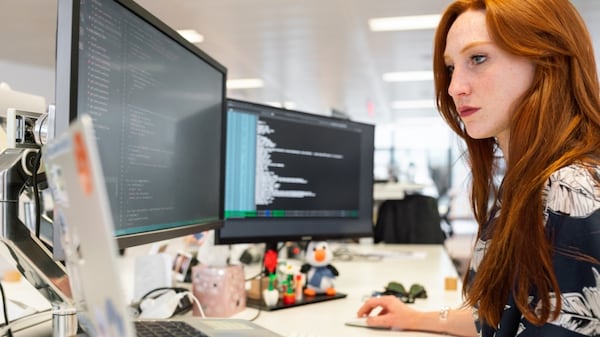
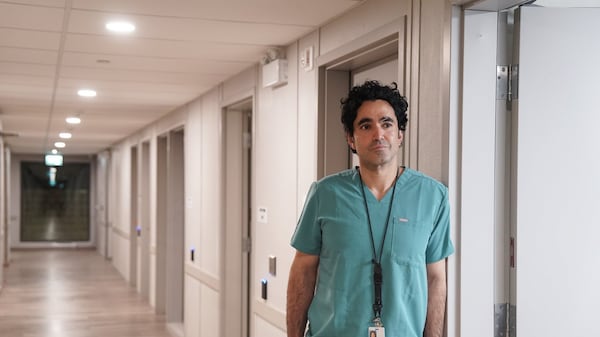
While many are embracing AI and other tech, several professors at Carleton University are going old-school and moving courses to pens, pencils and paper in favour of laptops, phones and AI. “It’s kind of a no brainer for the for the skills that we’re building and for the work that we’re doing. In the core courses, there are no laptops, no phones,” says Shawna Dolansky, a professor in Carleton’s College of Humanities. “Making sure that everybody is present and attentive, and listening to each other because that’s where the learning really happens.” Students are taking handwritten notes, reading physical books, and Dolansky says as students build their skills – like in their first year — there probably won’t be any take home assignments. “They’re learning something about the humanities, what it means to be human and how humans operate, and that’s a much deeper and longer lasting kind of learning than automating, you know, an essay prompt.” For the core humanities course, students have lectures twice a week and once a week, break out into smaller groups called seminars; Dolansky says laptops were never allowed there but says laptops have now been removed from the lecture hall as well. “It’s not about tripping them up. It’s about helping them to develop the skills so that when they go out into the workforce and they have to use AI, they are able to supervise the AI from a human perspective rather than rely on it to do their thinking for them,” she says. “I was pretty excited,” says first year student Finn Graham. “For most of us, we’ve gone through all of high school, and probably middle school too, just using our computers for every class. So, it’s a really nice breath of fresh air.” “I feel like having the screen in front of you. You all are only looking at the screen, but without the screen, you’re forced to look at each other and interact with each other,” says Alex Goltz. “I think that it allows us to be more interactive during class,” says another first-year student, Elham Al-Shaibani.