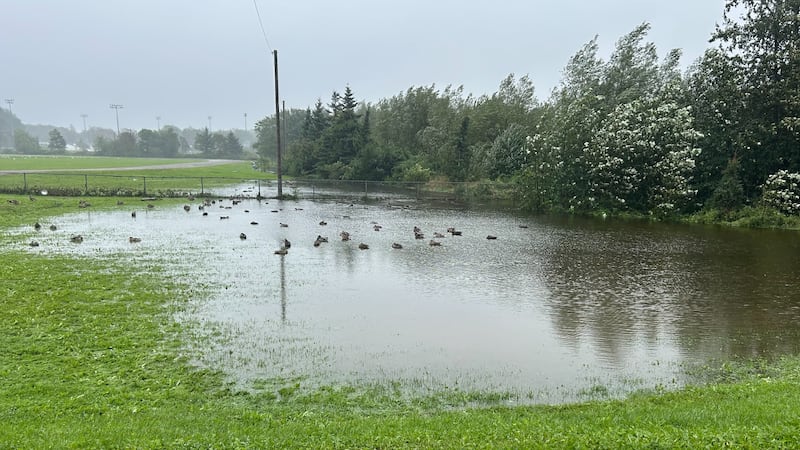
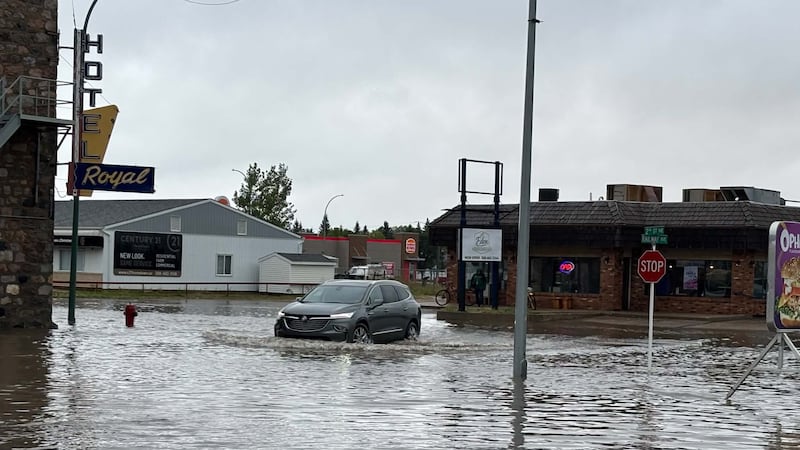
Peaches, plums and cherries may be plentiful in Ontario grocery stores right now, but it could be a very different situation next summer. More than 30 centimetres of rain fell across parts of Niagara region in early August. Flooding on those farms, orchards and vineyards could end up pushing prices higher, according to one plant biologist at the University of Guelph. Jayasankar Subramanian, a professor of tree fruit breeding and biotechnology in the Department of Plant Agriculture, develops tender fruit varieties that can withstand Ontario’s growing conditions. He said peach and plum trees are particularly vulnerable to prolonged rain. “Fruit trees are not deep rooted, as they are grafted on a rootstock,” Subramanian explained in a media release. “They mostly evolved in elevated and hilly regions where the landscape does not allow waterlogging, and hence, genetically their roots are very sensitive to excess water.” The Niagara Peninsula produces about 80 per cent of the peaches sold in Canada, meaning significant tree losses could have a huge impact on the country’s supply. “The widespread feeling is that, due to the anticipated loss of trees, there will be a decline in production as soon as next year,” Subramanian said. “Almost certainly, we will see prices higher in the next year.” The impact could also extend well beyond the 2027 growing season. Subramanian estimates it could take at least seven years of normal weather conditions for peach production to recover. “One of my major worries is the availability of trees to plant from next year,” he said. “Some of the nurseries are flooded, and with the demands for fresh trees expect to rise, there will be lack of grafts available.” Subramanian’s peach breeding program is supported in part by the Ontario Agri-Food Innovation Alliance, a collaboration between the provincial government and the University of Guelph.