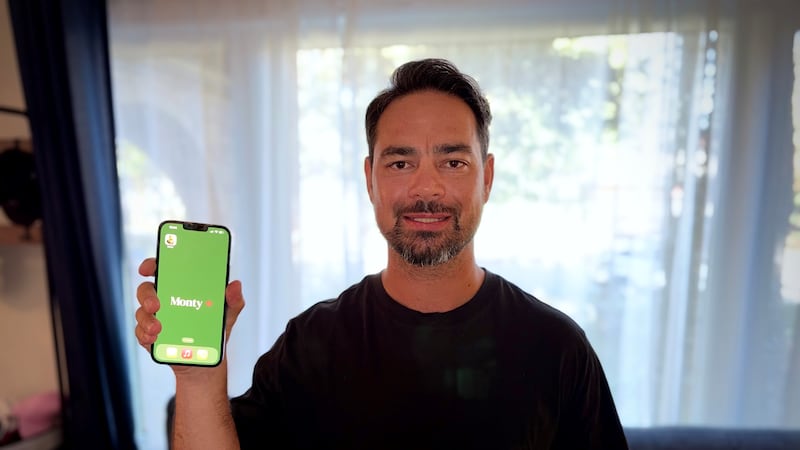
Teaching children about money can be a challenge for parents, particularly when it comes to explaining why they cannot always have what they want. To make conversations about money easier, a Cambridge, Ont. father created an online platform that teaches his two young sons about financial literacy. Mark Sharma, the creator of the digital app Monty, said the idea came from everyday experiences with his children, including repeated requests for toys at the grocery store. “It’s that Hot Wheels bin that I feel they’re just moving aisle by aisle,” Sharma said. “And they’re asking, ‘Can I buy it, can I buy it?’” Sharma said he realized simply telling his children “no” was not teaching them much about how money works. Instead, he wanted to give them a way to see and understand their money and the choices they could make with it. Monty is a digital money-tracking platform that allows parents to set an allowance and lets children track their progress, set savings goals and decide how much of their money they want to spend, save or give. Parents can also use the platform to have regular conversations with their children about money. For example, Sharma demonstrated how he can record money his son earns for doing chores, as well as money set aside for a food bank donation. The app then provides prompts and encouragement to help families discuss their children’s financial decisions. Sharma said the goal is to shift the conversation from children simply asking whether they can have something to helping them understand what they can afford. “Now when we’re going out, they’re saying, ‘How much is in my spend jar?’ They’re not asking, ‘Can I have it?’” he said. The platform also includes a weekly feature called “Monty O’clock,” designed to give families dedicated time to talk about money. Monty does not actually hold or transfer money. Instead, it acts as a digital ledger, tracking the allowance and financial goals agreed upon by parents and children. Sharma said the platform is designed primarily for children roughly 5 to 12 years old. “As soon as kids can understand numbers, they can understand money and understand the value of it, and just start managing it,” Sharma said. His wife, Vanessa Sharma, said the platform has helped their sons better understand the value of what they have. “They don’t understand how much things cost and they can’t really make that equivalency,” she said. “Now I think they can understand how much they have compared to other jars.” She said it gives the children a clearer sense of how much money they have available for different purposes. The idea also comes as some parents question whether children are getting enough practical financial education. One parent interviewed said schools do not teach enough about personal finance, while another said children need opportunities to put what they learn into practice. Monty is currently available for $10 a month or $99 a year. While Sharma sees the platform as a supplement to what children may learn in the classroom, he said the ultimate goal is to help families make financial literacy part of everyday life.