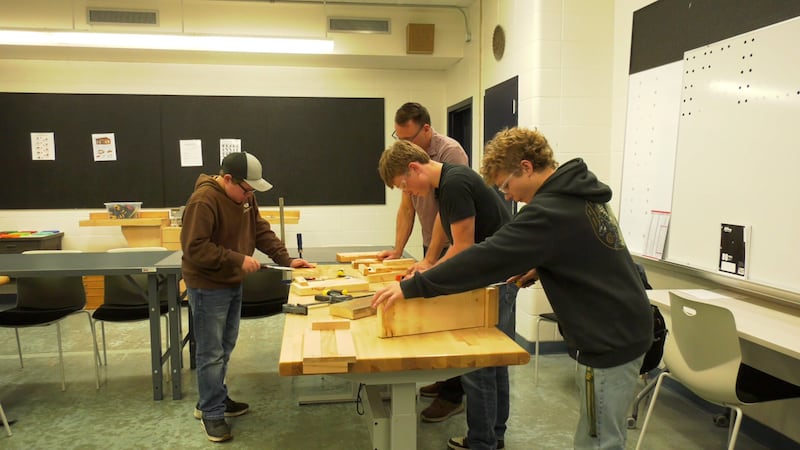
For most sprinters, the race is run on a track. For William Parsons, it is on sand. The 17-year-old from Guelph, Ont. is preparing to represent Canada at the 2026 Lifesaving World Championships in South Africa, where athletes will compete in pool, beach and ocean-based events. The championships are scheduled for Nov. 25 to Dec. 13 in Nelson Mandela Bay, with beach events at King’s Beach and pool events at Newton Park Swimming Pool. Parsons specializes in the running events, including a 90-metre beach sprint and beach flags, a competition in which athletes race to grab a flag from the sand. “I would say you definitely need to be disciplined because to make the team you have to be... I think top two and top one... in an event at nationals, and in more than one event,” Parsons told CTV News. “So, you definitely have to be disciplined, show up to practice every day... even on the days you don’t want to.” He first tried lifesaving sport about 10 years ago through his swimming club, initially taking part during the summer. He became more involved in the sport when he was old enough to compete at the national level and said he has focused more heavily on it over the past two or three years. “I do mainly just the running events,” Parsons said. “The 90-metre beachfront... is just basically like track but 90 metres sprint on sand.” Training for the sand To prepare for the championships, Parsons has been working with track and field coach Ken Kudo of the Royal City Athletics Club since September. Kudo said he initially assessed Parson’s fitness, speed and technique before developing a training program. Training has included sprint work on the track and sand, weighted-sled exercises and hill workouts. “Generally speaking, we’re focused on five different areas: working on the acceleration phase of a sprint, maximum velocity, speed endurance and then also the technical side of things as well as strength training.” Kudo said Parsons improved his time between two training trials, which he hopes will build the young athlete’s confidence ahead of the competition. “I found that Will is a good accelerator and a strong runner, because when you think about it, it is much different than running on a track,” Kudo explained. " [For track running], you have running shoes with help from having spikes on them, and it’s a hard surface. But in the sand, he’s running in bare feet." Kudo said athletes need strength to push through the sand and bring their legs forward into the next stride. A different kind of competition The Lifesaving World Championships bring together pool and beach events in a sport that tests skills associated with saving lives in aquatic environments. The international competition is organized by the International Life Saving Federation and takes place every two years in a new location. “This is huge. It’s as close to an Olympics as you can get,” said John Carey, head coach at Royal City Aquatics. “They have an opening ceremony as multiple countries come through, representing where they’re from... it’s going to be a lot of fun. We’ve been fortunate enough to put in an athlete almost every year.” Parsons said he enjoys the relaxed atmosphere around beach events. “I get to hang out with my friends a lot on the beach, kind of in between events. It’s pretty laid back, compared to traditional swimming.” For Canada’s youth team, athletes are spread across the country, from British Columbia to Nova Scotia. Parsons said the team held a training camp in July and expects to train together more extensively once in South Africa. He said he is excited to race against athletes from other countries, although the international travel will be a new experience. “I’m actually really excited to race with some different countries,” Parsons said. “I think it’ll be really fun. I’m nervous for the travel, though.” Looking beyond the championships Parsons said making the team required discipline and consistent training. “In September, I started mainly dropping down on the amount of swimming I was doing and focusing on running and weightlifting,” he said. “So, running three times a weekend, lifting twice and swimming once and I kind of just will continue that all the way until middle of November.” He is already considering future international competition, including the possibility of returning to the youth team for a championship in Japan next year. “I’ll definitely be thinking about that this year or next year,” he said. For other young athletes interested in lifesaving sport, Parsons recommends trying different disciplines before settling on a specialty. “If you want to get into it, you should try and find which part of lifesaving you would enjoy,” he said. “That’d be the swimming part or the beach part, like the boarding or the running. Whichever part you find most is for you.” The sport offers a range of events, including swimming, running, boarding and other beach competitions, allowing athletes to focus on the skills they enjoy most. “A happy athlete is a fast athlete. With a little bit of something for everybody, coming from a multi-sport background is so important,” Carey said. “You get to keep kids in the sport longer, which we know is so integral to their overall growth and development.” For now, Parsons’ attention is on South Africa, and the opportunity to test his speed on the world stage.