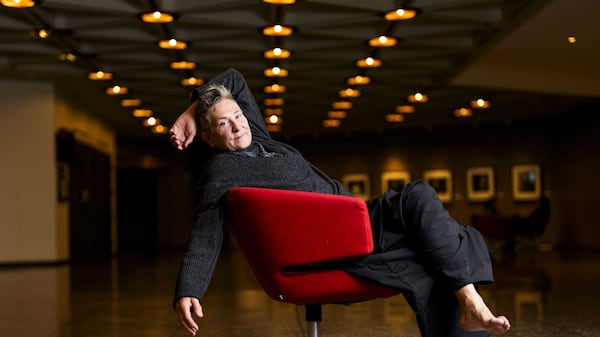
OTTAWA — Over the last several years, k.d. lang has used different words to describe this phase of her career. Sometimes she calls herself retired or semi-retired. Once, she told a reporter the muse was eluding her. It’s been five years since she released an album (“Makeover,” which didn’t include any new material); 10 since she produced one with original songs (“case/lang/veirs,” a collaboration with Neko Case and Laura Veirs). This day in early October, on the eve of a tribute concert in lang’s honour at the National Arts Centre, she settles on another term. “I’m definitely in a recess,” she says. “‘Recess’ is actually a perfect word for it because I’m just playing and hanging out with my friends. And maybe there’s more work. But I don’t feel like I’m ever going to be fully engaged in the music business anymore.” From the beginning, she says, her relationship with the business was somewhat fraught: “a charged subject,” she calls it. Lang smashed onto the scene in the mid-’80s with her band the Reclines. Their first album, “A Truly Western Experience,” won lang the Juno for most promising female vocalist — a prize she famously accepted while wearing a wedding gown. Then came more work with the Reclines, and eventually the collaboration that would be lang’s cross-border breakout: a duet with Roy Orbison on a new recording of his classic song “Crying.” She won her first Grammy for that record, and four years later her third for the song that remains her biggest hit, “Constant Craving,” off the landmark album “Ingenue.” As she was promoting that album, lang came out as a lesbian in an issue of the Advocate. It was a year before Melissa Etheridge came out; five years before Ellen DeGeneres did. “I remember feeling that — when I came out in 1992 — that there was no way I could ever even consider representing the whole LGBTQ community,” she says. “That’s like saying, ‘I represent water.’ This doesn’t work. It is fluid and it’s vast and it’s impossible to pin down.” But still, that’s what the world asked of her, she says, and her feelings about it were manifold. “It felt wonderful and burdensome. I felt a tremendous sense of pride, but I also felt like it derailed the focus from my music, but at the same time put focus on my music. It’s very, very complex and almost impossible to unravel.” The questions lang is being asked in this interview — about her relationship to fame and the music business, how her conversion to Buddhism affected those things — are “too big,” she says. “It’s very, very hard for me to distil that into a quip for an interview,” she says. Let alone a four-minute song, she adds later. Still, she tries. Lang knows how the game is played. During a photoshoot after the interview, she slips off her two-strap leather sandals to go barefoot — no need for the photographer to ask. Her now-hallmark shoelessness started as an ode to Anne Murray, who also performed barefoot. (Murray recently posted on Instagram old photos of her and lang going barefoot at Murray’s star on Canada’s Walk of Fame.) At the tribute concert on Oct. 2, both Jill Barber and Allison Russell were barefoot onstage: homage begets homage. During the show, Barber told the audience that lang’s career blazed the trail for her and others, while Russell said a sexy 1993 cover of Vanity Fair magazine featuring lang and Cindy Crawford was part of her queer awakening. Lang’s fame opened doors for them, they said. But her feelings about the limelight are complex. “There were times when I loved it, and I revelled in it,” she says. “But in general, where I started and where I am now, I see it as surreal and performative: a very small extension of who I am, but I don’t feel totally comfortable in it, and yet I don’t take it that serious.” Lang became a Buddhist around the turn of the millennium, and she says that became “inseparable” from how she thinks about fame. “Becoming a Buddhist practitioner while in the height of fame is also — well, it’s not a total dichotomy, but it definitely gave me some new ground to stand on,” she says. “But at the same time ... the Buddhist texts teach you that this is a phenomena. This is phenomena, this isn’t real. And so you don’t have to take it that seriously.” At that point, she says, she tried to shift her career: “I definitely started focusing on the singing aspect of it and trying to be as present as possible in my performances. I think those were the big shifts.” Around that time came her collaboration with Tony Bennett, the 2002 album “A Wonderful World,” which won the Grammy for best traditional pop vocal album, followed by “Hymns of the 49th Parallel,” a soundtrack of lang covering some of Canada’s greatest songs. She continued producing music. “Watershed” in 2008 was in many ways about becoming a Buddhist, she’s said; “Sing It Loud” with the Siss Boom Bang in 2011 marked the first time she recorded in a band since the Reclines. But when her mother fell ill, she moved to Calgary to take care of her. She spent a decade there, being as much a part of her mom’s final years as possible. “I did participate in my mom’s last 10 years wholeheartedly, as much as I could. And I feel like that somehow defused the grief because I didn’t waste a moment. I really didn’t. I was fully present and fully there for her,” lang says. Her mother, Audrey Lang, died in May 2022 at the age of 99. The time she spent caring for her mother shifted something even further for her, she says. It was during that time that she released “makeover,” an album featuring dance remixes of her songs produced by DJs in the 1990s, which weren’t previously available. But she hasn’t been releasing new music. “Lots of times I think maybe I sang for her, and when she passed, I didn’t have to do that for her anymore,” she says. Lang still identifies as a performer, but performance is no longer a regular part of her life. “Liberating, emancipating,” she says. “I actually miss the act of singing but I don’t miss the act of performing in public. But I still sing, you know, I sing around.” She lives in Portland, Ore., now, and describes her life as being relatively low-key. She starts her day with coffee and the New York Times’ daily puzzle games (she’s a particular fan of the Spelling Bee, and never stops until she gets to the “genius” rank); sets up her shrine; goes to farmers markets. These days, you’re more likely to find her singing to a dog than on a stage, she says. “I sing to dogs, always.” This report by The Canadian Press was first published Oct. 12, 2026. Nicole Thompson, The Canadian Press