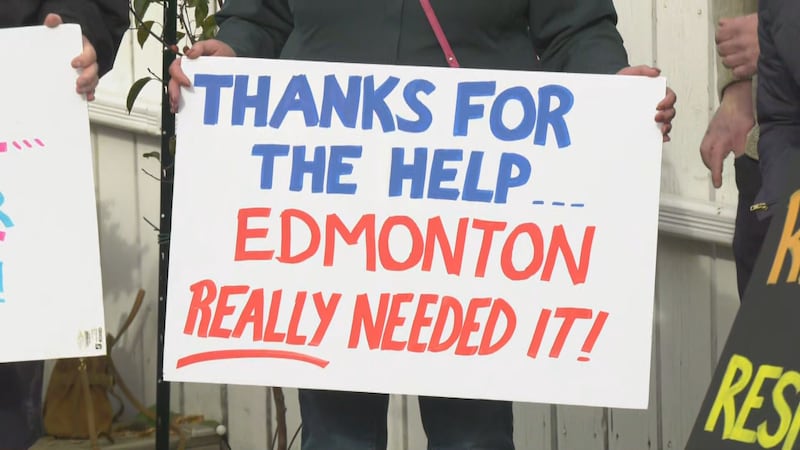
The province’s social services minister announced changes to the Alberta Disability Assistance Program (ADAP) based on feedback from the community. CEO of Inclusion Alberta Trish Bowman joins Alberta Primetime’s Michael Higgins to discuss the changes. This interview has been edited for length and clarity. Michael Higgins: What do you see the government accomplishing here with the reversal of some of its decisions? Trish Bowman: We certainly welcome the decision, and it’s an encouraging sign that they are listening and prepared to make changes as they see the impacts that this has on the ground for people. Similarly, we heard from lots of people who were very severely impacted by this and considering whether or not they would have to split up from their partner. We would also encourage that this exemption or this walkback, in a sense, be extended to couples where one partner is employed, and the other is on disability benefits. Currently, it’s only in cases where both partners are receiving disability income support. But we are also hearing from families where one partner works and they’re still experiencing a clawback for income over $1,500. We think it could be extended to benefit a lot more people. MH: Was this something you saw coming? TB: No, we hadn’t had any indication that this was something they were considering. So, it’s very encouraging. We hope it’s not the end of (the government) seeing how this impacts people as it rolls out and being willing to make adjustments so that people can truly be better off. MH: What’s your assessment of the role that public feedback has played here? TB: I think it has to have a major role. We do know there has been a loud and sustained response from the people in the disability community to the changes that were introduced in July, and so undoubtedly that has had an impact. And, as I said, we really hope that those most affected by these changes have a voice, that there is a place for them to let the people who make these decisions know how they’re being impacted. MH: How would you sum up the impact of ADAP, of the government’s changes in their entirety since the start of implementation back in July? What has that resulted in? TB: We’ve been clear from the beginning, and as have many others, that there could have been many improvements made to the AISH programme without introducing an entirely separate disability income support programme. Reducing people’s income at this time is very hard to understand. And yes, people with disabilities want to work, but that’s not a simple thing, and so I think the impact has been really significant. It’s caused a tremendous amount of fear, a tremendous amount of anxiety. We certainly know of people who are facing eviction, of increased uses of food banks because they can’t afford to buy food. So, $200 might not seem like a lot to some people, but when you’re already living below the poverty line, to have your income further reduced on the assumption that with a little bit of assistance you’ll be able to find enough employment to be better off is a very big assumption. For many people the nature of their disability makes finding enough employment and being able to work enough to be better off very unrealistic. So there’s the potential for great harm, quite honestly. MH: To what degree would you say Albertans with disabilities have been connected with meaningful employment as per the government-stated goal? TB: We haven’t seen any evidence of that yet. That is only beginning to be rolled out, we really don’t know what that is going to look like. But what we do know is we have decades of statistics across the country of the unemployment rate for people with disabilities being stubbornly high. To suggest that in a couple of years we’re going to be able to get tens of thousands of Albertans with disabilities enough employment at a sufficient rate for them to be better off is a very ambitious goal, and I think it puts a lot of people in harm’s way. MH: The government plans to ask Ottawa to make it easier for Albertans with disabilities to access employment insurance. How do you see that playing into the conversation? TB: It’s an interesting issue because, currently, if you’re receiving disability income support, or income support, and you were working and you lose your job, the unemployment insurance that you receive is clawed back dollar for dollar from your disability income support. So, people with disabilities who are on AISH or ADAP won’t actually experience benefit from that. However, for people with disabilities who aren’t on income support and who might have fewer weeks of employment, having earlier access to unemployment insurance is absolutely a benefit. We’d really like to see how unemployment insurance or employment insurance is treated for people who are on disability income support. We think it should not be clawed back the way it currently is.